
No Results Found
The page you requested could not be found. Try refining your search, or use the navigation above to locate the post.
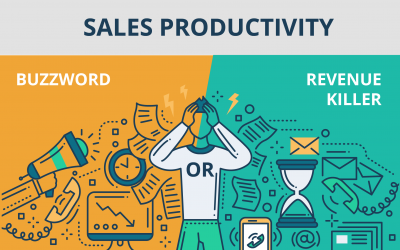
Many companies are feeling the pressure. If you don’t want to get left behind, there’s one number you need to focus on: 22.
Imagine the effect on your bottom line if you could boost that percentage.
Say your average sales rep brought in R10 million last year. If you increased their percentage selling time from 22% to 26% the knock on effect would have been an extra R1.1m. That’s an 11% increase in sales.
But this isn’t just theory, many companies are doing just this.
Analyst, Forrester says that if you switch to an integrated sales solution your sales reps will each get back 53 minutes a day. Think of the effect this has on their selling time. 22% goes up to 33% – enough to significantly worry your competition!
While the numbers are clear, the question you need to ask yourself is: Can you afford not to do this?
Think of the impact if your competitors did this and you didn’t. What sales would you be leaving on the table?
“We saw our sales teams spending upwards of 40% of their work week doing admin tasks. That number is now approaching 10% because we can do things in an integrated fashion, from wherever and whenever there’s an opportunity.”
19% increase in productivity
Sales professionals gained 19% in productivity by being able to access client data anywhere and anytime.
The page you requested could not be found. Try refining your search, or use the navigation above to locate the post.
Discover More Stories

It doesn’t take an economist to see that we’re in a tough spot. The shops are empty. People – and businesses – are under huge pressure.
Will things get better? While they say that time heals all, the fact is that market downturns mean deep economic recalibration – there will be winners and losers at the end of this. It’s scary, but it’s true.
The better news? It’s possible to emerge even stronger on the other side.
So strap in, hold on and commit.

It may seem counterintuitive, but when times are tough, resist the urge to do more. Instead, get back to basics – focus on your business’s core. Do fewer things, but do them right! Boom times allow for the growth of fluff, while recessions reveal the real revenue drivers. Exploit this opportunity to identify them.
Tough times reveal the products and services that are your business’s bedrock – direct your energy there.

New customers? Be crystal clear on your targets for new acquisitions – come one, come all isn’t a strategy to deploy when the market is making life difficult.

By driving efficiencies in this part of your business, you’ll free yourself up to add value elsewhere.

Automation can give people the time they need to focus on sales. When back-office processes are taken care of, there’s no need to sit in the office crunching through admin. You can work from anywhere, knowing those aspects of business are taken care of.

Smart software that integrates machine learning techniques can help streamline the process and power intelligent decisions.
Need a report? You should be able to grab one instantly.

The second? Stop customers from straying. You can do this, for example, by introducing a sub-brand, which customers can cancel their use of later.

Secondly, get social. Go where your customers are and get your customer mix right. Closeness with the right customers has never been more important than right now.

With your admin and reporting under control, this becomes far easier. You have both the time and the necessary tools to make revenue generation a top priority.
What we can change is how we react.
The page you requested could not be found. Try refining your search, or use the navigation above to locate the post.

“Microsoft delivers on intelligent seller productivity.” – Forrester 2017 Q2 report
The Satya Nadella Treatment
You might ask yourself what has given Microsoft the edge? While they have invested heavily in machine learning/artificial intelligence, and the now famous acquisition of LinkedIn, Forrester put it down to a “heightened focus on seller productivity”.
Sales software has traditionally focused on reporting and analytics. But with deep integration into Outlook, Microsoft has made it possible for sales reps to more productive on the go. Simple things such as not switching between apps has recently been shown to have a massive impact on revenue.
Forrester concludes:
“Microsoft is a best fit for companies looking to capitalize on the productivity gains of their other Microsoft cloud investments” – which is fairly obvious. But interestingly, they go on to say:
“..and those companies that are …looking to disrupt their peers with AI and machine learning”
Sales teams across the globe are already disrupting their competitors with Microsoft’s new Dynamics 365 platform, but ironically, this disruptive ability is already being felt by Microsoft’s own competitors.
If you want to find out more, why not check out: Office 365 & Dynamics 365
[1] John Bruno, The Forrester Wave: Sales Force Automation Solutions, Q2 2017 (Forrester)
The page you requested could not be found. Try refining your search, or use the navigation above to locate the post.
Discover More Stories

Sounds like strange advice in the current market, doesn’t it? It shouldn’t. When times get tough, many make the mistake of losing confidence. They focus inwardly, looking to consolidate what they have, rather than outwardly: on what could be. This is unnecessary self-sabotage!
Rather: vision, guts and a little ingenuity can make all the difference, separating the winners from the losers.
A major opportunity every business should be exploiting is this: Creating extended sales teams. By viewing everyone in your business – yes, everyone – as a salesperson, you immediately increase your sales potential.
Selling is no longer about the gift of the gab – it’s about building trust. And that means that everyone in your business can – and should – sell.
In fact, those people who already work for you are actually in the best position to do so. For example, who better to up-sell a deal than a service technician who is always on the front-line delivering to customers?
It’s true – not everyone understands the world of sales. So, sales managers may need to step in to provide guidance at first – showing those new to the process how to identify opportunities. Putting incentive structures in place is key too, as it will change the behaviour people have in seeking out new sales avenues.
The first step? Focus on your service people. Service teams interact with clients every day, throughout every stage of the post-sales cycle. That interaction equates to trust – trust that’s been built up over time. Here are a few ideas on how to leverage their abilities:
Create referrals – Referral leads convert at a higher rate than typical leads. Not only that, but referred customers tend to spend more. If you’re not exploring this avenue with your service people, you may be losing out.
Ask for customer feedback – Develop a culture of gathering (and sharing!) feedback. Use that information to learn and grow. Ask your marketing team to develop a set of key questions, then get your service people involved deployment. Use the feedback gathered to help improve both your product development and sales processes. Your service people are on the ground – they can access insights others simply can’t. Change what needs to be changed on the basis of what you discover and, if need be, rethink your approach. Also, share the changes you made with customers who gave you the feedback in the first place. They will feel appreciated and are more likely to give you more feedback in the future.
Cross-sell, up-sell and even down-sell – Have a client with a basic plan or product? Get your service teams to ask well thought through, quality questions; they understand customer needs and pain points better than anyone else. This means they’re best positioned to make recommendations about how customers can access better services. Don’t discount down-selling either: if a client is wavering, a basic plan can be a way of retaining their business, with the potential for growth in future.
Capitalise on online chat – The market has changed. Digitisation, fluidity and instant communication are the order of the day. Customers have come to expect fast responses and real-time interactions. The right person providing the right information online can both improve customer experience and shorten the sales cycle.
There was a time when marketing teams simply handed over leads to sales. Those days are gone. Now, marketing is operating ever further into the entire sales cycle, taking customers ever deeper into the journey.
This means that your marketing teams are increasingly important to the sales process. It also means that they need to be more knowledgeable about sales (and how your business runs) than ever. Here are a few tips:
Here’s the key: customers are not only the people you sell to. They’re also the people who can help you sell.
Customers can be a great source of new sales leads. Leverage your customers’ networks to explore new opportunities and open new doors. If you’ve worked well with a customer and developed rapport, you’re well positioned to ask for references into other business units or departments in their company.
Existing customers can also be extremely effective last-inning closers too. If there’s a deal in the pipeline or a lead who’s on the verge of buying – but who is not yet quite convinced – ask an existing customer to help close the deal. ‘My experience with the company was great’ is often just that little bit more effective as a sales tool than ‘Your experience with our company will be great’.
Sales is no longer about smooth talking – it’s about building trust and long-lasting, mutually beneficial relationships with customers. With a little guidance and the right incentive structures in place, you can empower anyone in your business to build and grow the kind of connections every successful business needs.
The page you requested could not be found. Try refining your search, or use the navigation above to locate the post.
Discover More Stories
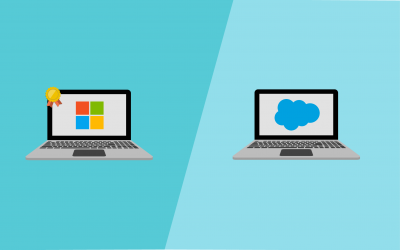
In our post, Microsoft Overtakes Salesforce.com, we shared an important market shift: Global analyst Forrester placed Microsoft ahead of Salesforce.com for the first time.
This is hugely significant. To understand this trend, we asked our customers why they chose Dynamics 365 over Salesforce.
Here were their top 6 reasons:
Most companies already use Microsoft’s products: Word, PowerPoint, Excel, Outlook etc. So, it’s no surprise that Microsoft is the leader in integrating those technologies with Dynamics 365.
Our customers love the fact they can work in Dynamics 365 without leaving Outlook. With Office 365 and Dynamics 365 built on the same common data model and hosted together on Azure, your data couldn’t be more integrated. And with Microsoft’s purchase of LinkedIn, LinkedIn’s powerful Sales Navigator syncs directly with Dynamics 365.
While Salesforce also offers integration with Outlook, Exchange, LinkedIn etc. our customers said that the integration was more difficult and limiting in terms of functionality.
Our customers are being asked if they are seeing value in their technology investments – if it’s having an impact on their bottom line.
This is something Microsoft is very strong in. Feature-by-feature, analysts consistently find little to choose between Dynamics 365 and Salesforce. But when it comes to the price of those features, there is no comparison. Microsoft is consistently lower in cost. And lower cost means a quicker time to proving value.
For instance, if you compare the core enterprise offerings, Microsoft Dynamics 365 Customer Engagement Plan costs $115/user/month. In contrast, Salesforce’s Lightning Enterprise Edition costs an extra $35 per user per month at $150/user/month. However, with the Customer Engagement Plan, you get Customer Service, Field Service, Project Service Automation, Powers Apps and Microsoft Flow – all included. In contrast, Salesforce only includes the sales elements.
Microsoft’s offering not only costs less, but it’s a complete, robust, multifunctional CRM. It’s much easier to get business value with a platform where you get more for less.
Your business isn’t static, so neither should your technology. The ability to customize and develop your platform should be a key consideration when choosing between Dynamics and Salesforce.
Unlike Salesforce, Dynamics 365 is only built on widely used programming languages (.Net, C# etc.) . This means it is easier to adjust your platform – because you have a broader pool of developers to draw on: either in house, or through Microsoft’s extensive partner network. And it also reduces the next issue…
Automation, Artificial Intelligence, Machine Learning. There’s a huge technological wave coming. Companies will either surf on top of this wave or be crushed underneath. Google, Facebook, Apple, Amazon, Microsoft – all the big hitters are investing heavily in this. Salesforce realized this recently and went on a spree of purchases of AI start-ups. But in terms of spend, they can’t compete.
For instance, Microsoft’s annual R&D budget is $12Bn (at least $4Bn of this is AI). In contrast, Salesforce’s turnover is just $10Bn. Microsoft is pumping the benefits of this research into Dynamics 365 at a tremendous rate and have made it a key focus in future development.
In Conclusion
Dynamics 365 is at the forefront of helping businesses like yours become more efficient and improve your bottom line. It will cost you less than Salesforce and you’ll get more for your investment.
Why not join our customers and discover what Dynamics 365 could do for your business?
The page you requested could not be found. Try refining your search, or use the navigation above to locate the post.
Discover More Stories

The mantra’s stuck around for a reason, but the route to the promised land has changed.
Now, surprise and delight means not only delivering great customer experiences, but leveraging the power of tech in doing so – a fact that holds true for field service organisations in particular.
The reality is that in today’s hyper-competitive, tech-saturated marketplace, customers have come expect more than ever before from Field Service Organisations (FSOs):
At the same time, strategies that place too much value on new customer acquisitions through a short-term tech focus tend to be unsustainable.
So, how can FSOs navigate this new business landscape and use tech to power long-term sustainable goals? Here are five rules to bear in mind:
The next client … the next big sale … focusing too hard on these can come at the cost of your current customer base.
Remember: your existing customer base is your most profitable base. Also: it’s expensive to acquire new customers. Your current customers’ experience with your organisation should therefore be a high priority. So, improve the customer journey, making sure it’s studded with positive interactions and value-adds – repeat business and referrals await.
Consider this: a customer calls in, needing to have a piece of equipment repaired. The repairs are done, and the customer walks away happy. However, since the customer isn’t a specialist, what he’ll remember most about the process is the customer service he received. Sometimes it’s just as much about how you make a customer feel as the actual service you provide.
However, the reality is: your competitors get it. They know the value of tech. And chances are, they’re investing in it a big way.
The result? When enough businesses begin to transform, everything in the marketplace changes. The benchmarks customers expect service providers to meet go way up. The ways in which clients expect to interact with businesses (including yours) are completely remade.
Consider:
The right data analysis can reveal everything from up-sell and cross-sell opportunities, to ways in which to maximise your most profitable customer relationships, refine service delivery based on past feedback and identify your most profitable customer groups and product types. Gone is guesswork. In its place – data-guided decision making.
More importantly – data is the core of personalisation. And personalisation has come to define the most critical interactions in business today. Customers expect you to understand their needs and provide tailored, individualised service. To do that – and do it well, without draining your resources – you need the right tools to dig into your data.
For example, by knowing what products or services a customer ordered from you in the past allows you to streamline how you interact. It also allows you to suggest relevant options, upgrades and associated services.
Schedule optimisation is one internal process that can drastically improve profit. For example: by using Microsoft Dynamics 365, technicians can dramatically increase the number of appointments they’re able to fit in each day, improving both productivity and profitability.
As your business grows, increasing efficiency becomes paramount. Failing to put the systems in place to allow you to grow – without adding to headcount – can mean the difference between linear and exponential profit growth.
Field techs are the face of a business. So, make sure you empower them to consult with and add value to each client interaction.
This can mean anything from adding a touch of personalisation to every meeting, going the extra mile when it comes to fulfilling an order, or using tech to streamline order processing, parts ordering and payment. Doing so can be a powerful differentiator in the market.
The page you requested could not be found. Try refining your search, or use the navigation above to locate the post.
Discover More Stories
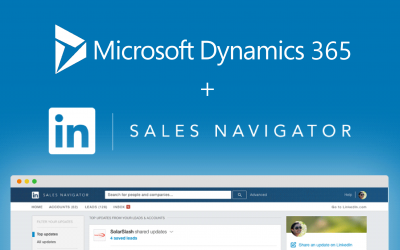
Get an hour back each day. That was the conclusion of global tech analyst, Nucleus Research when they looked at LinkedIn’s Sales Navigator with Dynamics 365 for Sales. Putting it another way, using this combination gives you a 12-15% increase in your productivity. Think how many more deals you could close because of this.
This is a big claim. But it’s not unreasonable. We’ve been using LinkedIn Sales Navigator with Dynamics 365 for months, and have been experiencing the benefits.
Now, when a lead comes to us we get all the data from LinkedIn alongside it. From this one lead, we can easily identify all the stakeholders associated with the deal – without leaving Dynamics 365. We can see their photos, job title, past work history, connections, etc. It’s incredible.
But don’t just take our word for it, you can read the report here. Or better still, see it in action in this short video:
Nucleus Research concludes:
“Clearly Microsoft has an advantage with the sheer volume and granularity of business relationship data within LinkedIn.”
What’s stopping you from having that advantage too?
Talk to us today.
The page you requested could not be found. Try refining your search, or use the navigation above to locate the post.
Discover More Stories

Gartner went on to state:
The page you requested could not be found. Try refining your search, or use the navigation above to locate the post.
Discover More Stories

The companies that get it right reap the rewards. Consider the stats:
To keep customers engaged, however, companies must compete in a marketplace where the benchmarks keep rising. Why? Exposed to the offerings of best-in-class digital juggernauts such as Amazon, consumers develop a taste for the most cutting-edge tech – and soon come to think of it as normal – whether they’re aware of it or not.
What are the drivers? A major one is advancement in AI. Today, artificial intelligence underlies an increasing number of customer service interactions – at both the front and back end. From brand spokesperson to service agent assistant, AI is remaking the interface between brands and their customers.
ow? Here are some of the ways.
AI is many customers’ first touchpoint.
Many of today’s consumers would rather find a solution to a query without having to dial into a call centre or deal with a service agent over the phone. Brands know this, and it’s why chatbots are an increasing number of brands’ first line of contact.
Easily accessible via a messenger window, bots are great at dealing with simple and medium-complexity queries. The result is quick customer resolution as well as decreased workload for the company’s human agents – to whom a bot might refer a customer in the case of a complex query.
By filtering incoming queries in this way, companies are realising that a human touch isn’t always necessary. Rather, it’s efficiency that customers want.
AI – which is able to draw on a range of data spanning past brand interactions (and often external data, too) – isn’t working from a blank slate. Rather, it’s able to contextualise queries, making sure replies are targeted, helpful and to the point.
AI is flexible.
Today’s customers take digital dynamism for granted. Daily immersion in tech means multi-device connectivity – and interaction on their own terms. For many, their nearest bank branch is an app. Their nearest retail outlet, their mobile. Brands have to keep pace. Access to a device means access to AI, whether via a messaging app or website.
AI is predictive.
Consumer queries are rarely totally unique. An issue or question raised by one customer is likely to soon be voiced by another. AI comes into its own in this area.
On one hand, when the same query is raised by a number of consumers, AI begins to learn. By piecing together the reasons behind a specific type of query, AI can learn to provide more helpful and targeted solutions to subsequent customers – having found what resolution worked best for those who came before.
More importantly, AI is able to predict queries before they happen. Through IoT-enabled devices, weather forecasts, inventory management services and more, AI can now anticipate when a customer is likely to call in, and why.
The result is the ability to pre-empt queries and surprise customers with helpful suggestions, at just the right time.
Building Business Dynamism
Microsoft Dynamics 365 offers an embedded suite of advanced AI capabilities, capable of tackling complex scenarios end to end. Here are four ways:
Want to find out how you can infuse AI into your customer service?
See our AI-enabled customer service solution.
1 Shifting the Loyalty Curve: Mitigating Disloyalty by Reducing Customer Effort by the Corporate Executive Board (CEB)
2 2016 State of Global Customer Service Report, Microsoft
The page you requested could not be found. Try refining your search, or use the navigation above to locate the post.
Discover More Stories
Conclusion: customers love efficiency. They stay loyal to companies able to offer it. However, very few businesses are able to offer the kind of service that keeps customers coming back. If you’re one of the few that can, you’ve got a powerful market differentiator – one that can allow you to carve out a niche in the market.
Here are 4 ways the right toolset can drive efficiency for that market-leading edge.
1. Intelligent Scheduling.
A great top-down view is key to optimising service delivery. If dispatchers can access real-time information on where technicians are, accurate, efficient scheduling becomes possible. Workloads and resources can be better balanced too, and more appointments scheduled per day. The result: productivity gets a massive boost.
On-site assistance should be carried out only when necessary. The right technology can help you detect, troubleshoot and resolve issues remotely when possible. Remote monitoring and predictive maintenance also become possible when you have the right tools. Moreover, systems can be designed to ask customers the right questions upfront. Do this and you can ensure you dispatch technician only when necessary – and that when you do, you always send the right person for the job.
Admin is the enemy. It eats into energy and resources. By streamlining the back office, your time is far better spent. The right technology means that client emails, phone calls and appointments can be monitored at the click of a button, and stored in one place, against their client record. Clients can also be kept informed at any stage of the engagement, with updates being sent by staff from any device. Further, when you have the ability to generate reports instantly, you can prioritise the most important clients and ensure you always provide great experiences to your customers.
Field service organisations have tons of info to keep track of. And while background information is key, it can quickly become a burden. Technology can provide key alerts and prompts, making insights actionable. For example, when service contracts, warranties and installed products are kept up to date, business flows far more smoothly. Driving additional revenue becomes possible too. Accurate contract information can ensure you are offering renewals at the right time, and not letting any contracts expire.
Get in touch.
The page you requested could not be found. Try refining your search, or use the navigation above to locate the post.
Discover More Stories