No Results Found
The page you requested could not be found. Try refining your search, or use the navigation above to locate the post.


# IT Software, Youth, Gaming, Life Goals, Programming
Youth Day serves as a reminder of the importance of young people in this country. The impact of today’s young South Africans will be even more pronounced as they become the decision-makers of tomorrow. With the right guidance and support, they can shape our nation’s future and create a brighter tomorrow.
At The CRM Team, we greatly believe in our young people and strive to give them the tools and resources they need to succeed.
The latest youngster to join our team is Jordan Masters, a Junior Dynamics 365 Developer
To celebrate Youth Day, we chatted to Jordan to discuss his career thus far, in hopes to inspire the young people of South Africa to work towards their dreams.

Where it all started, a young boy with a dream.
From an early age, Jordan had already figured out which path he wanted to follow.
“As a top IT student in high school, I knew IT was a career I wanted to pursue.” Jordan began by developing games to play with his friends.
“I would take on passion projects whenever I found something interesting. One of the things I was particularly interested in was crypto. However, I did not have the funds to invest in it, so I created an app that pulled figures throughout the day of how much crypto was worth.” Proving how tech savvy Jordan is, this app would perform as a simulation without investing a cent.
Everyone who has accomplished something worthwhile was once a beginner.
Growing up in a gaming generation had a significant impact on Jordan. He would create bots that could help him level up in a game while at school. “As an example, we got into a game called Hearthstone. The bot I created would constantly take screenshots during the game, and I built an engine that could recognize these images, regardless of whether it was text or pictures. Then I would cut up the images and match them using colours. The bot would then take the images provided and I would instruct it on how to play how to play the game and move the mouse.”
“Those passion projects got me interested in coding and made me want to pursue it further,” states Masters.
After finishing matric, Jordan already had a plan for what he wanted to do and how he would do it. After watching the movie, The Intern, his desire was to be part of a bigger team where they could work on software development projects together. However, that dream was placed on hold as he had to embark on a solo journey. “I reached out to companies in small towns to develop software solutions for them at a very small fee.”
Masters describes how he could only charge these companies a few thousand rands for systems that would have cost them hundreds of thousands. Jordan merely wanted to improve his skills and become independent while navigating life outside of school.
“I wanted to make money to spend on myself instead of asking my parents,” he states.
It is Jordan’s ethics and drive that opened doors for him. Now that he is part of The CRM Team, Jordan’s next goal is to get a Bachelor of Computer Sciences qualification, so that one day he can rank up as a Senior Developer.
The choice is yours to modify your dreams or magnify your skills.
Jordan’s journey is evidence of where commitment, hard work and determination can take you. Here is a man who had a dream at an early age and worked faithfully to achieve his dream. From teaching himself coding and pursuing it at a young age, to actively seeking opportunities to execute his skill and help small companies with software development – Jordan is what every young person should strive to be like.
“The one thing I would suggest for a young person in South Africa is to find something in demand and see if you enjoy it. While it may be difficult for some to find something that they love, it is worthwhile to learn a skill that is in demand and learn to love it.
I would also advise the youth to not be afraid to get themselves out there. They must reach out to companies or individuals and offer their services to help those companies reach their goal while acquiring experience to help them in the future. Also remember, the most important thing is do not stress yourself out, life always works itself out.”
The youth of South Africa can learn a lot from this young man.
The page you requested could not be found. Try refining your search, or use the navigation above to locate the post.

# IT Software, Sales, Sales Professional, Dynamics 365, Power Platform

Meet Talhah, a young, passionate individual hailing from the vibrant city of Johannesburg, South Africa. Born with an adventurous spirit, Talhah embraces life with enthusiasm and energy. Whether casting a line on a serene fishing trip, cheering for his favorite football team, or indulging in the sizzling delights of a traditional braai, he finds joy in the simple pleasures of life. Armed with an Honours degree in Bcom Marketing Management from the University of Johannesburg, Talhah channels his creativity into every endeavor he pursues. Balancing professionalism with a touch of artistic flair, he effortlessly expresses his innovative ideas in all aspects of life. With a strong focus on family and friends, he cherishes the moments spent together, creating memories that last a lifetime.
Talhah Jeewa, is a Senior Solution Sales Professional at The CRM Team, specialising in Microsoft Dynamics 365 and the Microsoft Power Platform. With his expertise and passion for customer-centricity, Talhah has been instrumental in transforming industries such as manufacturing, tertiary education, corporate training, real estate, non-profits, and transportation.
At the heart of Talhah’s work lies the powerful Microsoft Dynamics 365 business applications suite. This comprehensive platform offers a wide range of solutions to meet the unique needs of businesses, enabling them to manage and optimise their operations effectively.
His background in marketing management, with a BCom Honours degree, has fuelled his passion for Dynamics 365 Marketing, Customer Insights, Sales, and Customer Service. He understands that these components are the key drivers of customer centricity and play a crucial role in building long-lasting relationships.
One of the most remarkable aspects of Microsoft Dynamics 365 is its ability to automate manual and time-consuming processes with just a click of a button. This automation not only saves organisations countless hours but also aligns efforts towards a common goal. Imagine the impact of eliminating tedious administrative tasks and redirecting resources towards value-added activities that truly benefit customers. With Dynamics 365, businesses can achieve this efficiency while significantly reducing costs from an IT perspective.
The transition to the cloud has been a game-changer for many organisations, and Talhah has witnessed first-hand the transformative power it brings. Customers who have migrated to the cloud using Dynamics 365 have experienced remarkable cost reductions, freeing up thousands of hours and millions of rands. The elimination of hardware costs and the reduced security risks associated with cloud-based solutions have made the platform even more appealing to businesses of all sizes.
In an industry that constantly evolves, Talhah stays ahead of the curve by embracing every release wave of Microsoft Dynamics 365. With each update comes a host of new and revolutionary features that customers love. The power of the platform knows no bounds, and Talhah’s expertise lies in helping businesses leverage these capabilities to their fullest potential.
However, the question remains: Can we keep up? The rapidly evolving nature of the Power Platform presents a challenge for businesses to stay up to date with the latest advancements. Talhah’s commitment to continuous learning and innovation ensures that he remains at the forefront of industry trends and can guide his clients towards sustainable growth.
Beyond his expertise, Talhah’s true passion lies in the people he meets and the diverse challenges he encounters on a daily basis. Every day brings new opportunities to connect with individuals from different walks of life and find exciting ways to solve their unique business problems. It’s a career that he finds fulfilling, and he wouldn’t have it any other way.
With his deep knowledge of the platform and its potential to revolutionise industries, Talhah has helped businesses achieve remarkable results. His dedication to customer-centricity, automation, and continuous learning ensures that he stays ahead of the curve in an ever-evolving digital landscape. Talhah’s commitment to solving complex business challenges and his passion for helping organisations succeed make him an invaluable asset to any team.
The page you requested could not be found. Try refining your search, or use the navigation above to locate the post.

# IT Software, Sales, Sales Professional, AI, Technology Enthusiast

Meet Paul Mulder, a seasoned sales professional with a passion for technology, outdoor activities, and making a positive impact on the world. Born and raised in South Africa, Paul has a deep appreciation for the natural beauty, great weather, and the simple pleasures of life that his home country offers.
As a “born-and-bred” South African, he has a love for the seaside and enjoys activities such as snorkelling, swimming, catch-and-release fishing, and scuba diving. When he’s not near the coast, Paul keeps himself active by playing tennis, skateboarding, hitting the gym, and attempting to play the guitar (although he modestly claims to play it “very badly”). He also has plans to learn to play the piano in the near future, showcasing his love for music and continuous pursuit of personal growth.
Paul’s passion for making a difference extends beyond his personal interests, as he is deeply committed to the humane and just treatment of all inhabitants and environments of our planet. He is particularly passionate about marine conservation and children’s rights, which reflect his caring and empathetic nature. With a heart for making a positive impact on the world, Paul strives to contribute towards creating a better future for all.
Professionally, Paul has an extensive background in the IT Software Industry, with a focus on software sales. He has held various roles throughout his career, ranging from sales executive to business unit manager, and has even started his own business that implements sales effectiveness solutions.
Paul is known for his innovative mindset and his belief in the power of technology, particularly artificial intelligence, to help businesses and individuals achieve more than they thought possible. He brings a unique perspective to his work, driven by his divergent way of viewing the world and his unwavering enthusiasm for staying up-to-date with the latest advancements in his field.
Currently, Paul is a Senior Solutions Sales Professional at The CRM Team, where he brings his wealth of experience, passion for technology, and commitment to making a positive impact to the team. With his expertise in sales and his forward-thinking mindset, Paul is well-equipped to help clients navigate the ever-changing landscape of customer relationship management and drive meaningful results.
In addition to his professional pursuits, Paul is an active member of his community and strives to make a difference wherever he can. He is constantly seeking opportunities to contribute to charitable causes and give back to society, aligning with his values of compassion, fairness, and social responsibility.
The page you requested could not be found. Try refining your search, or use the navigation above to locate the post.
# sales, marketing , AI, CX, ChatGPT, Microsoft
There’s no holding back the tide of next-generation AI, and organisations need to start embracing it to stay ahead of the competition and meet consumer expectations.
This is according to Paul Mulder, a Senior Solution Sales Professional at The CRM Team, a leading Microsoft Solutions Partner.
He says new AI technologies such as OpenAI’s ChatGPT and Google Bard AI are fast approaching the peak of inflated expectations in the Gartner Hype Cycle and have heightened consumer expectations of what is possible using Generative AI. Mulder says: “The exposure and experience consumers are now having with Generative AI is making them accustomed to it, so when they go into a work environment or engage with a service provider, their frame of reference is built around consumer-based AI experience.”
Generative AI is offering consumers personalised, relevant content at the click of a button. While not all information presented by generative AI is 100% accurate, and legislation around copyright issues has yet to be formalised, consumers are now witnessing the speed and convenience AI can offer.
“At the peak of the Gartner Hype Cycle, people start demanding more and wanting a richer experience. Once over the top of the curve, a down trend starts, and leads to a point where we find place for AI within our lives.”
“Now the question arises – what can we do with AI? There are issues such as copyrighted materials – we need to determine who coaches the system to not return values which infringe on people’s copyright. Maturity, legislation and the concept of responsible AI are necessary, but in line with Moore’s Law, AI is developing faster than we can keep track of or legislate. The reason for this is that it’s consumer driven, it’s people on the street going to companies and saying ‘I have seen it, I want it’.”

Mulder says organisations must now work to keep up with the evolution of change to deliver the level of engagement and immersive experiences consumers are demanding.
In the consumer world, the likes of Google AI-powered Search and Performance Max, Meta’s Advantage+ are already redefining our AI experience and in the business world Microsoft AI such as Copilot will help meet changing expectations and revolutionise how enterprises operate and engage with customers, he says. Microsoft Dynamics 365 Copilot in Sales and Viva Sales, Dynamics 365 Customer Service, Dynamics 365 Customer Insights and Dynamics 365 Marketing brings Generative AI to every line of business.
“Organisations need to get ready to take AI to the next level of detail to deliver generative experiences able to provide the right advertising and engagement to the consumer, at the right time,” Mulder says.
“In enterprise systems this is playing out through several interfaces. For example, in sales, marketing and customer experience, Copilot is a technology sitting across those domains, gathering information in the back end and assimilating it, to provide very relevant information to the person engaging with the content. So, if you are a salesperson, you want to know the person you are engaging with previously purchased x, as well as their demographic, how they engaged with the company in the past, and how they engaged on social media, you could write a natural language query to Copilot which would return a natural language synopsis of what you had asked. Copilot brings it together and says: ‘This customer insured a household appliance with us last month, but his structural coverage isn’t with us, so we could bring that into our portfolio too’. Copilot will build an appropriate quote for you or structure highly relevant messaging and content for you to incubate or engage in a more immersive way with that customer.”
He notes that early efforts to gain a 360-degree view of the customer were too slow and required multiple engagements with the customer to bring it all together. With Generative AI, organisations can redefine the customer experience by instantly bringing together customer information and understanding the situational context of the conversation sales is having with a customer. AI gives salespeople the opportunity to immerse themselves in the customer’s journey to purchase, not only to influence it, but to actually participate in it…real time.
The immersion into the customer journey starts from our very first interaction, “In marketing, Copilot could pull a person’s behaviour within the framework of privacy, across social media, emails they opened, and rich information on their online behaviour, Copilot assimilates this information and then guides the marketer to help consumers make their next best purchase decision. It offers intelligent segmentation of people with common attributes beyond their demographic – such as hobbies and sports they are interested in. Copilot suggests to marketers more relevant ways of engaging with the customer.”
To support sales, Generative AI will help form the necessary human connections. “As marketing organisations, we have always known that relationships between people are fundamental, and word of mouth is powerful. LinkedIn Sales Navigator will look at networks of connections, offering the ability to say ‘I want to connect with a certain person, what key areas of interest allow me to do so? Who in their network can connect me to them and enable us to exploit that?’. Generative AI also supports a better employee experience, empowering employees and helping organisations to become employers of choice.”
He notes that while consumer Generative AI may make mistakes, enterprise grade AI is less likely to. “There’s a distinction between AI in the public domain and within a business. Within a business, these AI tools only have access to controlled areas using qualified data. The benefits far outweigh the downsides and are more controllable in a corporate environment. However, there is still a responsibility on companies to take the suggestions made by a machine and validate that they are true,” he says.
Mulder believes those organisations that will get ahead in future and live up to consumer expectations are those that embrace next-generation AI now. Machines are starting to mimic humans, “it’s coming, and you can’t hold back the tide,” he says.
Paul Mulder
Paul is a Senior Solutions Sales Professional at The CRM Team, where he brings his wealth of experience, passion for technology, and commitment to making a positive impact to the team. With his expertise in sales and his forward-thinking mindset, Paul is well-equipped to help clients navigate the ever-changing digital transformation landscape and drive meaningful results.
Subscribe to our newsletter
The page you requested could not be found. Try refining your search, or use the navigation above to locate the post.
# Dynamics 365, Microsoft D365, Dynamics CRM, Next-gen AI, Microsoft Dynamics 365 Copilot, AI-powered business processes
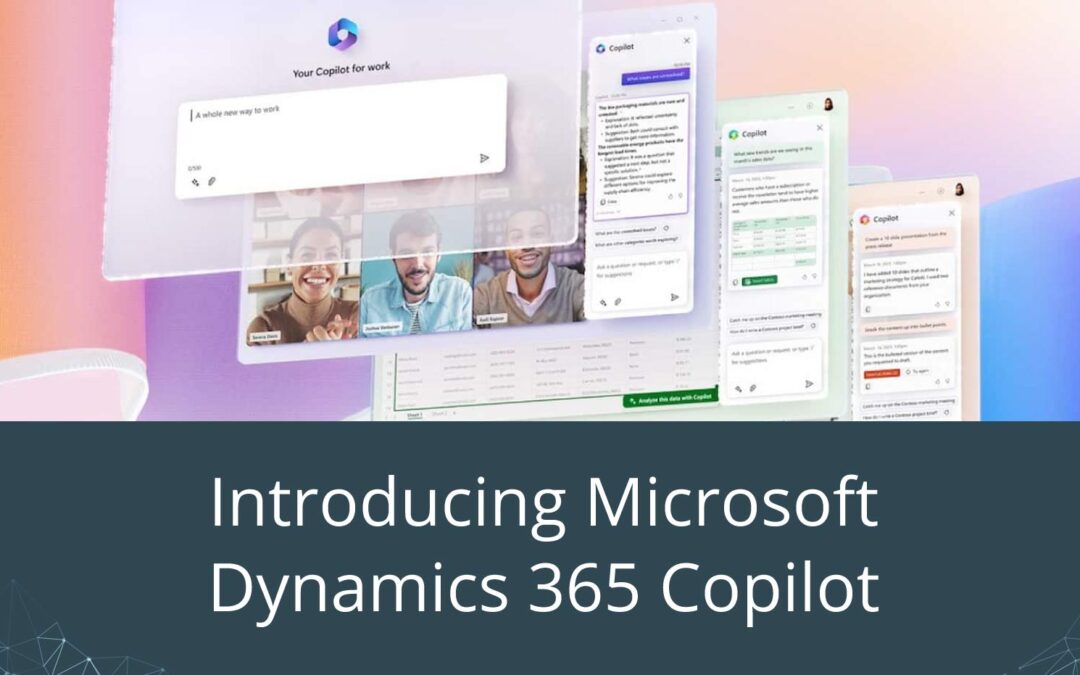
The world of customer relationship management (CRM) is always evolving. As businesses compete for customer loyalty and attention, they seek new ways to engage, delight, and retain customers. In recent years, artificial intelligence (AI) has emerged as a powerful tool for improving customer experiences and driving growth. Microsoft Dynamics 365 Copilot is the latest and most advanced solution in this space, providing from sales to customer service professionals with personalized recommendations, streamlined workflows, and valuable insights into customer interactions and behaviors.
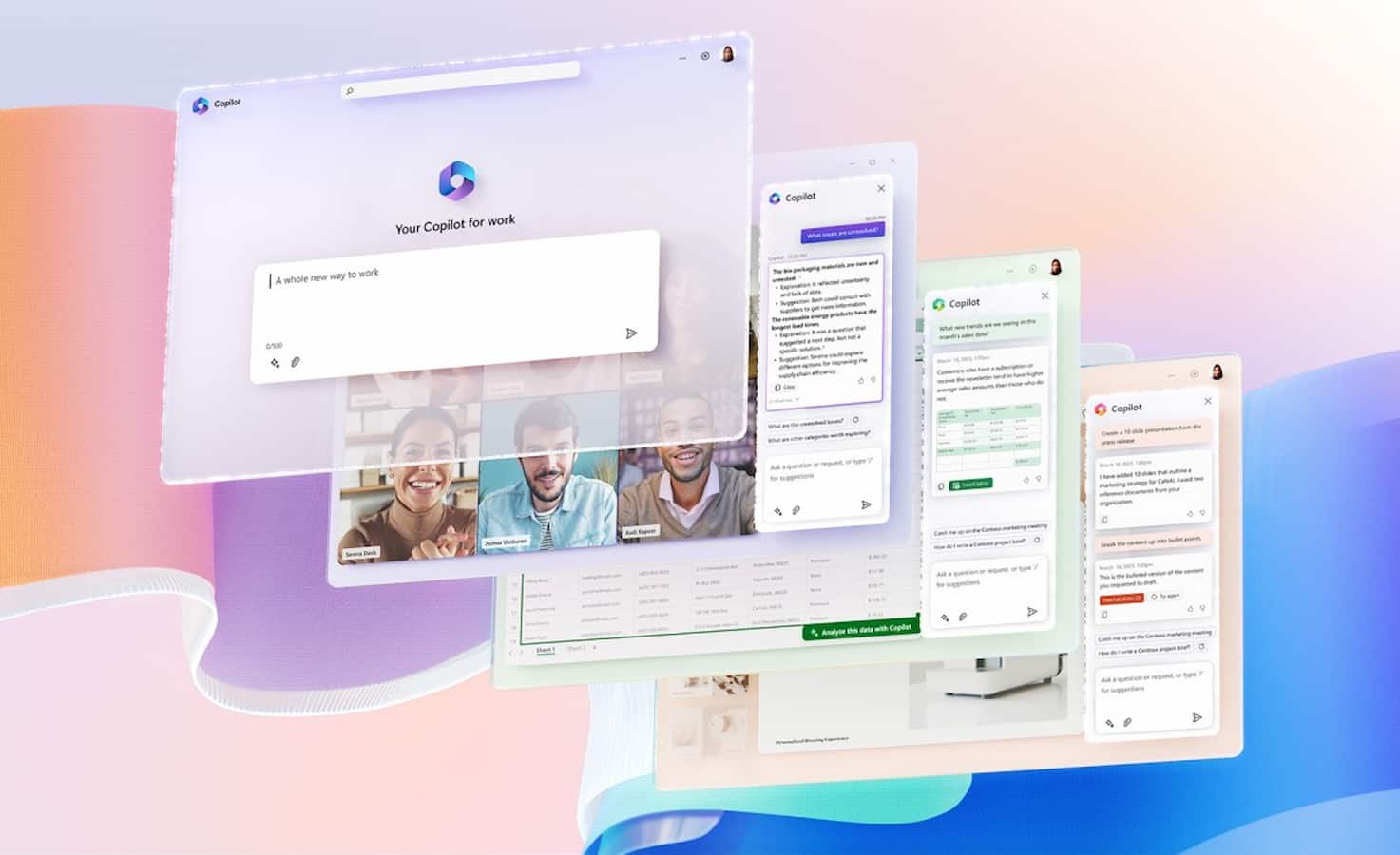
Microsoft Dynamics 365 Copilot is a groundbreaking AI-powered solution that offers a wide range of features to streamline and automate various business processes.
Microsoft’s CVP of Business Apps and Platform, Charles Lamanna, recently revealed the release of Dynamics 365 Copilot on March 6, 2023. This revolutionary AI-powered solution is designed to optimize and automate an array of business processes, ranging from financial management and supply chain operations to customer service and sales.
In this article, we’ll delve into the essential features of Dynamics 365 Copilot, uncover the advantages it offers to businesses of all sizes
Let’s take a closer look at some of its key features:
Dynamics 365 Copilot has the unique ability to understand and respond to natural language queries, making it easier for users to interact with the system using everyday language. This feature eliminates the need for complex commands or programming, allowing users to perform tasks efficiently. For instance, users can simply ask Copilot to create a new invoice for a customer, and the system will automatically generate the relevant document based on data in the chosen ERP system.
Another standout feature of Dynamics 365 Copilot is its advanced analytics capabilities. The solution employs machine learning algorithms to analyze vast amounts of data from multiple sources, including transactional data, customer feedback, and social media. With this, Copilot can provide insights and recommendations to help improve decision-making and drive better business outcomes. For instance, Copilot can identify customer complaints’ trends about a particular product, prompting companies to investigate and resolve the issue before it escalates.
Dynamics 365 Copilot also allows users to create and customize workflows that align with their specific business processes and requirements. This means that companies can tailor their CRM/ERP systems to their unique needs instead of relying on a one-size-fits-all solution. For example, a manufacturing company could create a workflow that automates the process of scheduling production runs based on demand forecasts and inventory levels. This would help to minimize waste and optimize production efficiency.
When it comes to business success, few things are as important as efficiency, customer experience, data insights, and flexibility. That’s where Microsoft Dynamics 365 Copilot comes in. This AI-powered solution promises to streamline and automate a variety of business processes, making it a powerful tool for companies of all sizes.
By automating routine tasks and providing insights, Dynamics 365 Copilot can free up your workforce’s valuable time and optimize resources that can be redirected to more strategic activities. This can lead to increased efficiency and productivity across the organization.
Dynamics 365 Copilot can analyze customer feedback and identify trends to help you address issues proactively and improve your overall customer service. This can lead to higher customer satisfaction, increased brand loyalty, and increased revenue and profitability. Additionally, Microsoft is simplifying virtual agent creation for customer service departments using Power Virtual Agents with conversation boosters, which can help customers get fast access to answers from company websites and internal knowledge bases through Azure OpenAI Service and Bing.
With Copilot’s advanced analytics capabilities, Dynamics 365 Copilot can help companies gain deeper insights into daily business operations and what customers are looking for. This can provide valuable intelligence that can be used to identify new opportunities, optimize processes, and keep you in the know.
Microsoft Dynamics 365 Copilot’s customizable workflows and its functionality to integrate with different Microsoft products give businesses greater flexibility and agility in responding to evolving business requirements. This can help organizations future-proof their operations and ensure they enjoy long-term success.
Overall, Dynamics 365 Copilot empowers businesses with the latest advancements in AI technology, making it possible to automate tedious tasks and unlock the full potential of the workforce. The solution promises to accelerate innovation, improve business outcomes, and transform the way organizations operate in every line of business.
Connect with Solution Sales Professionals at The CRM Team to understand how you can utilize the power of Dynamics 365 Copilot like many organizations that are taking advantage of OpenAI’s ChatGPT.
Learn more about D365 Copilot
The page you requested could not be found. Try refining your search, or use the navigation above to locate the post.
Brands are built on the success of their customer service. Instead of it being a responsive measure to deal with complaints, companies are learning to take personalised, empathetic customer care right to the heart of everything they do. This comes at the right time because customer expectations for hyper-personalised service from businesses continue to increase.
Winning the trust and loyalty of customers depends on how well businesses across every industry utilise their customer data and empower their teams to make every digital and physical engagement matter.
We are here to help you explore the art of customer service and engagement. We understand the importance of creating a more unified, intelligent data ecosystem to spark innovation across customer service teams. As your customers’ needs evolve, we can partner with you to turn every customer interaction into an opportunity to delight.
Create outstanding experiences in the moments that matter
Gaining a customer for life happens when organisations make every interaction matter. Whether that is reacting efficiently to a customer query, complaint, or need, or proactively taking steps to offer a new product or service. The key is to personalise the experience. Better understand your customers to create personalised journeys and lasting brand loyalty.
Demand for this bespoke treatment has increased. Today’s expectations are for hyper-personalisation across all channels of engagement between the customer and organisation. This move towards an omnichannel model has increased the scope in which companies can reach customers in new ways.
Where should a business start in this vast landscape of customer touchpoints to craft a personalisation strategy that leads to customer delight and long-term loyalty? Let us examine this now.
Understand your customers
It takes 12 positive customer experiences to negate the poor impression left behind from a single unpleasant experience. There is no margin for error when it comes to delivering customer care. A crowded marketplace of competitors, coupled with the number of digital channels open to consumers to voice their opinions and experiences with brands (both positive and negative) means that a single missed opportunity to delight a customer can have a significant impact on your brand reputation.
Employees use data to personalise the experience of the customer. The goal is to make every customer feel that the service they are receiving is 100 percent customised to them. However, this is not always achievable due to time and budget constraints.
Instead, a crucial step is to analyse your own data estate. From your customer relationship management (CRM) system to social channels and customer engagement (CE) platforms. Integrating this data for analysis with a Customer Data Platform (CDP) can help to surface rich insight by creating a single customer view that generates individualised personas.
Predicting customer behaviours using these data-driven personas can allow businesses to segment their customers more effectively in order to better align customer treatment strategies.
Embrace omnichannel experiences
The ways that customers engage with your business continue to expand. This offers a huge opportunity to benefit from the increased customer data flowing into your business.
Unifying this data into a consolidated customer profile that can carry across any customer touchpoint is fundamental to business personalisation efforts. As a result, conversations are more targeted and relevant. Additionally, customer service agents gain a greater understanding of the events leading up to a customer interaction if this unified omnichannel profile is accessible and properly collated.
Make the most of innovation to personalise
AI adoption for customer service has been widespread. However, its full potential to drive personalisation lies beyond the simple Q&A functionality that has become a popular standard.
Conversational AI’s ability to learn about customer interests and preferences, and then re-engage with personalised product recommendations at key stages of the buying process has become a key personalisation capability for companies to adopt.
The more simplistic virtual assistant functionality also has its place. For example, where customers need to action more simple tasks, such as getting an update on an order status. These systems complement the more complex analytical use cases. AI should be thought of as augmenting existing processes that extend the consistency of your company identity.
Personalise – but do not overdo it
It can be a fine line to tread between providing a customer with bespoke service and appearing to be compromising their privacy. Location-based personalisation techniques such as offers/greetings sent to apps on consumers’ phones when they pass by a store can come off as invasive.
At the same time, be as transparent as possible when it comes to informing consumers about how and why their data is used. Regulations like GDPR (General Data Protection Regulation) have helped created industry standards for this. However, companies can always look to bolster trust with their own in-house messaging and policy statements.
Do not lose the human touch
The capabilities of AI and data analytics are crucial to developing the insights necessary for understanding customers, building profiles, and offering bespoke offers and interactions.
However, businesses should not over-rely on these automated capabilities. The moments that matter are often those of one-on-one human connection. Take time to establish a comprehensive culture of communication that is agile to change. This is essential to empower your customer service agents with the empathetic skills they need to help find resolutions for customers that are personal and valued.
Personalise your customer’s experiences
The ways that personalisation will be felt across customer service will continue to evolve. Either from ongoing trends of increasing digital touchpoints or unexpected factors. Being agile to change is key.
We work with customers across industries to implement modular solutions that fit into existing customer service ecosystems to unlock new personalisation capabilities.

Why use Dynamics 365?
Align sales and marketing
Sales and marketing components can work together to help you better understand a customer’s needs and address those needs through the right marketing channels. Some of the ways these two functions can work together to help you are:
Increase sales productivity
The right CRM software allows your sales team to find, prioritise the right leads, and deliver insights on when and where your sales teams engage with customers. These systems can work together to:
Build better customer relationships
Bringing customer service and sales together helps you determine and predict your customers’ preferences and makes it easier for your buyers to interact and trust doing business with you. When these two solutions combine, they can help you:
Get an end-to-end view of your customers
Turn data into insights to keep your current customers happy or connect with new prospects. Other benefits include the ability to:
Use a common platform
CRM takes disparate customer relationship software functions and brings them all together for seamless management. Other common platform benefits are:
Get visibility into customers
The more you know your customer’s preferences, the more likely you are to gain their trust and, eventually, their loyalty. Giving your team visibility into what makes customers tick will give you the inside edge over the competition. Put the customer at the centre of your business with CRM software that helps you:
Offer customer portals
Online self-service portals put customers in control of their data, help them learn about product information, and let them track account activity. Companies have grown to realise that as vital as it is to provide their staff with an online company portal, offering it to clients makes it easier to engage with them as well. Here are three other reasons why customer portals for clients make sense:
Marketing: Improve your customers’ journey
Generate multichannel marketing campaigns, nurture sales-ready leads, and align your sales and marketing teams with planning and tracking tools that integrate with your existing apps and services.
Subscribe to our newsletter
The page you requested could not be found. Try refining your search, or use the navigation above to locate the post.

Dynamics 365 and Power Platform 2023 Release Wave 1.
Microsoft published its 2023 release wave 1 plans for Microsoft Dynamics 365 and Microsoft Power Platform on January 25. They comprise a compilation of enhanced capabilities planned to be released between April 2023 and September 2023. The first release wave of this year includes hundreds of updates and enhancements, which demonstrate Microsoft’s continued commitment to empowering digital transformation.
By bridging data, insights, and people silos, this release wave adds value to every role. By enabling AI-guided insights and suggested actions, automating tasks and processes, integrating collaboration into workflows seamlessly, and building low-code solutions, new capabilities empower informed decisions.
A review of Dynamics 365 updates






















| Milestone | Date | Description |
| Release plans available | January 25, 2023 | Learn about the new capabilities coming in the 2023 release wave 1 (April 2023 – September 2023) across Microsoft Power Platform, Dynamics 365, and Microsoft Cloud for Industry. |
| Early access available | January 30, 2023 | Test and validate new features and capabilities that will be a part of the 2023 release wave 1, coming in April, before they get enabled automatically for your users. You can view the Microsoft Power Platform 2023 release wave 1 early access features now. |
| Release plans available in 11 additional languages | February 21, 2023 | The Microsoft Power Platform, Dynamics 365, and Microsoft Cloud for Industry release plans are published in Danish, Dutch, Finnish, French, German, Italian, Japanese, Norwegian, Portuguese (Brazilian), Spanish, and Swedish. |
| General availability | April 1, 2023 | Production deployment for the 2023 release wave 1 begins. Regional deployments will start on April 1, 2023. |
The page you requested could not be found. Try refining your search, or use the navigation above to locate the post.

ECommerce is one of the most rapidly evolving industries in the world. In order to remain relevant and competitive, businesses must stay up to date with the latest eCommerce trends as well as the ever-changing expectations of their customers. You risk losing sales if you fall behind.
A revolution has taken place in retail because of e-commerce. With its evolution, online shopping has become easier for modern-day consumers and has met their changing needs.
In its early years, ecommerce had relatively limited capabilities. Those days are over. Whether it is customied products, improved return policies, or improved integration, all these changes (among others) have revolutionized ecommerce. And the ecommerce industry will only continue to evolve in 2023.
In 2023, take advantage of these emerging trends in ecommerce to take your business to the next level.
In any industry, whether it is business-to-business or business-to-consumer, you need to personalize your communications. No matter how you use it, whether in marketing or on your eCommerce site, it can result in more sales. It is expected that eCommerce brands will leverage data for more than just insights in the next few years. Online stores will use customer data to expand their product range and to see where and how they can improve the customer experience.
The concept of artificial intelligence (AI) refers to the development of technology that mimics human intelligence. By learning and adapting to consumer behaviour, it can produce more accurate and valuable results. The adoption of AI technology can enhance the buying experience for customers. It is predicted that AI will be a major player in eCommerce in the future. Many leading brands and companies invest continuously in artificial intelligence.
A significant percentage of businesses use AI for personalization (70%) and site search (54%).
It is evident that personalization is a trend that’s gaining traction steadily. Through personalization, users can receive suggestions for products and targeted emails based on previous activities. Personalized customer experiences help businesses attract and retain customers without using additional marketing techniques.
Site search powered by AI utilizes machine learning and natural language processing (NLP) to determine the intent behind the search query and to provide the most relevant results.
Thanks to the advancement of artificial intelligence, shoppers can conduct searches using images instead of typing keywords.
A rapid rise in social shoppers is also evident. Ecommerce has taken off with the introduction of Facebook and Instagram Checkout’s Buy button. The use of social media has transformed the way we live our daily lives, including how we shop. For brands, this is an opportunity to improve their social media presence, which is an excellent platform for brand discovery.
Through these social media platforms, brands can gain visibility and inspire people while scrolling through their feeds. The power of social media to influence ecommerce trends will only increase as it becomes a regular feature of our lives. As a result, brands need to adopt a social media strategy that focuses on the shopping experience.
Multichannel sales are no longer a luxury – they are a necessity in today’s business world. The fact is consumers purchase products through a variety of channels. It is vital that businesses reach their customers where they are.
As increasingly new selling channels emerge, omnichannel selling has dominated eCommerce since 2022 and will continue to do so in 2023 and beyond. Retailers are challenged to provide a consistent yet diversified shopping experience across all channels, whether in-person, online, or via a mobile app.
Ecommerce storefronts that offer creative and innovative VR experiences will drive consumer adoption. To make an informed purchasing decision, people are concerned about the inability to physically see the products This gap can be bridged by virtual reality technology, which allows online shoppers to better visualize the products in which they are interested.
The impact of this could be profound for ecommerce businesses. A VR/AR experience can shift the perception of products online customers intend to purchase. With virtual reality, you can help your customers better understand if your products meet their needs.
The use of virtual reality is not only enhancing the customer experience, but also allowing shoppers to evaluate and explore products in the same way they would during an in-person shopping experience.
One of the essential tasks when running an eCommerce website is to convert your traffic into purchasing customers. Applying conversion rate optimization (CRO) encourages site visitors to buy your products or sign up for your newsletter.
The future of CRO is customer centric. More marketers will focus on discovering what attracts visitors and what prevents them from taking action, guaranteeing the best user experience possible.
Optimizing the eCommerce site’s performance is a great starting point. Business owners should strategize their eCommerce developments and optimise every customer touchpoint.
Recently, chatbots have gained popularity for their ability to communicate effectively and quickly with people as well as their ability to provide businesses with time and resource savings.
HubSpot’s survey found that 90% of customers prefer “immediate” responses to marketing and sales questions. And 60% of customers defined “immediate” as 10 minutes or less. You know what this means – If you don’t respond to your customers’ queries quicker than your competitors, you might lose a chance to sell.
Because of that, increased store owners are using chatbots as “assistants” for their customer support team. The bot is online 24/7 and can be set up to answer present and frequently asked questions from your customers.
Thanks to technological advances, chatbots can provide more tailored service and product recommendations, making the shopping process more efficient and more enjoyable. This is a promising eCommerce trend that will explore in 2023!
With the advancement of technology and changes in consumer behaviour, one must keep an eye out for these ecommerce trends in 2023. Whichever ecommerce trend you decide to adopt, do it with the aim of improving the shopping experience for your customers and building a long-lasting relationship with them.
Take your ecommerce evolution to the next level by evolving with it side-by-side and taking advantage of these ecommerce trends.
The page you requested could not be found. Try refining your search, or use the navigation above to locate the post.
In 2023, some fascinating artificial intelligence trends may be able to show tangible growth, according to artificial intelligence trendsetters.
IoT and AI will lead to more advanced devices
2022 was a year of tremendous interest in the subject. There will be no difference in 2023; the world will be more reliant on smart devices.
While artificial intelligence and the Internet of Things (IoT) appear to be separate topics, combined, they can significantly enhance business outcomes. Technology experts consider both technologies an opportunity for innovation, product improvement, and competitive advantage.
An Insight into 2023’s AI Technology Transformations
AI technology trends in 2023 will leave both industry and consumers intrigued. One thing is certain: artificial intelligence has limitless potential. According to Sundar Pichai, the CEO of Alphabet (Google), “AI will have a greater impact on humanity than fire, electricity, and the internet.” The possibilities are endless, from personalized marketing to remote documentation.
In the midst of the technological revolution, industries worldwide are undergoing digital transformations. According to International Data Corporation (IDC) research, artificial intelligence spending will surpass $500 billion globally by 2023. Every sector and the world at large will be reshaped by AI’s widespread applications.
Below are some major trends in 2023 that will have a lasting impact:
With the growing use of AI in security operations, automated defences against cyber threats will continue to develop naturally.
The use of artificial intelligence (AI) in cybersecurity extends far beyond its predecessor, automation, and is used to perform routine data storage and protection functions. Cybersecurity artificial intelligence, however, goes beyond this and supports more complex tasks.
An example of an application of advanced analytics is the detection of ongoing threats or suspicious trends. Despite this, not all news is good. It will be a never-ending game of cat and mouse between cybercriminals and organisations as AI becomes more prevalent. Therefore, firms who are concerned about staying in business must begin integrating AI into their cybersecurity as soon as possible.
At present, natural language processing is the most widely used AI mechanic because it comprehends human speech without requiring text input. Additionally, this technology analyses and converts different languages into computer codes that enable apps and websites to run efficiently. YouTube has adopted this AI-powered NLP technology to allow users to search, play, and access other controls via voice commands.
One of the most fascinating areas of artificial intelligence is improving predictive analytics, which has applications across a variety of academic sectors. It makes predictions about the future based on previous data using data, statistical algorithms, and machine learning techniques. The goal is to accurately anticipate the future using data from the past. The rise of predictive analytics is not something that happened overnight; rather, its history shows that it has only recently been gaining traction.
Our jobs will become more efficient and more effective with the help of robots and smart machines in 2023. This could be in the form of smart devices providing access to data and analytics instantly. Both retail and industrial workplaces are increasingly using this type of technology. AR-enabled headsets could overlay digital information on the world around us. As an example, real-time information could be provided to assist us with identifying hazardous conditions in maintenance or manufacturing – such as showing when a component is hot or a wire is likely to be live. In the future, management and leadership teams will have access to real-time dashboards and reporting, which will allow them to keep track of operational efficiency in real time. As AI-powered virtual assistants gain prominence in the workplace, they will be able to answer questions quickly as well as suggest more efficient methods of accomplishing tasks. As a result, developing the ability to work with and alongside intelligent, smart machines will become increasingly necessary to succeed in the workplace.
With the aid of artificial intelligence, leading retailers are improving operational efficiency and customer service. Instead of being just transaction centres, retail stores are increasingly becoming focal points for brand awareness and customer experience. Adaptive AI will drive this transformation. One of the biggest growth areas will be frictionless shopping with computer vision and edge-based AI systems that will reduce wait times and ease hassle. With on-premises infrastructure, future retail stores will also be able to tailor seamless customer journeys and deliver hyper-personalized recommendations.
A physical store’s in-store analytics will provide intelligent insights based on dwell time across different aisles. The integration of past shopping histories across multiple channels and factoring in demographic profiles will enhance the customer experience and make experiential shopping highly immersive and enjoyable for them. In addition to omnichannel management, adaptive AI will provide highly contextual assistance. Conversational AI, coupled with emerging technologies like AR and VR, will augment the capability of store employees to redefine the shopping experience entirely in brick-and-mortar stores.
The growth of more ethical and explainable AI versions is fundamental for a number of reasons. AI requires information to acquire, which repeatedly requires private information. For countless of the potentially more useful and significant AI use cases, this may be extremely sensitive information like health or financial details. If we, as a society, don’t believe in AI or can’t figure out how it makes decisions, we simply won’t feel really safe handing over our details. The entire system will come to an end. In 2023, AI will make strides to overcome the “black box” issue of AI.
The people responsible for putting AI systems in place will work more vigorously to ensure they have the ability to clarify how decisions are formulated. This will enable them to clarify what details have been used to reach those conclusions. The part of AI ethics will become more prominent, too, as organizations get to grips with eliminating bias and unfairness from their automated decision-making systems. Biased information has already been displayed to lead to prejudice in automated results. This can potentially lead to discrimination and unfair treatment. This simply won’t be acceptable in a world where AI plays a significant role in decisions entailing employment and access to justice or healthcare.
It’s an exciting time to be in AI, and 2023 will be no different. As responsible AI makes its way into practice and generative AI continues to grow, we can expect many new interesting and innovative use cases soon. As a society, we’ll need to pick between the good and bad ones and help people adjust to this fast-changing world.
The page you requested could not be found. Try refining your search, or use the navigation above to locate the post.
With the pandemic accelerating digital transformation, 2022 was hit hard by the digital revolution. Technology is enabling more people than ever to stay connected both personally and professionally, putting pressure on the global economy to keep up. As we approach 2023, let us take a look at ten trends to keep an eye on.
AI is hardly a new concept. As we move into next year and beyond, artificial intelligence is going to continue to permeate virtually every aspect of our lives. More organisations are expected to implement AI in 2023. With its easy drag-and-drop interface, No-code AI will be used by any business to create richer products and services.
AI has the potential to transform and streamline industries across the board, from finance to education. As a result of its ability to train, learn, analyse, and produce large volumes of output, it has the potential to replace much manual work humans are required to do every day, preventing them from focusing on the bigger picture, improving their skills beyond basic needs, and influencing their industries’ future and direction.
There is no doubt that this is the future of the internet. While it is hard to predict exactly what it will look like, what we do know is that a more immersive experience is on the way, with the ability to ‘try on’ clothes via virtual reality already possible. The year 2023 may be the year when phones, headsets, glasses, and more become more integrated into the metaverse.
It is already common for companies to use metaverse technology for training and onboarding, and in 2023, this trend will accelerate.
Several experts predict that the metaverse will contribute $5 trillion to the global economy by 2030, with 2023 being the year that defines how it will evolve in the decade to come.
Like any other year, 2023 will see developments aimed at combating real-world threats. Cybersecurity is one of the greatest threats facing governments, businesses, and individuals today. Businesses should invest in high-quality cybersecurity products and keep them up-to-date and should also invest in staff training to ensure that the team recognises scams and can handle their tasks safely. In the recent past, attacks have spiked in part because of remote workers, who can leave organisations vulnerable.
The next step in application development will be the development of superapps that allow users to control most aspects of their business ecosystem from a single app. Approximately 50% of the world’s population will use superapps every day, according to Gartner. In some cases, these. Superapps may have mini apps that serve as add-ons and provide benefits beyond those already offered.
Superapps can connect to all systems and linked accounts (savings accounts, credit cards, etc.), and perform transactions at all systems (buying mutual funds, stocks, groceries, insurance, etc.) with one app. One superapp will be capable of delivering multiple experiences around a person’s daily life. For instance, an app that provides news, checks the user’s vitals, buys groceries, buys tickets, provides entertainment via OTT, tracks delivery status, tracks bank balances, and notifies about meetings, other tasks, etc.
This is another trend that has been featured on trend lists for several years. However, its effects will likely be felt as late as 2023 and beyond. Connected devices and devices that can interact with each other will become more and more common. It is now possible to connect many “things” to the Internet and to each other using Wi-Fi. Thus, the Internet of Things. There is no question that the Internet of Things will revolutionise the way we live, and has already made connected devices, home appliances, cars and much more possible.
Cloud migration will continue to take place in 2023 with companies transferring their mission-critical resources to the cloud. According to Gartner, by 2023, public cloud spending will reach roughly $600 billion, as businesses increasingly recognize the value of cloud computing. As a result, businesses will increasingly opt for industry cloud platforms, designed to meet the specific requirements, needs, and best practices of industries.
We are already seeing the emergence of a bridge between the physical and digital worlds, and this trend will continue into 2023. A digital twin and 3D printing are two components of this merger.
A digital twin is a virtual simulation of a real-world process, operation, or product that allows the testing of concepts and ideas in a safe virtual environment.
The use of digital twins enables designers and engineers to test physical objects under any conceivable condition without incurring the high costs of real-life experiments. Manufacturing, machinery, cars and precision healthcare will all benefit from digital twins in 2023.
Currently, blockchain is primarily used in the financial sector, but by 2023, this secure technology will expand to the healthcare, government, and educational sectors.
Companies will be able to decentralise trust and security in a way that is impossible to tamper with, driving innovations in security and data exchange. Blockchain will have endless applications, including the storage and transmitting of personal information like health records, as well as the verification of high-end products over long periods of time.
The threats to the environment have become apparent over the last few years, and most of us are aware of the need to continue evolving our behaviours and practices to be more ecologically friendly. Business and branding are constantly evolving, but in 2023, sustainability will become the number one business branding innovation. As a result, technology will play a significant role in reducing the carbon footprint businesses leave behind.
Consumers will continue to demand energy-efficient and sustainable products and services in 2023, pushing supply chains toward greater transparency.
Digital product teams are now responsible for 76% of generating revenue, so CIOs will have to adopt new practices and technologies for software design, development, automation, operation, and analytics that will improve user experience while reducing system failures. Gartner predicts 80% less downtime for organisations that invest in digital immunity by 2025.
The page you requested could not be found. Try refining your search, or use the navigation above to locate the post.