No Results Found
The page you requested could not be found. Try refining your search, or use the navigation above to locate the post.
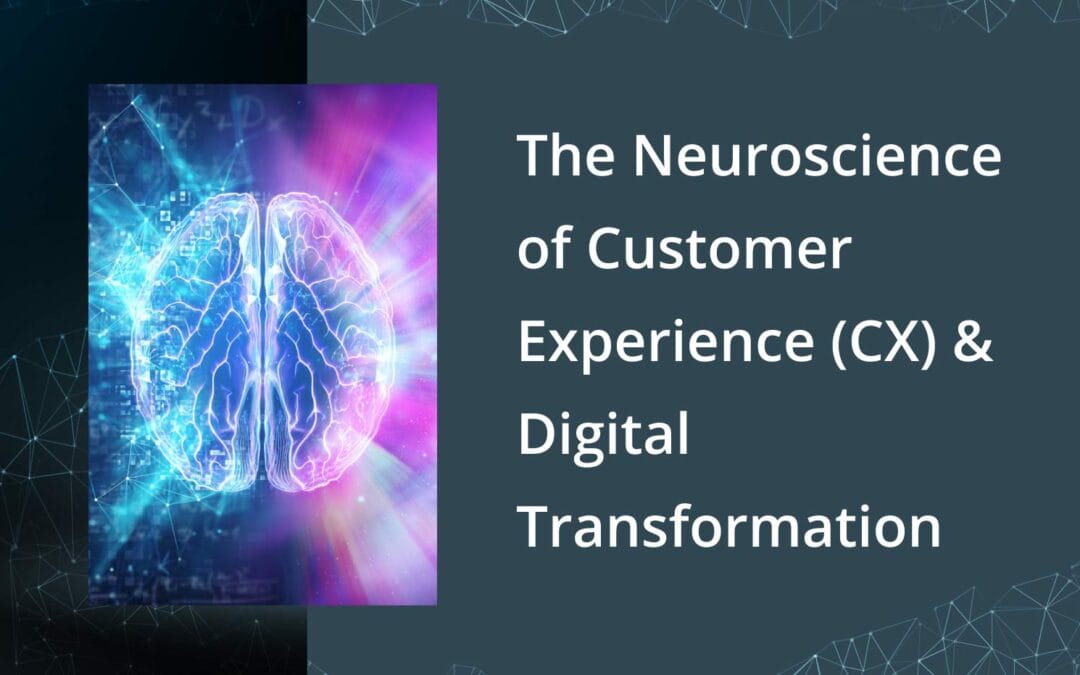
After 15-years of doing retail mystery shops and lecturing Customer Experience (CX) at the Gordon Institute of Business Science (GIBS), Ian Rheeder shares the human science behind great Customer Experience Management (CEM). In this short article, he shares an avalanche of brain-science that has made the topic of CX easier to understand and implement.
There are just two things that are important to our business—a clear strategy and great customer experience (CX). From advertising to every interaction, CX is the overall customer experience (or accumulative perception) of our company. Service is just part of CX.
Traditionally, Customer Experience Management (CEM) was always designed before Customer Relationship Management (CRM). Senior management was heavily involved in the design of the CX (the customer journey), thereafter, CX was monitored using CRM at all touch-points. This means CX has always lead CRM. So CRM tracked CX and improved CX at every touch-point. However, because of the digital transformation of the hybrid-workplace, this traditional CX process must be challenged. Advanced CRM software now needs to be imbedded into CX from the start. There is a new CX balancing act—the need for digital; and a want for human touch.

So let’s now look at how we can use the below top-10 golden nuggets, spawned by neuroscience, to improve the world of CX.
The single biggest breakthrough is customer-centricity should start with employee-centricity or improving the employee experience (EX). This is because “when you love your work, then customers will love your work”. The biggest thing to loving one’s job are work relationships. For instance, Gallup’s studies show that if you have a good friend at work, you are 700% more likely to be engaged (motivated). This is also why bosses need to be approachable and likeable (think Putin vs. Zelensky). Dr Mathew Lieberman’s studies show that only 0.8% of leaders focus on “social” and thus only have a 12% chance of being rated great. But as soon as a leader focuses on “social”, their chance of being rated great, skyrockets to 75% (again, think Putin vs. Zelensky). This is also why working alone at home hurts collaboration and innovation; people solve customer journey problems face-to-face with colleagues – not huddled over a keyboard.
Again, due to the Digital Transformation of the workplace, software (infused with AI) must be developed to compliment the employee end-to-end journey—from recruitment, onboarding and career development. Digital tools should make the average employee look like a genius, and therefore improve employee engagement. In other words, employees need the right hardware and software to do their work right—especially in a hybrid work-from-anywhere (WFA) office.
The “science of happiness” has exposed that innovation increases by 300%, call-centre staff increase sales by 400%, other salespeople increase sales by 37%, and blue-collar workers are 27% more productive when in a good mood (HBR, 2012). Why is this? Because due to the energy enhancing dopamine and serotonin released when happy, every single part of the brain works better. Leaders think people are rational, but the rational human does not exist. Humans are driven by feelings, which then drives performance. Rene Descartes (1596-1650) was wrong when he said “I think therefore I am”, which is not nearly as accurate as “I feel therefore I am”. Feelings make us act; thoughts merely guide us. Hope, faith, love, trust are feelings – not thoughts. Leaders need to realise that they are managers of energy or feelings. It was Napoleon who realised that to win a war peoples’ morale is 300% more important than equipment.
Yet, because of the new digital way of doing work, digital software can easily improve real-time collaboration and thus performance, reducing employee burnout.
Dr Daniel Kahneman’s work on pain, suggests that last impressions are “lasting”. This means we need to focus on the last moment-of-truth, as this touch-point is recalled longest and remains top-of-mind. It’s like the last day of your holiday—make sure it is a fun one.
Using software to personalise every experience (using customer insights) will improve loyalty by enhancing every touch point.
This advice is confusing to employees, because it’s impossible to delight unless you first get the basics right (at all touch-points). The neuroscience backs this up too. Our brain registers the emotion of bad service 300% more than good service. Or “bad” is 300% bigger than “good”. Our brains are just hardwired to lookout more for painful touch-points vs. delightful touchpoints. What’s more, our brains need three delightful touchpoints to cancel out one bad touch-point (i.e. a 3:1 ratio). Which means delightful gets expensive if you have one bad touchpoint. So, forget the delight factors initially, and focus on meeting basic needs first. Then if you have a CX budget leftover, work on meeting wants too.
Digital has become the new basic. AI software can help employees get the basics right, in real-time, by reminding them to do relevant CX things.
It’s now proven using brain scanners that if someone smiles at you (or does a single-eyebrow-flash), it feels like you are actually smiling. The impact of this is huge because the service provider literally creates serotonin in the customer’s blood stream, which unconsciously biases them towards enjoying the CX. In summary, positive energy is contagious, but negative energy (i.e. indifference) will spread through our mirror neurons 300% faster.
Don’t forget, an online meeting with your HD camera on, exposes your body language in high definition.
Our brain does 400 billion calculations per second (bits/second), but we are only conscious of 40 bits/second. This means that the world of CX is an unconscious one. At an unconscious level we are still sipping in smells, sounds, body language and colour, which means that customers are often unaware of why they love or hate the CX.
Again, don’t forget, an online meeting, reveals your facial body language in high definition. Work on your online image. Get the best graphic designers involved in the UX (User Experience) and UI (User Interface).
One of the best ways to influence is to build trust by demonstrating empathy. Trust produces oxytocin, which is the platform for starting new relationships and great CX. One of the fastest ways to build trust is to be the first to do a small favour (servant leadership or servant CX). Smile warmly, do a single eyebrow-flash during the handshake and show genuine sincerity when greeting (for example, by asking relevant questions with a caring tone). It’s difficult to fake sincerity because we pick up on the unconscious micro-signals that warn us. Secondly, did you now that the opposite emotion of trust is disgust? What’s more is there is no emotion between trust and disgust. Customers either trust you or they have disgust for you. It’s just the way our brains work—brains have to choose between “are you for me or are you against me.”
With improved Customer Relationship Management data quality, CRM software can assist by prompting relevant CX at every touchpoint, and of course improve Time To Resolution (TTR). This improves the Employee Experience (EX) and reduces burnout. Remember EX is the secret behind great CX.
34% of women murdered in the USA are murdered by the man who loves them. This means that love and hate go together. Indifference (lukewarmness) is the real CX killer when doing mystery shops. We pick up through tone of voice and body language that service providers just don’t care. Studies show that about 70% of all customers are put off by just one employee’s indifference. The question is how do we solve this? The answer is: leaders need to give employees a “why” to improve CX and make the workplace a fun place to be. Remember, we are more sociable than any other species.
With better data quality, CRM software can support the service provider by making them more relevant at every touchpoint. Quality data can be used for segmentation, defection warnings and automatically scripting relevant outgoing messages.
In comparison to our ‘feeling’ brain (limbic system) our ‘thinking’ prefrontal cortex is not that well developed. The novice Chief Customer Officer (CCO) bombards the receiver with too many things, thinking they can take it all in. The expert communicator will not deliver more than two benefits for a product or service, as the drop-off in recollection is drastic. This is why CX practitioners need to offer fewer options and touchpoints—less is more. Receptionists often attempt to give you great service whilst also typing on a keyboard—humans simply can’t do two new tasks at a time. Frontline staff need to choose or their tone will come across as indifferent.
With about 66% of retail staff resignations citing burnout as the cause (Axonify), systems need to support the employee’s prefrontal cortex. With the assistance of efficiency boosting AI fed CRM (i.e. doing stock take), this allows the more engaged employee to concentrate on the customer.
Asking questions, with the right tone and body language, is now proven to really build trust. Asking questions also demonstrates that you are an empathetic problem solver. Imagine being asked these three questions by a front-line salesperson: “What’s important to you about buying an SUV?”, “What are you driving at the moment?” and “What cars are on your short-list?”
By prompting the most relevant questions at the right time, whilst offering a 3600 view of the customer, this is where artificial intelligence (AI) fed CRM and machine learning (ML) can really assist. By having all the customer data, neatly segmented at one source, would assist both acquisition and retention. Through quality data, CRM, AI & ML can prompt which customers are feeling disgust and about to defect. AI, CRM & ML assists with demand forecasting, supply chain management, and thus improved OTDIFIC (on time delivery, in full, invoiced correctly).
To monitor our CX (using CRM), the two best metrics by far are the Net Promoter Score (NPS) and Customer Effort Scores (CES). Thereafter Time To Resolution (TTR) or First Time Fix Rates (FTFR).

Ian Rheeder
Ian draws on the practical knowledge of 17-years of training marketing teams, was the founding member of the SA Marketing Association, founding member of CXSA, and was The Past President of the Professional Speakers Association. Before starting his own marketing consultancy in 2005, Ian was the marketing & sales director of the global zipper giant, YKK. Before that he gained his experience consulting to over 30 international brands.
The page you requested could not be found. Try refining your search, or use the navigation above to locate the post.
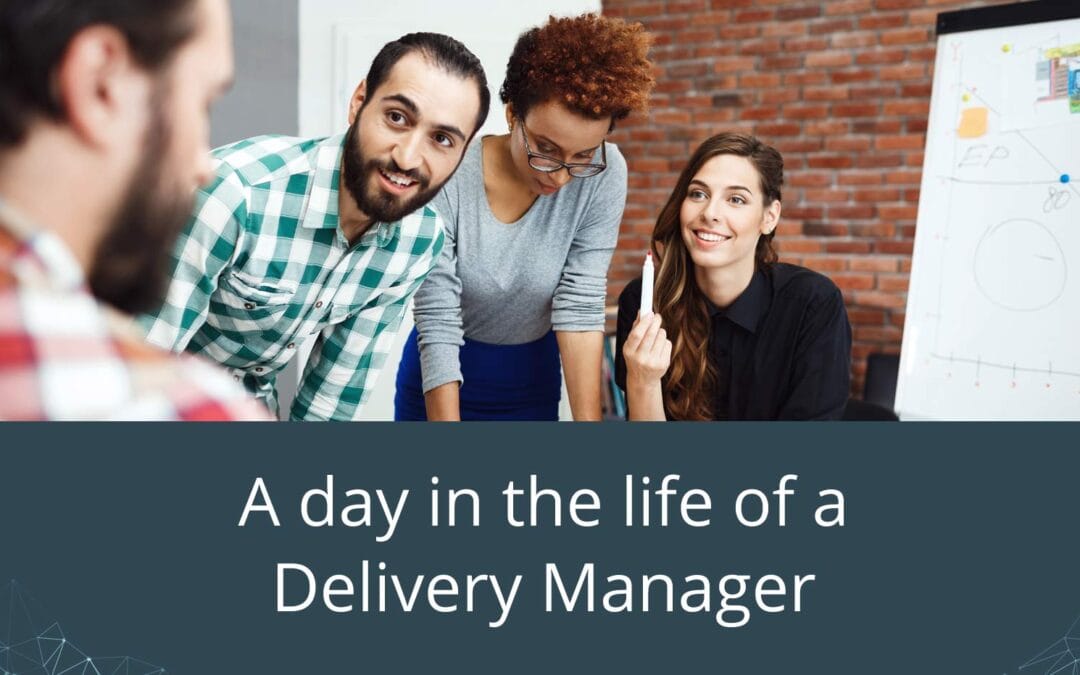
A Delivery Manager in a company oversees the product delivery process for clients and developers.
A Delivery Manager’s essential duties are ensuring accuracy and timeliness, coordinating the developers, managing budgets and delivery schedules, and, most importantly, nurturing client relationships.
Mariana Becerra, Delivery Manager at The CRM Team, shares her day-to-day experience as a Delivery Manager.
Mariana, how would you describe the role of a Delivery Manager?

A delivery manager wears many hats. A brief description would be that we ensure that a project is delivered on time, on budget and that the customer is happy. As delivery managers, we ensure the project is successfully completed within the prescribed scope, timeline, and cost. We also take care of the customer relationship and ensure that the customer has visibility of the project’s progress at all times.
Please take us through a day in the life of a delivery manager. What are your typical day-to-day activities?
It depends on what phase the project is at.
Usually, the first thing I like to get out of the way is our stand-ups, which are our daily meetings with the team. That includes the delivery team, for example, our developers and solutions architects. These meetings are usually 15 minutes, in which the team shares where they are with their user stories or current tasks. The team shares what they did the previous day and what they will be doing today. The team can mention the blockers they have (which are impediments to their tasks) and if there is anything I can assist with, like getting information from the customer. I note all that information down, communicate with the customer, and set up meetings if required.
In these meetings, my job is to ensure that the team is on track and, if not, find out why and take proactive steps to correct this.
After receiving updates from the team, I will get to the practical details of the project. For example, if we just started a new project, I ensure that I have the relevant documentation signed by the customer. This includes an agreement on the scope we agreed to deliver.
Then I would proceed to look at the current costs of the project. Thus, I check the budget and, if necessary, take steps to mitigate over-usage of our budget.
I also check the timelines. Are we on track? Are we delivering what we agreed on? If necessary, I communicate with the customer and adjust the timeline.
We do have other activities as well. For instance, towards the end of the project, we sit with the team in a retrospective meeting. We discuss what worked well, what did not, and what we can do to improve next time.
Additionally, we have weekly updates with the customer. We meet with the customer and review what we have achieved during the week. We do a demo for them where we demonstrate on the system what we have done, and we use that opportunity to get feedback from them.
What do you enjoy about the Delivery Manager’s day-to-day work?
My favourite part of my job is when we have customer demos at the end of the project. Listening to positive feedback from customers during those demos is very satisfying. It is gratifying to hear positive final feedback from the customer. Also, hearing that the end users can use the system effectively at the end of the project is one of my most rewarding moments.
What do you wish you had known before becoming a Delivery Manager?
As a Delivery Manager, you must ensure the customer is happy. You also have to ensure that your team understands what they need to deliver by translating it in a way that makes sense to them. Mainly because what happens sometimes is that the team is very technical, and the customer is not. So, I have to ensure that my team understands what must be done and how it must be done.
I learn so much every day! Every customer is different. Their requirements are usually unique because they have specific business processes. So, we must adapt our product to ensure they can use it effectively – and in this process, there are many learnings.
If you want to be a good Delivery Manager, you must make sure that you have good interpersonal and communication skills. Be able to oversee all processes ensuring that nothing is “falling off the edge”.
Mariana Becerra
I am an enthusiastic Delivery Manager skilled in Agile project management, marketing planning, client relationship management, and daily tasks and meetings orchestration. My experience has developed my strengths as a leader, a strategic thinker, and a project manager.
I am a focused person with a particular drive to get things done. I am a graduate with a Bachelor of Commerce Honours in Business Management. I am also a Certified Scrum Master and Product Owner. I always look forward to developing myself further with focused courses that will enhance my career growth.
I enjoy technology and the dynamics of the work environment. I aim to leverage my leadership strengths while keeping up my enthusiasm for technology.
The page you requested could not be found. Try refining your search, or use the navigation above to locate the post.
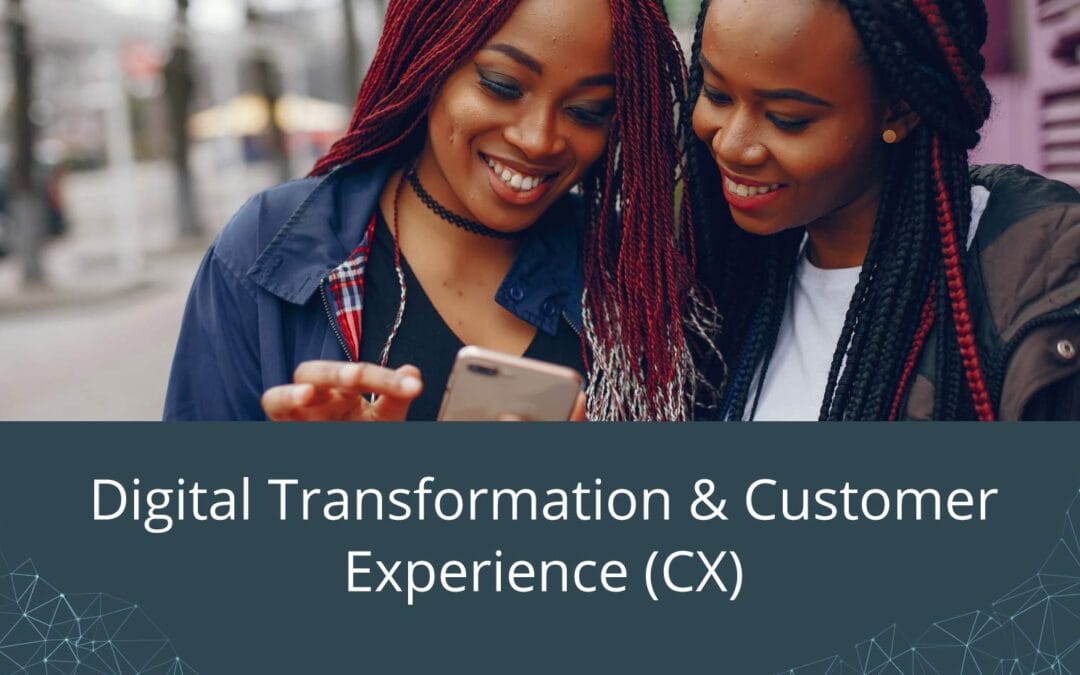
Background
In today’s customer-led business world, most businesses are not facing digital disruption –
they’ve already been disrupted by Industry 4.0. In fact, digital tech and customer centricity is not a differentiator anymore, it’s the new foot-in-the-door of survival. In 2022 a massive 28% of consumers are weekly buying groceries online[1].
Bridging the offline-online divide, consumers are walking around with super-computers in their hands (cell phones). With 24% of consumers opening apps when in a store, and 18% taking photos, digital convenience and efficiency has fast become a basic human need[2].
Blinded by their Industry 4.0 Digital Strategy though, many companies are simultaneously losing the human touch, and it’s now Industry 5.0’s challenge to make Industry 4.0 feel more human. Why? Because there’s definitely “The need for Digital” – yet digital must be balanced with “The want for Human” too. But not all businesses are purely on-line. Business-to-business (B2B) sectors are in need of more human than digital—so it’s important to get the balance right for your particular business model.
Would it help if you knew your customers’ deep personal preferences?
To launch an improved customer experience, big-data can be scraped and analysed. In the hope that they will wipe-out your existing business model, this is what new competitors are currently focusing on. As Google Chrome phases out cookies in 2024, collecting first-party data isn’t a maybe, it’s a must to personalise the customer journey.
Using data analytics, businesses can pivot when they have a detailed 3600 view of their customers’ recent behaviour. This is especially true when the artificial intelligence (AI) can predict a customer’s next move or request. In this way, customers and companies co-create products and improve touch-points, raising the barrier-to-entry for disruptive new competitors.
Will you be relevant in 3-years from now?
The biggest fear for most CEOs, is remaining relevant in the near future (this includes price relevance). Thankfully, most CEOs also agree that their competitive advantage—or way to customer loyalty—will be based on superior customer experience (CX).
Let’s look at six tried and proven steps to embrace Digital Transformation, whilst improving CX[3].
[1] Hootsuite, 2022
[2] Gartner, 2022
[3] Hernandez, J. and Clamp, A. (2017). KPMG. Customer First. How to create a customer centric business and compete in the digital age.

The first of the 6-steps are for the EXCO to describe to themselves, what the end Digital Transformation goal should look like.
1. 360° Customer Profile: The goal is a single customer view, allowing you to treat every customer differently. The key is to consolidate all the rich customer data in one single database or place.
2. Merging Data Ecosystems: Social Media data, browsing data, with internal financial data needs to merge. Then get decision engines to model and predict behaviour.
3. Focus on Customer’s Core Issues: Use customer insights—especially their biggest issues—to lead focus-groups, and innovate better solutions, before your competitors do.
4. Support Products with Digital Services: Because more customers are discovering the efficiencies and cost-savings of online, digital is the low-hanging-fruit. Globally, 58% of those aged between 16-64 buy something online weekly; and in South Africa it’s still very impressive at 47%[1]. Entice customers to interact with you on a daily basis, allowing you to collect first-party data, helping you improve on the customer journey.
5. A new Evolved Business Model: The Apple iPhone was successful mainly due to the App Store platform of mind-blowing apps. This “platform” was successful because thousands of app developers designed complimentary products to load onto the iPhone. This is where your ecosystem of “partners” collaborates to deliver your overall value proposition.
[1] Hootsuite, 2022

To create a competitive advantage, the fusion-team of leaders (digital & marketing experts) must first define their vision of what the CX journey must look like, and roughly how CX will be measured. A brainstorm is required to discuss how leading, digital-enabled journeys can be applied to the business. The five stages of Design Thinking would have been used to guide the CX process (i.e. Empathise, Design, Ideate, Prototype, Test). A guiding principle is to first get the basics right at every touchpoint, and then only think about the “delight” factors[1]. An overwhelming majority of CEOs agree that the way to customer loyalty will be based on superior digital CX.
1. Define Vision: Unifying vision in line with brand values and company culture. Make sure your company is capable of delivering.
2. Customer Research (voice): Combined operational, social media data, and feedback from (i.e. NPS, CES comments).
3. Balance Return-on Investment: Decide where more will need to be spent and where to cut back on costs. CX is not all about growing sales, but also reducing costs. Because “Consumers punish bad service more readily than they reward delightful service[2].”, focus on getting the basics right.
4. Design Thinking for best CX: Stanford Business School’s Design Thinking Model is critical. The 5-steps are: Empathise (research), Design, Ideate, Prototype, Test.
5. Execute change: Changing the customer journey normally requires a change in business structure (i.e. people structure, operating models, digital processes). This often requires “silo busting” – making sure that all departments work together “digitally” to serve the customer journey.
[1] Dixon, M., Freeman, K. and Toman, N. (2010). STOP Trying to Delight Your Customers, Harvard Business Review, July-August.
[2] Dixon, M., Freeman, K. and Toman, N. (2010:116). STOP Trying to Delight Your Customers, Harvard Business Review, July-August.

Digitising Sales, Marketing & Service (front office’s operations) must operate as an integrated-seamless whole. This is especially important as advertising could have created a “service anticipation gap’. The front office —in real time —must have a view of the end-to-end supply chain, and keep the customer informed of on-time-delivery-in-full (OTDIF). Great selling is service, and vice versa. For instance, if the service is excellent, the customer may easily purchase more. What’s more, the majority of a salesperson’s time today should be spent on other activities (OTDIF); and a service staff’s time may be spent on selling.

Between 1998 to 2019 Apple expanded from 8 to 17 different business units (SBUs), fragmenting the organisation and creating silos. So Apple’s leaders had to become cross-functional experts, and were forced to deliberately collaborate with other SBUs. They had to be deeply knowledgeable about all SBUs[1]. In short, the EXCO had to be a fusion-team of experts to digitally connect the entire enterprise.
Remember, the main objective of digital transformation is to make more sales through customer centricity. The key is to design a digital system that supports both the employee and the customer. It’s generally accepted that an “outside-in” process is key, where the customer creates the journey. However, the “inside-out” approach is arguably more important today, because this inside, end-to-end value chain, needs to be innovated and supported by employees too. The entire value chain must be connected from back-office (off-stage) to the front-office (on-stage)—all connected using data flow. The Aberdeen Research Group has observed a 270% faster annual growth rate for those companies who have digitally connected a seamless value chain[2]. The advantages are seamless service, responsiveness, OTDIF, agility, efficiency and consistency. Aberdeen have also cited that 269% higher chance of retention vs. companies with a weak omni-channel strategy. What’s more, the customer lifetime value (CLV) of someone who buys both in-store and online is 30% higher.
[1] Podolny, J. M., & Hansen, M. T. (2020). How Apple is organized for innovation. Harvard Business Review, 98(6), 86-95.
[2] KPMG, 2007:23
[3] Haederle, M. (2010). The Best Fiscal Stimulus: Trust. Miller-McCune.

The use of predictive analytics is doubling every year, and has become the top area of investment[1]. To improve sales and retention, the CX must be data fed with customer data and market (i.e. competitor) data. Data-driven insights, using complex algorithms embedded at touch-points, will help predict a customer’s next request.
[1] KPMG, 2017:28

To improve your business model, the strong forces of technology cannot be ignored anymore. Delivering Digital Transformation has become easier due to IoT, broad bandwidth, the metaverse, cloud computing, social media, the ability to analyse data in real-time and mobile technology. In South Africa, over 80% of Internet is accessed with a cell phone and over 75% of banking is done on a mobile device. To deliver end-to-end digital transformation, consider these steps.
Don’t forget that humans are 80% emotional and only 20% logical[1]. Which means that you need to empathetically engage all their senses. Secondly, the human brain is more ‘social’ than any other species[2], so the company that thrives at Digital Transformation will connect and socialise better than their rivals. Lastly, the missing link for today’s CX, are highly trained staff, who are not just empathetic, but solve problems fast[3].
[1] Damasio, A. (1994). Descartes’ Error. Emotion, Reason and the Human Brain. Putnam.
[2] Gilbert, D.T. (2012). The Science behind the smile. Harvard Business Review. 90, 1/2.
[3] Dixon, M., Ponomareff, L., Turner, S. and DeLisi, R. (2017). Kick-Ass Customer Service. Harvard Business Review. Vol. 95, Issue No.1.
Ian Rheeder
Ian draws on the practical knowledge of 17-years of training marketing teams, was the founding member of the SA Marketing Association, founding member of CXSA, and was The Past President of the Professional Speakers Association. Before starting his own marketing consultancy in 2005, Ian was the marketing & sales director of the global zipper giant, YKK. Before that he gained his experience consulting to over 30 international brands.
The page you requested could not be found. Try refining your search, or use the navigation above to locate the post.

Wave 2 of Dynamics 365 and Microsoft Power Platform 2022 was released in October. There are hundreds of enhancements, capabilities, and features included in this second release wave of the year.
This release wave is a big one, and it comes at a critical time for many organizations. In spite of challenges or headwinds, we’re committed to continuously innovating and helping you grow your business. With Dynamics 365 and Microsoft Power Platform, you can enhance your technology ecosystem by providing insight into every area of your business, empowering your employees to focus on what they do best, and enabling your teams to deliver world-class experiences to your customers.
Do more with less to empower growth and agility
With a single, cohesive business cloud, 2022 release wave 2 unlocks durable growth.
Sales | How Teleperformance boosts its sellers’ effectiveness with Viva Sales
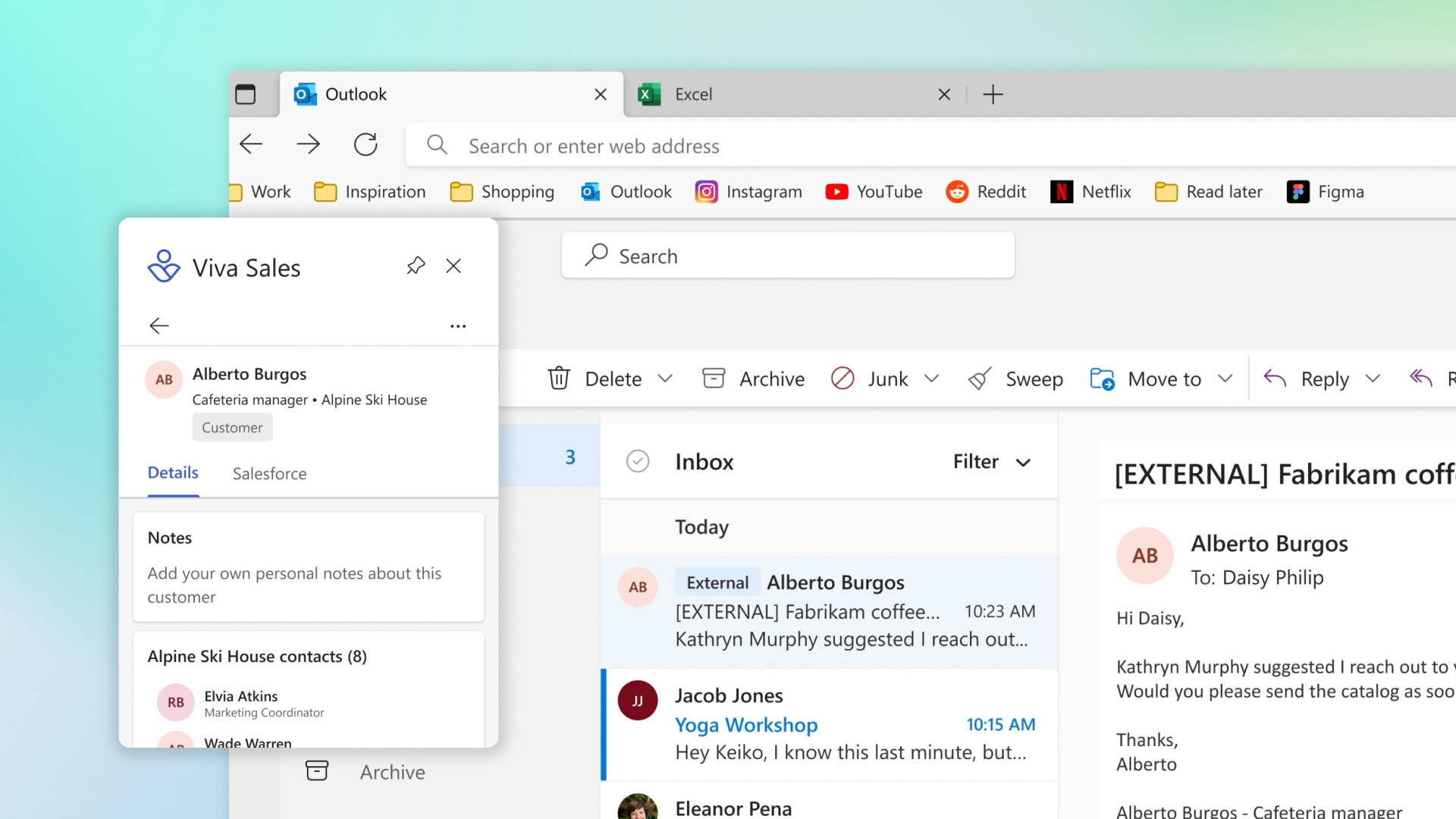
Recently, Microsoft announced Microsoft Viva Sales, a seller experience that integrates with Microsoft 365 applications and Microsoft Teams. Your sales team can now collect, access, and register customer data in any customer relationship management system, such as Salesforce and Dynamics 365. Discover how Teleperformance, a global business process outsourcing and customer experience service provider, eliminated manual data entry. In this way, sellers could spend more time selling.
Sales and marketing | Financial services provider Eika orchestrates personalized campaigns to fund sustainable businesses across Norway
One of the largest financial service providers in Norway, Eika, is an alliance of 53 independent banks supporting two Norwegian dialects. As part of its commitment to sustainability, it has launched an initiative to provide loans to businesses installing sustainable solutions.
Customer service | Baylor Scott & White brings a new level of patient experience to healthcare
Today, healthcare organizations are evaluated on how well they deliver preventative services and improve the overall health of their communities. Through personalized omnichannel services, they are tackling this challenge. As the largest not-for-profit healthcare system in Texas, Baylor Scott & White is among the largest in the country in terms of patient experience.
Using the Microsoft Digital Contact Center Platform, Baylor Scott & White is streamlining patient communications through a combination of personalized self-service and an AI-driven contact center. Explore how the enhanced features in release wave 2 for Microsoft Dynamics 365 Customer Service can support patient relations teams through enhancements and omnichannel engagement.

Innovation across Dynamics 365 Field Service, Mixed Reality, and Connected Spaces
Due to a shortage of skilled workers and the shift from a cost center to a revenue generator, field service operations are changing rapidly. Moreover, the industrial metaverse allows for new scenarios for mixed and augmented reality, as well as monitoring and optimizing space in retail stores and factory floors.
Operations | Global IT services provider Columbus Global elevates consulting experiences with AI, streamlined processes, and analytics
In reimagining their businesses, Columbus Global acts as a digital trusted advisor for organizations around the world. It offers subscription consultancy services as one of its many services.
Supply chain | Improve inventory visibility, and planning and agility of your warehouses
In recent years, supply chain disruptions have exposed supplier vulnerabilities and fragilities across industries and countries. With Microsoft Dynamics 365 Supply Chain Management, organizations can exceed customer expectations, mitigate financial risks, and deliver on time.
Scale low-code across the organization to do more with less
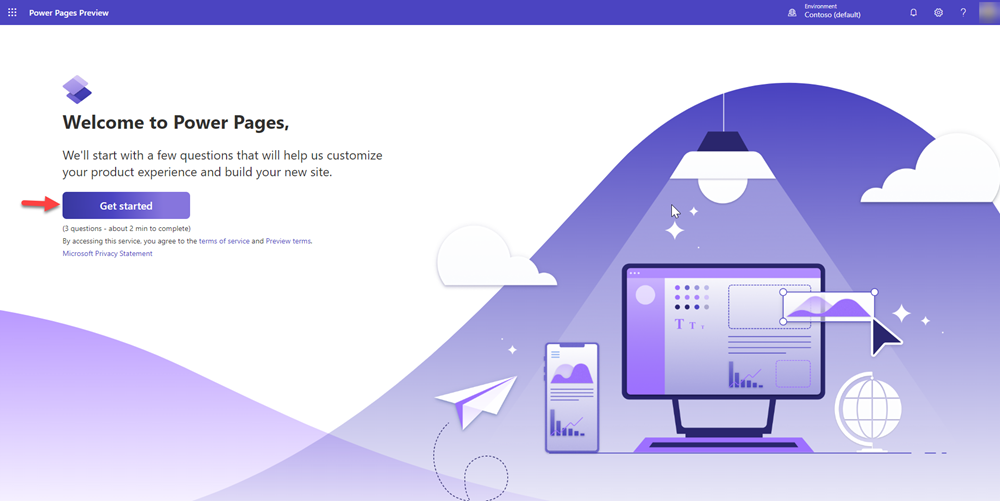
Microsoft Power Platform features a comprehensive set of low-code development tools that will enable users to quickly build and transform solutions, enabling them to transform their businesses. Introducing Microsoft Power Pages and Managed Environments. Both are generally available now! Furthermore, you can create a flow in seconds using the new AI copilot in Microsoft Power Automate by simply describing what you want to automate.
The page you requested could not be found. Try refining your search, or use the navigation above to locate the post.

Microsoft Envision South Africa 2022 was no ordinary event! It was a terrific opportunity for Microsoft Partners and customers to get a first look at new features, enhancements, and innovations to transform your business into a more agile, customer-centric organisations specific to all industries.
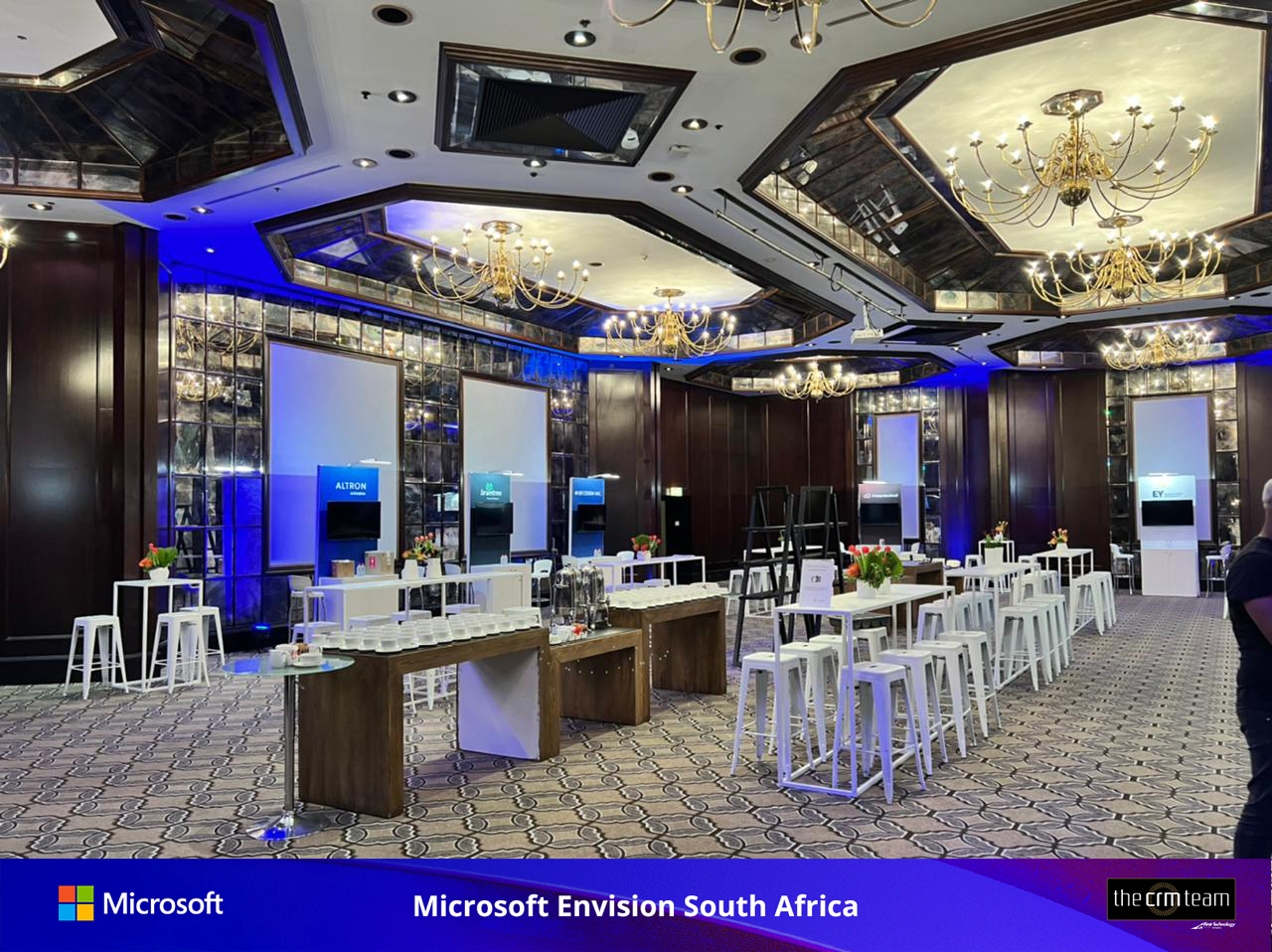
Upon arrival guests were given a warm welcome with arrival refreshments and a moment to network with various attendees.
The CRM Team was proudly represented by Wynand Roos (Johannesburg) and Rynhardt Grobler (Cape Town) who were part of the panel at the industry breakout session: Retail – Reimagine Customer-Driven Retail.
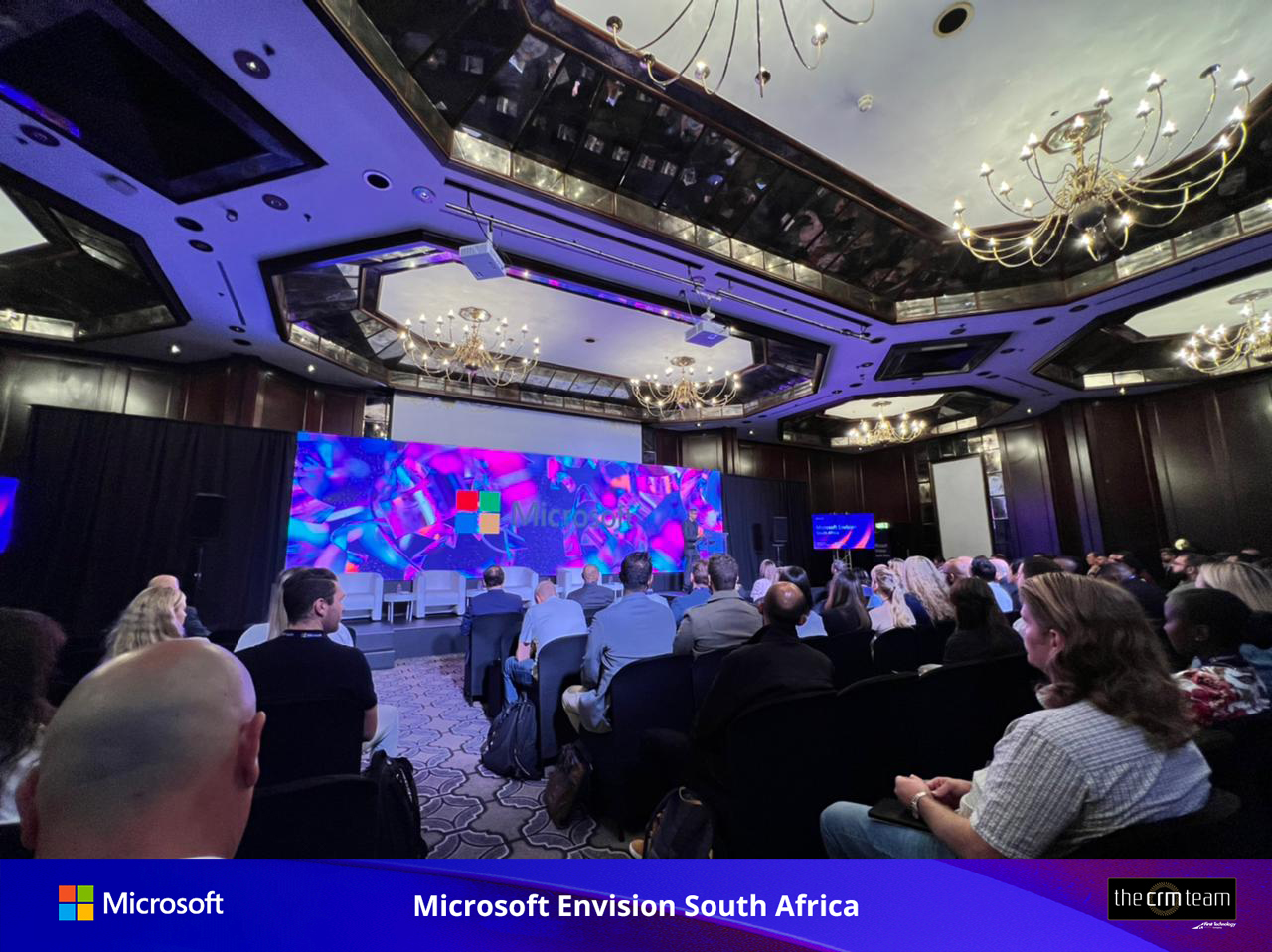
To kick off the session, Lidia Ngengebula – the Retail, Transportation & Logistics Director at Microsoft South Africa welcomed everyone. “I just want to firstly say thank you so much for the support that you have given us as the Microsoft team. I must tell you we have a lot of fun working with you as our customers and you as our partners. There has never been a more exciting time than today to be in retail right because speed of retail just continues keep accelerating retailers are looking for change, they are looking for ways to monetize the digital economy.”
Lolo Scrumpton, the Retail Executive at Microsoft South Africa, introduced the panelists which included, Wynand Roos – Managing Director of The CRM Team, Richard Swart – Chief Operating Officer at Ignition Group and Rami Sultan Microsoft UAE Government Director.
Lolo Scrumpton asked Wynand Roos, how retailers can get a centralised 360-degree view of who their customers are, where their customers purchase, how often they purchase and what they buy.

In which Wynand responded, “I’d like to start by saying that data and capturing data is not a substitute to strategy and to give a simple example, I recently had an urge to purchase some equipment and went on to Google to find the equipment that I was looking for and I found two retailers that sold what I was looking for. One retailer site stated that they were out of stock and asked for me to provide my e-mail address to notify me when new stock arrives. The other retailer side that they were also out of stock on the item that I was looking for. So, I sent an email to their email address asking to be notified when there will be stock again. Two days later I had no response, so I followed up in which they responded, and they said that they placed an order, but they do not know when it is going to arrive. I followed up with them week after week.
I received a notification from the first retailer to say that they received new stock. So, the next morning before work I popped into the store, and they said they were just about to phone me. They went on to say that they had received stock the previous evening and notified me and that was a wonderful experience for me even though I had to wait for the stock. With the other retailer I kept on following up and I had to initiate that conversation.
There is no substitute for strategy, so how do we make this real for customers? First, we implement a customer data platform in Microsoft world that is known as Customer Insights. Our customer insights allow us to connect to all different data and we must consolidate that data and go through a process that matches and merges that data in order to get a single view of a customer. Not just a single view of the attributes, but also a single view of their behaviour, what their customer lifetime value is, their loyalty points, the money that they spend online versus spend in store. That gives us a consolidated understanding of who those customers are, so once we have that understanding we then let AI (Artificial Intelligence) play its part and AI determines insights on top of that data.”
After the industry breakout sessions, all attendees were treated to a lovely lunch and dessert which everyone seemingly enjoyed.
After the delicious lunch, we all gathered to listen to Michael Jordaan who was the guest speaker at Microsoft Envision 2022.
Michael Jordaan is known as a legend in South African entrepreneurship, ex-CEO of FNB (First National Bank) and the founder of Bank Zero.
Jordaan took us on a journey of how technology and the business landscape has evolved over the past couple of years. He took us back to the 2002 Windows XP, the first consumer version of Windows, came out and all the incredible features it had. He went on to say that everyone thought it was right and no one thought it would evolve to the way that it has today.
Overall, Microsoft Envision South Africa 2022 was a treat to all those who attended. The different sessions left everyone excited to see what more Microsoft is going to do in the next year.
The page you requested could not be found. Try refining your search, or use the navigation above to locate the post.

Dynamics 365 and Power Platform are now generally available in Microsoft’s enterprise-grade data centres in Johannesburg and Cape Town. Microsoft’s move further reinforces its commitment to investing in South Africa and increasing cloud capabilities. Through innovation, agility, and resilience, this will enable organisations in the public and private sectors to accelerate growth.
The multiple hyperscale data centre locations within South Africa now provide Azure, Microsoft 365, Dynamics 365, and Power Platform online services to support organisations as they reimagine ways of doing business to adapt to the rapid pace of change in today’s world.
“Leaders in organisations across industries and sectors are focused on finding ways to improve the flow of innovation and knowledge across the business in order to respond to market changes, customer needs and specific business and industry challenges at speed. They need digital solutions that break existing silos between data sources, people, processes, and insights,” says Karin Jones, Director Business Applications GTM at Microsoft South Africa.
Through South Africa’s expanding data centres footprint and an ongoing investment in Microsoft Business Applications, commercial cloud services are becoming available and extending. This provides leaders with the portfolio of digital solutions they need to reduce costs, improve efficiency, and ensure business continuity and disaster recovery.
Microsoft Cloud provides a flexible platform, productivity, business applications, as well as intelligent software for rapidly storing, analysing, and acting on data at scale and securely. Additionally, it makes it possible for people to connect with business resources – data, documents, databases, networks, and systems – wherever they are, at any time. Through this, collaboration, sharing, productivity, and learning are enhanced.

By delivering these cloud services from South Africa, local companies can move their businesses securely and reliably to the cloud while maintaining data residency and sovereignty. As a result, they will be able to comply with regulatory requirements.
Combined with the launch of Azure Availability Zones in 2021, they are further supported by the low latency, resiliency and high availability of business-critical applications and data that comes with in-region data centres – guaranteeing uptime and continuous access to critical data, applications, and workloads.
“Organisations in South Africa are increasingly recognising the value of the cloud, driving continued growth and adoption,” says Jones. The IDC State of Cybersecurity in South Africa report showed that nearly half (48 percent) of organisations in the country are using cloud as a platform and driver of digital innovation, and 61 percent of South African organisations said they were spending more on cloud solutions in 2021 than 2020. South Africa’s public cloud services market is expected to grow at a compound annual growth rate (CAGR) of 24.5% through 2025, up from $1.6 billion in 2021.
New services continue to open up opportunities. Integrating cloud-based services and products with industry-specific clouds – such as retail, manufacturing, healthcare, and financial services – can help extend the value and benefits of the cloud even further. Microsoft’s cloud portfolio includes these capabilities, solutions, and tools to help organisations transform – driven by Microsoft Business Applications and the capabilities of Dynamics 365 and Power Platform.
In this era of connected operations, Microsoft Business Applications provide organisations with integrated, purpose-built, adaptable business solutions that allow them to manage specific business functions, foster customer relationships, and quickly create low-code solutions.
On top of the Power Platform layer is Dynamics 365, a pre-built set of applications that helps companies optimise operations, empower cross-functional innovation, and improve customer engagement. With these apps, companies can quickly onboard users, deploy them quickly, customise them for their own workflows and processes, and provide ready-made business scenarios for marketing, sales, commerce, supply chain, and customer service.
Anyone in the organisation, from business users to professional developers, can build, test, and deliver customised solutions tailored to meet their unique needs in production with Power Platform, a low-code/no-code solution. IT resources are scarce, so the solution requires minimal coding. “This means businesses are able to adapt and respond to rapid developments in real time,” says Jones.
“Microsoft’s ongoing investment in local infrastructure and the expansion of cloud services in South Africa is helping build the capability and improve operational efficiencies of organisations of all sizes across sectors. This will accelerate digital innovation in the country by enabling businesses to become more agile, resilient, and competitive. This in turn will help unlock broader economic growth for South Africa,” says Jones
The page you requested could not be found. Try refining your search, or use the navigation above to locate the post.
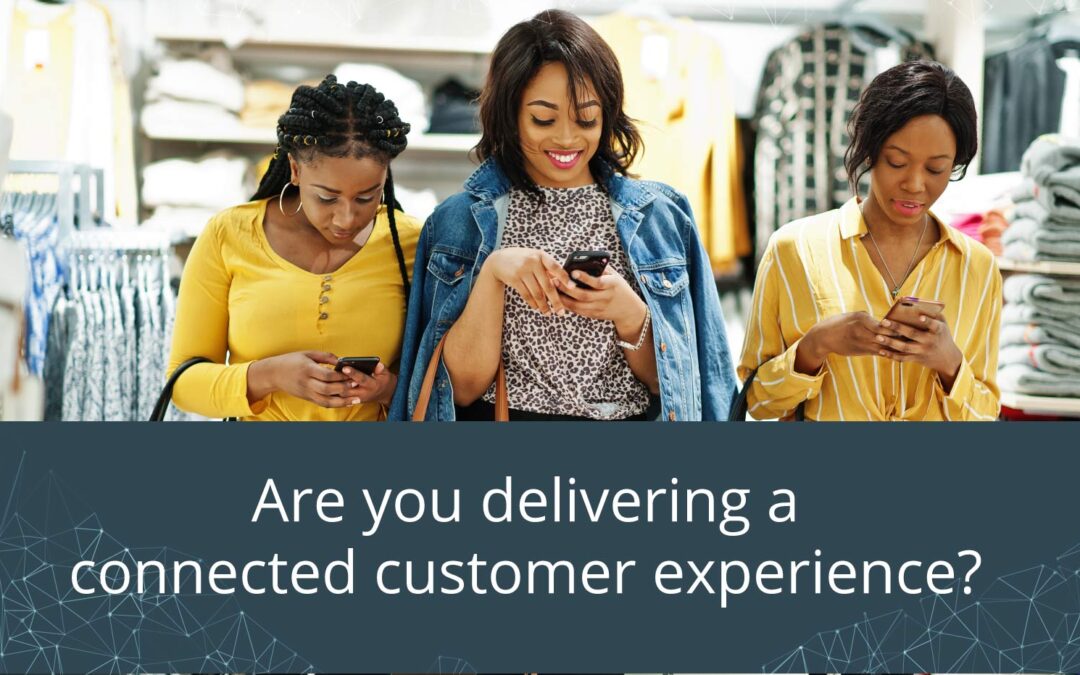
The customer is the centre of every successful business, and digital technology allows you to interact with them in more ways than ever before. It is also important to remember that customers expect more as well. A lot more.
Create a bad experience, and you’re more likely to lose that customer. Improve your customer’s experience and get more business.
The question is, how do you create better customer experiences that will encourage new business and loyalty from your customers?
New business opportunities are being created as a result of seismic shifts in the global business landscape. Customer-experience-focused executives understand that a linear process based on megaphone messaging is no longer sufficient to connect with customers. Hyper-personalised, orchestrated journeys, which elevate customer experiences, are the future of marketing. Customer-driven journeys that deliver customer-centred messages in real-time will succeed.
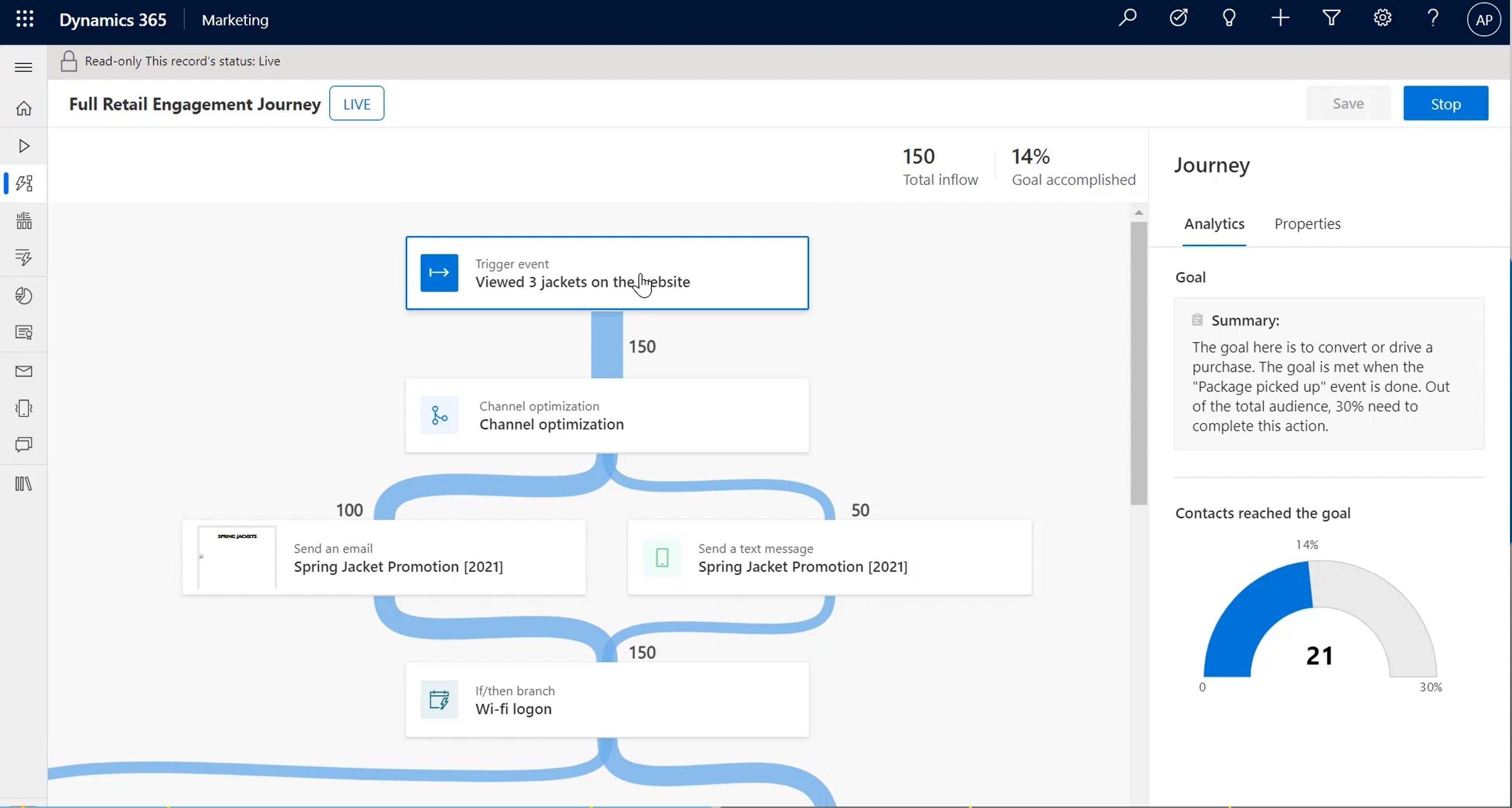
It is essential that customers have the ability to construct their own paths to purchase decisions in order for personalisation to succeed. A better understanding of customer needs will enable organisations to develop hyper-personalised messages that are more tailored and relevant. Further, there needs to be a greater focus on nurturing and retaining long-term, high-value customers.
Engage customers in real-time with Microsoft Dynamics 365 Marketing. By applying these technologies, organizations have the ability to establish close relationships with each of their customers, and they can communicate with them in the channels they prefer, with a great deal of assistance from artificial intelligence.
In order to provide personalised service to customers, organisations should consider the range of experiences their customers have with them. Dynamics 365 Marketing uses AI to help determine which channel—email, text, push notification—a customer will be most receptive to. Business users of this application can also draw on a new AI-driven content library to help select the content elements that will resonate better with the customer. Focus on your best opportunities.
Dynamics 365 Marketing supports:
All of which help you win customers and earn loyalty.
Dynamics 365 Marketing provides real-time customer journey orchestration to help organisations understand, orchestrate, and engage their customers better across marketing, sales, commerce, and service. Dynamics 365 Marketing has a unique, direct connection to data and insights from Dynamics 365 Customer Insights and can use its continuously updating, multi-data source segments dynamically.
Marketing technology requires substantial amounts of data to understand, orchestrate, and engage customers at scale and in real-time. The more data available, the higher the likelihood of intervening at the right time, in the right way, and prompting the next best action. The number of touchpoints per customer per journey is increasing. Capturing data across those touchpoints and making sure it is fed into the next customer interaction using advanced AI is vital.
Customer journeys orchestrated by Dynamics 365 Marketing are based on real-time interactions across email, mobile, social media, custom channels, and in-person touchpoints. They reach customers in a personal way, encouraging greater understanding between organisations and customers to win customer confidence and loyalty.
The next leap in customer journey effectiveness is the introduction of real-time responses to customer-triggered events. AI helps guide a journey to refine the message, offer, and delivery—and assists in conducting dynamic experimentation to determine the content that resonates best—all with unprecedented speed. When a company can rapidly adjust to triggering events that indicate a change in customer focus or signal a new activity, customers then know that they are valued.
Activating digital selling and marketing makes it easier to collect data for sophisticated analytics. As part of your analytics process, ensure that your customer journey orchestration software offers a set of built-in analytics dashboards and cross-journey insights to improve journey effectiveness and achieve your business goals. In real-time, monitor your customer journeys and channel KPIs and guide evaluating performance metrics for messages and channels. Is a social channel effective for a specific interaction? Thoughtfully designed analytics capabilities can provide the answer.
Organisations must deliver personalised messages that customers can identify with explicitly or implicitly—the right message, at the right time, using the channel that customer prefers—to show that they understand and care about their customers. Strong, sustained growth is a constant requirement for every business. But in today’s world of uncertainties, organisations must not only reach new customers; they must strengthen existing relationships. Demonstrating a commitment to customers is now centre stage in forward-thinking organisations. Customer-led, real-time orchestrated customer journeys are the way to help existing customers progress from one-time engagements to repeat customers to fans of the company.
Subscribe to our newsletter
The page you requested could not be found. Try refining your search, or use the navigation above to locate the post.
Brands are built on the success of their customer service. Instead of it being a responsive measure to deal with complaints, companies are learning to take personalised, empathetic customer care right to the heart of everything they do. This comes at the right time because customer expectations for hyper-personalised service from businesses continue to increase.
Winning the trust and loyalty of customers depends on how well businesses across every industry utilise their customer data and empower their teams to make every digital and physical engagement matter.
We are here to help you explore the art of customer service and engagement. We understand the importance of creating a more unified, intelligent data ecosystem to spark innovation across customer service teams. As your customers’ needs evolve, we can partner with you to turn every customer interaction into an opportunity to delight.
Create outstanding experiences in the moments that matter
Gaining a customer for life happens when organisations make every interaction matter. Whether that is reacting efficiently to a customer query, complaint, or need, or proactively taking steps to offer a new product or service. The key is to personalise the experience. Better understand your customers to create personalised journeys and lasting brand loyalty.
Demand for this bespoke treatment has increased. Today’s expectations are for hyper-personalisation across all channels of engagement between the customer and organisation. This move towards an omnichannel model has increased the scope in which companies can reach customers in new ways.
Where should a business start in this vast landscape of customer touchpoints to craft a personalisation strategy that leads to customer delight and long-term loyalty? Let us examine this now.
Understand your customers
It takes 12 positive customer experiences to negate the poor impression left behind from a single unpleasant experience. There is no margin for error when it comes to delivering customer care. A crowded marketplace of competitors, coupled with the number of digital channels open to consumers to voice their opinions and experiences with brands (both positive and negative) means that a single missed opportunity to delight a customer can have a significant impact on your brand reputation.
Employees use data to personalise the experience of the customer. The goal is to make every customer feel that the service they are receiving is 100 percent customised to them. However, this is not always achievable due to time and budget constraints.
Instead, a crucial step is to analyse your own data estate. From your customer relationship management (CRM) system to social channels and customer engagement (CE) platforms. Integrating this data for analysis with a Customer Data Platform (CDP) can help to surface rich insight by creating a single customer view that generates individualised personas.
Predicting customer behaviours using these data-driven personas can allow businesses to segment their customers more effectively in order to better align customer treatment strategies.
Embrace omnichannel experiences
The ways that customers engage with your business continue to expand. This offers a huge opportunity to benefit from the increased customer data flowing into your business.
Unifying this data into a consolidated customer profile that can carry across any customer touchpoint is fundamental to business personalisation efforts. As a result, conversations are more targeted and relevant. Additionally, customer service agents gain a greater understanding of the events leading up to a customer interaction if this unified omnichannel profile is accessible and properly collated.
Make the most of innovation to personalise
AI adoption for customer service has been widespread. However, its full potential to drive personalisation lies beyond the simple Q&A functionality that has become a popular standard.
Conversational AI’s ability to learn about customer interests and preferences, and then re-engage with personalised product recommendations at key stages of the buying process has become a key personalisation capability for companies to adopt.
The more simplistic virtual assistant functionality also has its place. For example, where customers need to action more simple tasks, such as getting an update on an order status. These systems complement the more complex analytical use cases. AI should be thought of as augmenting existing processes that extend the consistency of your company identity.
Personalise – but do not overdo it
It can be a fine line to tread between providing a customer with bespoke service and appearing to be compromising their privacy. Location-based personalisation techniques such as offers/greetings sent to apps on consumers’ phones when they pass by a store can come off as invasive.
At the same time, be as transparent as possible when it comes to informing consumers about how and why their data is used. Regulations like GDPR (General Data Protection Regulation) have helped created industry standards for this. However, companies can always look to bolster trust with their own in-house messaging and policy statements.
Do not lose the human touch
The capabilities of AI and data analytics are crucial to developing the insights necessary for understanding customers, building profiles, and offering bespoke offers and interactions.
However, businesses should not over-rely on these automated capabilities. The moments that matter are often those of one-on-one human connection. Take time to establish a comprehensive culture of communication that is agile to change. This is essential to empower your customer service agents with the empathetic skills they need to help find resolutions for customers that are personal and valued.
Personalise your customer’s experiences
The ways that personalisation will be felt across customer service will continue to evolve. Either from ongoing trends of increasing digital touchpoints or unexpected factors. Being agile to change is key.
We work with customers across industries to implement modular solutions that fit into existing customer service ecosystems to unlock new personalisation capabilities.

Why use Dynamics 365?
Align sales and marketing
Sales and marketing components can work together to help you better understand a customer’s needs and address those needs through the right marketing channels. Some of the ways these two functions can work together to help you are:
Increase sales productivity
The right CRM software allows your sales team to find, prioritise the right leads, and deliver insights on when and where your sales teams engage with customers. These systems can work together to:
Build better customer relationships
Bringing customer service and sales together helps you determine and predict your customers’ preferences and makes it easier for your buyers to interact and trust doing business with you. When these two solutions combine, they can help you:
Get an end-to-end view of your customers
Turn data into insights to keep your current customers happy or connect with new prospects. Other benefits include the ability to:
Use a common platform
CRM takes disparate customer relationship software functions and brings them all together for seamless management. Other common platform benefits are:
Get visibility into customers
The more you know your customer’s preferences, the more likely you are to gain their trust and, eventually, their loyalty. Giving your team visibility into what makes customers tick will give you the inside edge over the competition. Put the customer at the centre of your business with CRM software that helps you:
Offer customer portals
Online self-service portals put customers in control of their data, help them learn about product information, and let them track account activity. Companies have grown to realise that as vital as it is to provide their staff with an online company portal, offering it to clients makes it easier to engage with them as well. Here are three other reasons why customer portals for clients make sense:
Marketing: Improve your customers’ journey
Generate multichannel marketing campaigns, nurture sales-ready leads, and align your sales and marketing teams with planning and tracking tools that integrate with your existing apps and services.
Subscribe to our newsletter
The page you requested could not be found. Try refining your search, or use the navigation above to locate the post.
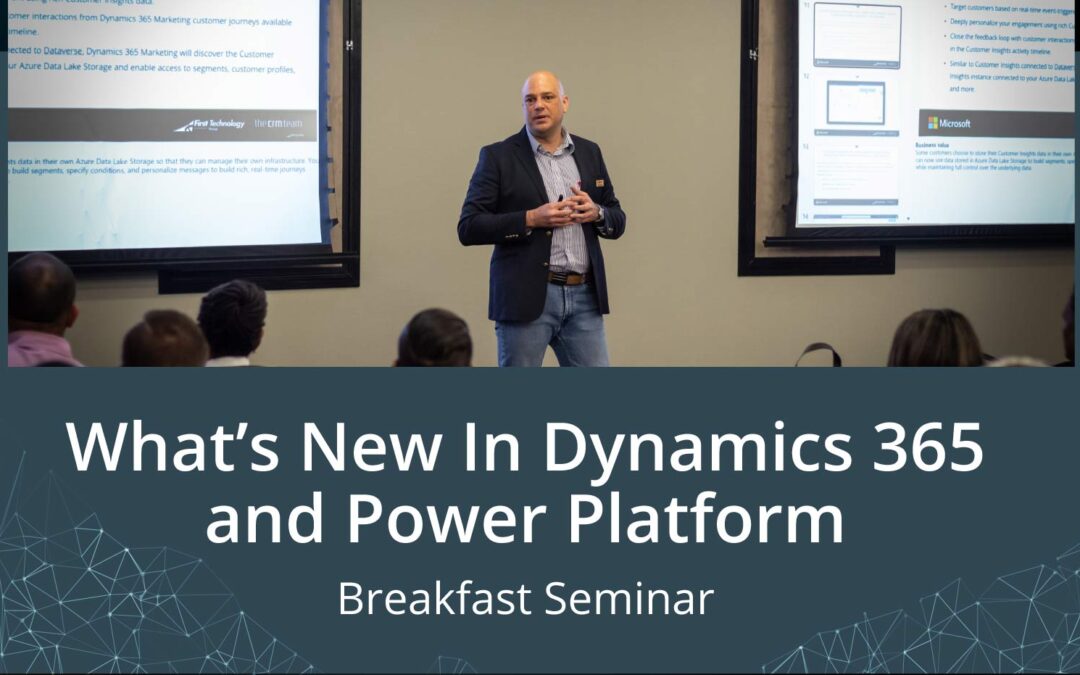
Due to lockdown restrictions, it has been two and a half years since we, The CRM Team, have been able to host an in-person event with customers and prospects. So, when the President announced that hard lockdown was finally over, our team was hard at work to ensure that we get back to live in-person events again.
On the17th of August, we hosted our customers and prospects for a ‘What’s New In Dynamics 365 and Power Platform’ Breakfast Seminar at the Microsoft SA offices, in Bryanston. Microsoft is innovating at a rapid pace, and our objective with this event was to bring our customers and prospects up to date with what is new and how it can unlock possibilities within their organisations.
This seminar was well-attended by our customers and prospects from various organisations. Upon arrival, they were well received with breakfast, before going into the auditorium where the programme was held.
Wynand Roos, the Managing Director of The CRM Team, took customers and prospects through What’s New In Dynamics 365. Roos discussed many fascinating topics in relation to Dynamics Marketing, Sales, Customer Service, Customer Insights, and Customer Voice.
In Dynamics Marketing, Roos explained to the attendees how they can target customers based on real-time event-triggered customer journeys, how to elevate customer experiences, Dynamics Marketing: investment areas, data, and AI (artificial intelligence), and many more.
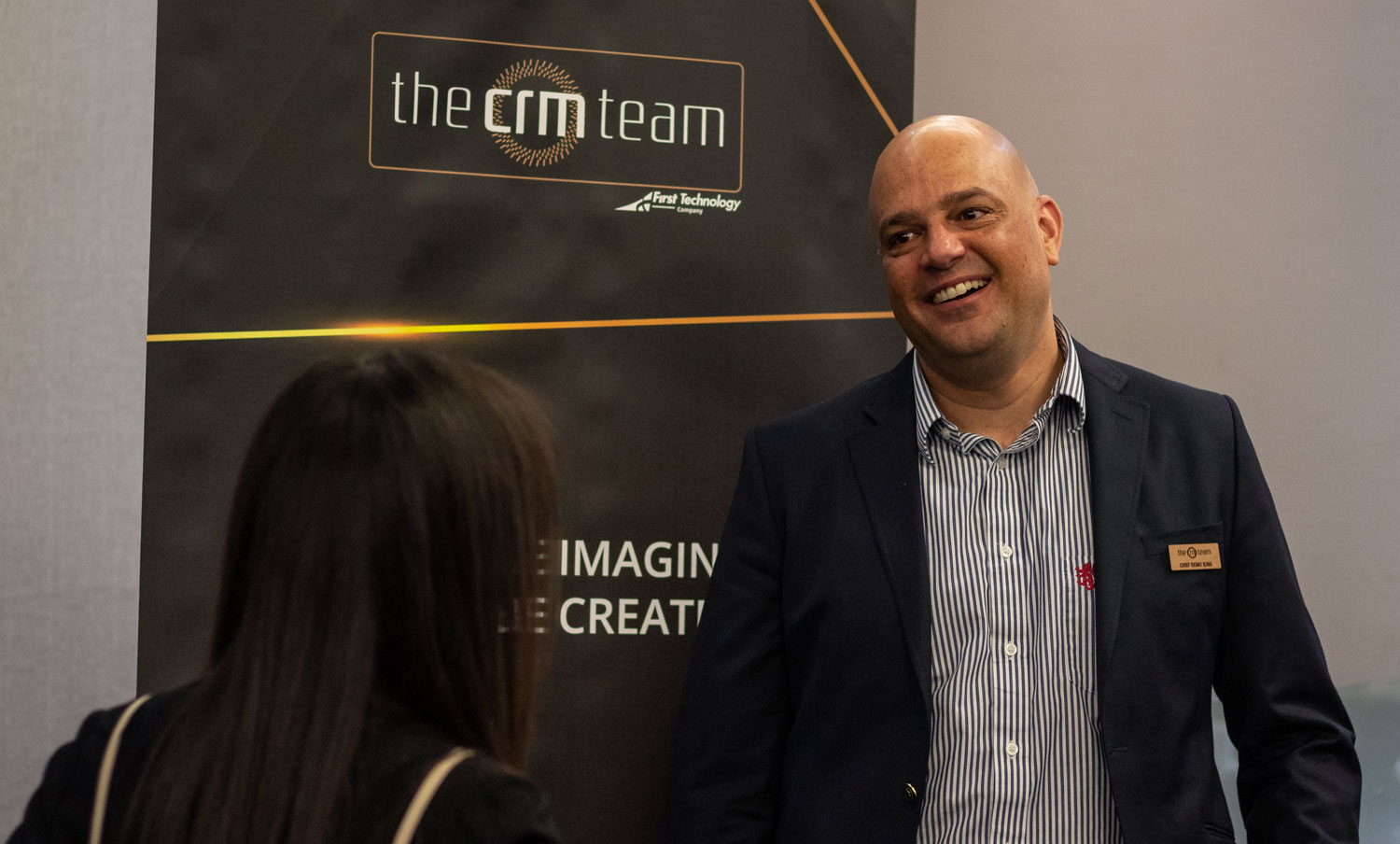
In Dynamics Sales, Roos touched on the roadblocks to selling, investment areas in Sales, forecasting and pipeline intelligence, conversation intelligence, sales accelerator, and process automation, engaging efficiently with customers, choosing the right engagement plan for customers and so much more.
Under the topic Dynamics Customer Service, Roos discussed the investment areas, visual customisation of Power BI embedded analytics, simplifying administration with the new Customer Service admin center application, teams integration, engaging with customers in Dynamics 365 Customer Service Community, and many more.
In Dynamics Customer Insights, Roos spoke through the investment areas, customer understanding, how to easily and quickly get insights and power your business processes, expanding semantic type support for activities and entities, and how to enable seamless data interoperability across Dynamics 365 applications.
The last topic Roos discussed under What’s New In Dynamics 365 was Dynamics Customer Voice, where he overviewed the investment areas on customer voice, allowing file upload option for external survey responders, getting detailed email delivery status, and sharing and co-authoring surveys with your team in a seamless way.
After Wynand Roos’ presentation, we had Microsoft’s Technical Specialist, Michael O’Donovan who discussed What’s New in Microsoft Power Platform.
O’Donovan introduced our attendees to Power Apps, to empower everyone to create apps to solve business challenges. He touched on how to turn images and designs into apps, for example sketching a form and turning it into an app with Power Apps express design. O’Donovan went further to introduce the Creator Kit for Power Apps and Native Apps to the attendees.
He then went on to elaborate on how businesses can automate business processes across Power Process, using robotic process automation hosted machine. He touched on using Power Virtual Agents, to build intelligent bots for customers and employees in minutes and Power Pages to build engaging site experiences.
To end off the wonderful event, Mark James and Selby Bopape, The CRM Team’s Specialist Technical Trainer’s, discussed Change Management and User Adoption. The duo touched on 7 reasons why tech projects fail, The CRM Team’s adoption plan for user adoption, and the three phases in user adoption.
The event was a great success and attendees left with a wealth of new knowledge. We look forward to hosting more events like these in the future!

The page you requested could not be found. Try refining your search, or use the navigation above to locate the post.

Women’s month serves as a lovely reminder of how courageous women are. It is important for today’s young girls to know and understand that a woman can accomplish things that go beyond what they think is possible.
Throughout history, it has been evident that women can achieve anything that they put their minds to, despite their struggles, traumas, circumstances, or whatever the world has against them. Think of the 20,000 women who marched to the Union Buildings in 1956 to protest against the pass laws that were passed on to women in South Africa. Think of women like Oprah, who grew up in extreme poverty and went through childhood trauma to become one of the most well-known TV hosts worldwide. Think of J.K. Rowling, the woman behind the popular Harry Potter series, who was a single mother living on welfare when she wrote the first book of the series. All those women did not just become overnight sensations. They fought hard to rise above their circumstances. And that is what inspired me to thrive in life, no matter how unkind life was towards me.
My story dates back to when I was a pregnant 15-year-old and my world felt like it was crumbling down. You can imagine how brutal society was towards me, labelling me with all sorts of names and basically painting me as the girl who would not go anywhere in life. As a 15-year-old, the first thing that comes to mind when you are going through that is that life is not worth living. However, there was no way I was going to give up, no matter how hard it got.
Years go by, and the girl they said would not get anywhere in life passes her matric very well, and the shock on their faces was evident. Now imagine how they looked when they found out that I was accepted into one of the top universities in the country. I knew from the moment I started university that my reality was not the same as everyone else in varsity. I had to stay focused. I could not afford to mess up or have moments of recklessness because I was not just living for myself but for the little boy who was back home waiting for his mommy to finish school so she could take him and give him a better future.
My story is not about how I am some resilient woman who is determined to make it no matter what. My story is about how, in my times of weakness and misery, I still managed to pick myself up and work towards achieving my goals. I have become a woman that 15-year-old me is extremely proud of. A young mom who is raising her 10-year-old son and providing the best possible life for him.
One thing I can tell all women out there, especially the young women who feel like the world is against them, is that you have a fighting spirit inside of you. You are courageous, deserving, and a force to be reckoned with. Whatever you are going through, whatever challenges you will face, always make sure you pick yourself up and try again. Even if you fall a thousand times, you can get up a thousand times more.

Yolani Williams – Content Writer
Yolani Williams is the Content Writer at The CRM Team, with the role to produce relevant content such as blogs, articles, and social media copy. Yolani holds a qualification in Strategic Corporate Communication and has 3 years of relevant experience in the marketing field.
Subscribe to our newsletter
The page you requested could not be found. Try refining your search, or use the navigation above to locate the post.