No Results Found
The page you requested could not be found. Try refining your search, or use the navigation above to locate the post.
Gartner went on to state:
The page you requested could not be found. Try refining your search, or use the navigation above to locate the post.
Discover More Stories

The companies that get it right reap the rewards. Consider the stats:
To keep customers engaged, however, companies must compete in a marketplace where the benchmarks keep rising. Why? Exposed to the offerings of best-in-class digital juggernauts such as Amazon, consumers develop a taste for the most cutting-edge tech – and soon come to think of it as normal – whether they’re aware of it or not.
What are the drivers? A major one is advancement in AI. Today, artificial intelligence underlies an increasing number of customer service interactions – at both the front and back end. From brand spokesperson to service agent assistant, AI is remaking the interface between brands and their customers.
ow? Here are some of the ways.
AI is many customers’ first touchpoint.
Many of today’s consumers would rather find a solution to a query without having to dial into a call centre or deal with a service agent over the phone. Brands know this, and it’s why chatbots are an increasing number of brands’ first line of contact.
Easily accessible via a messenger window, bots are great at dealing with simple and medium-complexity queries. The result is quick customer resolution as well as decreased workload for the company’s human agents – to whom a bot might refer a customer in the case of a complex query.
By filtering incoming queries in this way, companies are realising that a human touch isn’t always necessary. Rather, it’s efficiency that customers want.
AI – which is able to draw on a range of data spanning past brand interactions (and often external data, too) – isn’t working from a blank slate. Rather, it’s able to contextualise queries, making sure replies are targeted, helpful and to the point.
AI is flexible.
Today’s customers take digital dynamism for granted. Daily immersion in tech means multi-device connectivity – and interaction on their own terms. For many, their nearest bank branch is an app. Their nearest retail outlet, their mobile. Brands have to keep pace. Access to a device means access to AI, whether via a messaging app or website.
AI is predictive.
Consumer queries are rarely totally unique. An issue or question raised by one customer is likely to soon be voiced by another. AI comes into its own in this area.
On one hand, when the same query is raised by a number of consumers, AI begins to learn. By piecing together the reasons behind a specific type of query, AI can learn to provide more helpful and targeted solutions to subsequent customers – having found what resolution worked best for those who came before.
More importantly, AI is able to predict queries before they happen. Through IoT-enabled devices, weather forecasts, inventory management services and more, AI can now anticipate when a customer is likely to call in, and why.
The result is the ability to pre-empt queries and surprise customers with helpful suggestions, at just the right time.
Building Business Dynamism
Microsoft Dynamics 365 offers an embedded suite of advanced AI capabilities, capable of tackling complex scenarios end to end. Here are four ways:
Want to find out how you can infuse AI into your customer service?
See our AI-enabled customer service solution.
1 Shifting the Loyalty Curve: Mitigating Disloyalty by Reducing Customer Effort by the Corporate Executive Board (CEB)
2 2016 State of Global Customer Service Report, Microsoft
The page you requested could not be found. Try refining your search, or use the navigation above to locate the post.
Discover More Stories
Conclusion: customers love efficiency. They stay loyal to companies able to offer it. However, very few businesses are able to offer the kind of service that keeps customers coming back. If you’re one of the few that can, you’ve got a powerful market differentiator – one that can allow you to carve out a niche in the market.
Here are 4 ways the right toolset can drive efficiency for that market-leading edge.
1. Intelligent Scheduling.
A great top-down view is key to optimising service delivery. If dispatchers can access real-time information on where technicians are, accurate, efficient scheduling becomes possible. Workloads and resources can be better balanced too, and more appointments scheduled per day. The result: productivity gets a massive boost.
On-site assistance should be carried out only when necessary. The right technology can help you detect, troubleshoot and resolve issues remotely when possible. Remote monitoring and predictive maintenance also become possible when you have the right tools. Moreover, systems can be designed to ask customers the right questions upfront. Do this and you can ensure you dispatch technician only when necessary – and that when you do, you always send the right person for the job.
Admin is the enemy. It eats into energy and resources. By streamlining the back office, your time is far better spent. The right technology means that client emails, phone calls and appointments can be monitored at the click of a button, and stored in one place, against their client record. Clients can also be kept informed at any stage of the engagement, with updates being sent by staff from any device. Further, when you have the ability to generate reports instantly, you can prioritise the most important clients and ensure you always provide great experiences to your customers.
Field service organisations have tons of info to keep track of. And while background information is key, it can quickly become a burden. Technology can provide key alerts and prompts, making insights actionable. For example, when service contracts, warranties and installed products are kept up to date, business flows far more smoothly. Driving additional revenue becomes possible too. Accurate contract information can ensure you are offering renewals at the right time, and not letting any contracts expire.
Get in touch.
The page you requested could not be found. Try refining your search, or use the navigation above to locate the post.
Discover More Stories

Does your company deal with data from individuals or companies in the European Union (EU)? If so, read on.
Here in South Africa we are familiar with the impending PoPI Act. But if you have clients that are European Citizens, or based in the EU you’ll also have to navigate a new piece of legislation: GDPR (the General Data Protection Regulation).
The GDPR: a 5-second overview
At core, The General Data Protection Regulation (or GDPR) is about safeguarding the privacy of individuals and companies in the EU, and reflects the implementation of the Digital Single Market Strategy.
What will the GDPR do?
The GDPR will place new rules on companies that deal with EU residents. It will also apply to companies that collect or analyse data tied to EU residents, no matter where they are located.
To do this, the GDPR establishes global requirements governing how companies manage and protect personal data – and respect individual choice. Importantly, it is a law that will apply no matter where the relevant data is sent, processed, or stored.
When is it due to take effect?
The GDPR comes into effect on 25 May 2018.
What will the impacts be?
Depending on what data a company holds, the GDPR may mean a number of changes. These may include updates to personal privacy policies or strengthening how data is protected.
What are some of the key elements of the GDPR?
Does the GDPR apply to my business?
The GDPR applies to companies (operators or controllers) in the EU.
It also applies to those outside the EU who offer goods and services to, or collect personal data from, EU residents.
What kind of data does the GDPR consider ‘personal data’?
The GDPR considers personal data to be any information related to an identified – or identifiable –natural person. This relates to direct identification data (such as a legal name). However, it also covers indirect identification data (data that makes it clear who is being referenced).
Personal data also includes online identifiers (such as IP addresses and mobile device IDs) and location data.
I use Dynamics 365. What types of data might be affected?
Where do I begin? Dynamics 365 users have four stages to follow in the journey toward GDPR compliance: discover, manage, protect and report.
Step 1 – Discover: Companies need to identify what personal data they hold have and where that data rests. This means both searching for and identifying the relevant personal information and then classifying it.
Step 2 – Manage: This relates to governing how personal data is used and accessed. This means, among other things, putting in place a governance system that can: notify subjects about how their personal data will be processed, get consent from data subjects around the processing of their personal data, provide a way for subjects to ask that processing of their data be stopped, correct inaccurate or incomplete data, transfer and save data. The system should also make it clear how data requests are processed and resolved.
Step 3 – Protect: Companies need to establish security controls to prevent, detect, and respond to data vulnerabilities and data breaches. Companies must put in place data privacy and security controls that ensure the confidentiality, integrity and availability of personal data. Encryption is one tool that satisfies the GDPR requirements.
Step 4 – Report: To show GDPR compliance through reporting, companies need to maintain an audit trail of all processing activities, requests and their resolution. Companies will also need to track and record flows of personal data into and out of the EU and third-party service providers. Moving toward GDPR compliance needn’t be an involved or difficult process, but companies should start thinking today about the steps they may need to take. At The CRM Team, we’re helping our customers keep in step with this legislation. There are many ways this can be done, but our preferred platform is Microsoft Dynamics 365 – a suite of intelligent business applications that brings all your customer information together in one place.
The page you requested could not be found. Try refining your search, or use the navigation above to locate the post.
Discover More Stories

Don’t let this take your sales team by surprise. Changing market conditions can be an opportunity for the well prepared, but can also catch the unprepared sleeping. A 2008 Bain & Co. study found that during the last recession more than 20% of companies in lower quartile in their industry jumped to the top quartile – that’s a huge jump! They also found that more than 20% of ‘leadership’ companies fell from the top quarter into the bottom quarter!
Those sales teams who are prepared can see massive growth, but alternatively, those who are not can see a massive drop in sales.
Here’s four things your sales team should do to prepare to thrive during the next recession.
During a recession the game changes, so you want to be in a position where you can easily respond to change. The pressure of difficult times often forces efficiencies and cost-savings. But why wait until times are difficult? Reshape your sales team now and take the advantage. While your rivals are doing forced cost-savings you can be focussed on taking advantage of the changing market conditions. Don’t wait until you are forced to, prepare now.
During a recession, customers spend less so sales teams need to increase their share of the customer rather than a share of the market. What this means is that you are more likely to meet your targets by up-selling and cross-selling to your customer base than reaching out to acquire new customers. This makes sense because it costs up to ten times more to acquire a new customer than to sell to an existing one.[1]
One of the first things to be reduced during a recession are marketing and sales budgets. With reduced money and head count acquiring new customers becomes harder. So, if you want to meet your targets it’s much easier to look at your current customer base for up-sell and cross-sell opportunities. This will help you maintain the status quo but if you’re wise you’ll also…
[1] Pricing for Profitability: Activity-Based Pricing for Competitive Advantage By John L. Daly (2002), p85. Published by John Wiley and Sons. ISBN 0471221597
During boom times, it works to be experimental and explore different customer types. But when things are tighter, it makes sense to know who your most profitable customers are and target your energies at them – and people like them. Once you have done this, if you really want to excel during a down turn you should…
It sounds counter intuitive but a McGraw-Hill Laboratory Study[2] showed that companies that continued strategic spending during a recession out-performed those that didn’t. And they also experienced a revenue growth of 275% during the first year of recovery. If you think about it, if everybody else pulls their marketing/sales spend, then things will be cheaper and your spend can have a greater reach. If you prepare now, you can store up an arsenal to spend during the down turn, and see a much greater bang for your buck than you’re achieving now.
[2] McGraw Hill Laboratory of Advertising Performance (LAP). 1985.
Sounds good, you may be thinking. But why are we at The CRM Team writing this article? While we make it our business to help sales teams flourish generally, we have lots of experience at helping sales teams become more agile, and target their customers better.
We’d love to help you prepare for the next downturn, so that you don’t just survive, but actually increase your sales.
Compared to aggressively hiring new sales representatives, CRM is a technology that can be implemented rapidly with a great return on investment. It makes sense for any company. Put simply, CRM can provide real business benefits for your sales team in times where every dollar counts.
The page you requested could not be found. Try refining your search, or use the navigation above to locate the post.
Discover More Stories

During the 1980s Microsoft dominated the business world. In that era, being loved or hated didn’t matter much because it was all about winning. And Microsoft was a winning machine.
But something happened in the 1990s – Microsoft didn’t just continue to win, they also became cool.
I remember it well. I was on a work experience placement. After I had done a week of making tea, the boss of the IT department called me over and whispered ‘Have a look at this.’ It was a beta version of Windows 95 – and it blew my mind.
Windows 95 was a turning point for Microsoft. If you remember its forerunner, 3.1 (C:\>win), Windows 95 was a big jump.
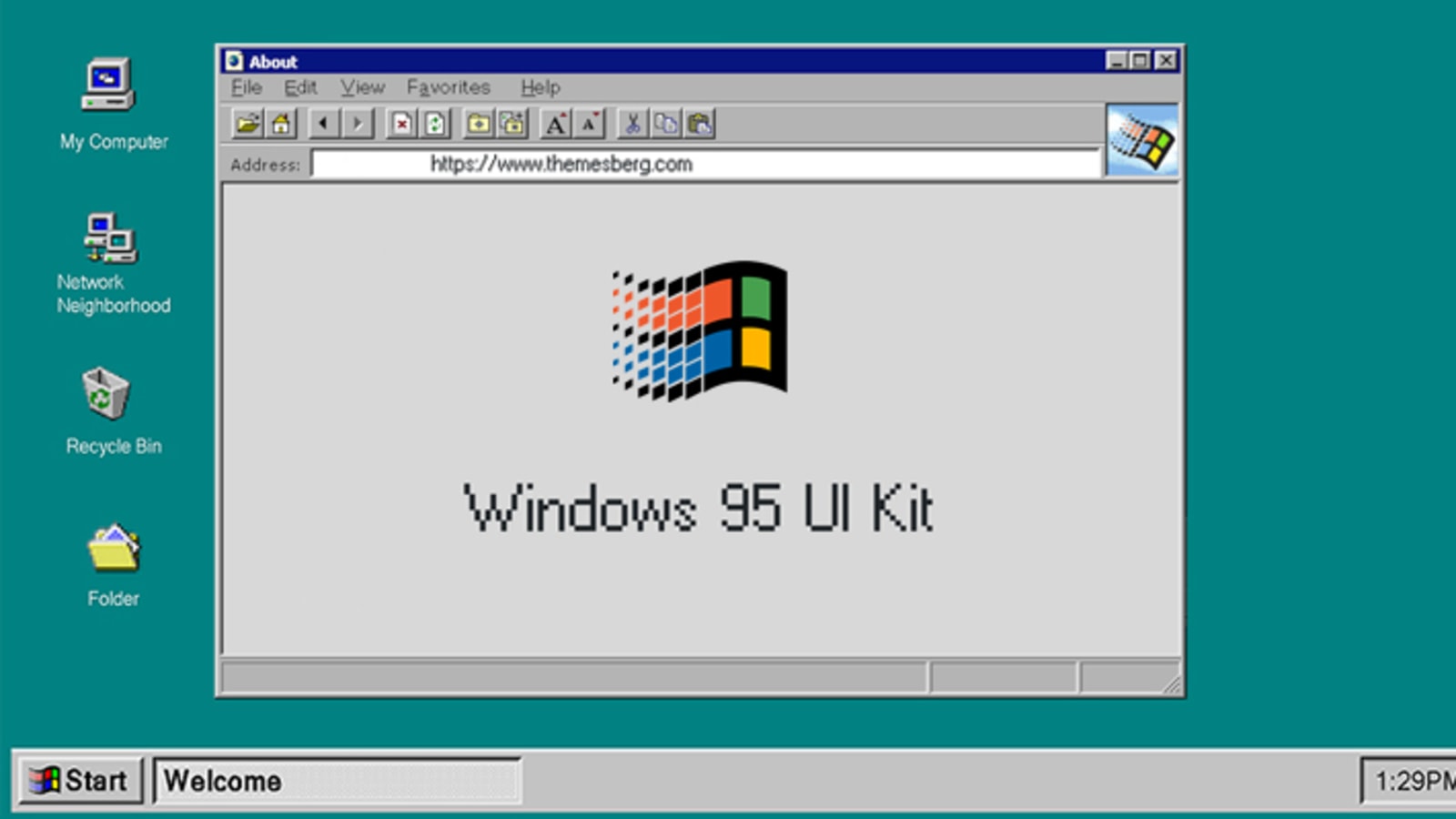
They queued round the block to get their hands on a copy – take that Apple! Friends stars, Matthew Perry and Jennifer Aniston did an hour-long instructional video for it
And the Rolling Stones were paid $8m to use ‘Start Me Up’ for the television ads, which are still pretty good today.
But change is in the air.
Gone is the brashness and talk of world domination. No longer are competitors vilified, but under new CEO Satya Nadella, they’re embraced as partners.

Steve Jobs famously criticised Microsoft for having ‘no taste’
Packaging was cluttered with slogans and symbols. Many people had fun with this, imagining how Microsoft, in contrast to Apple, might have packaged the iPod.
Have a look at this screen shot from a current Microsoft webpage.
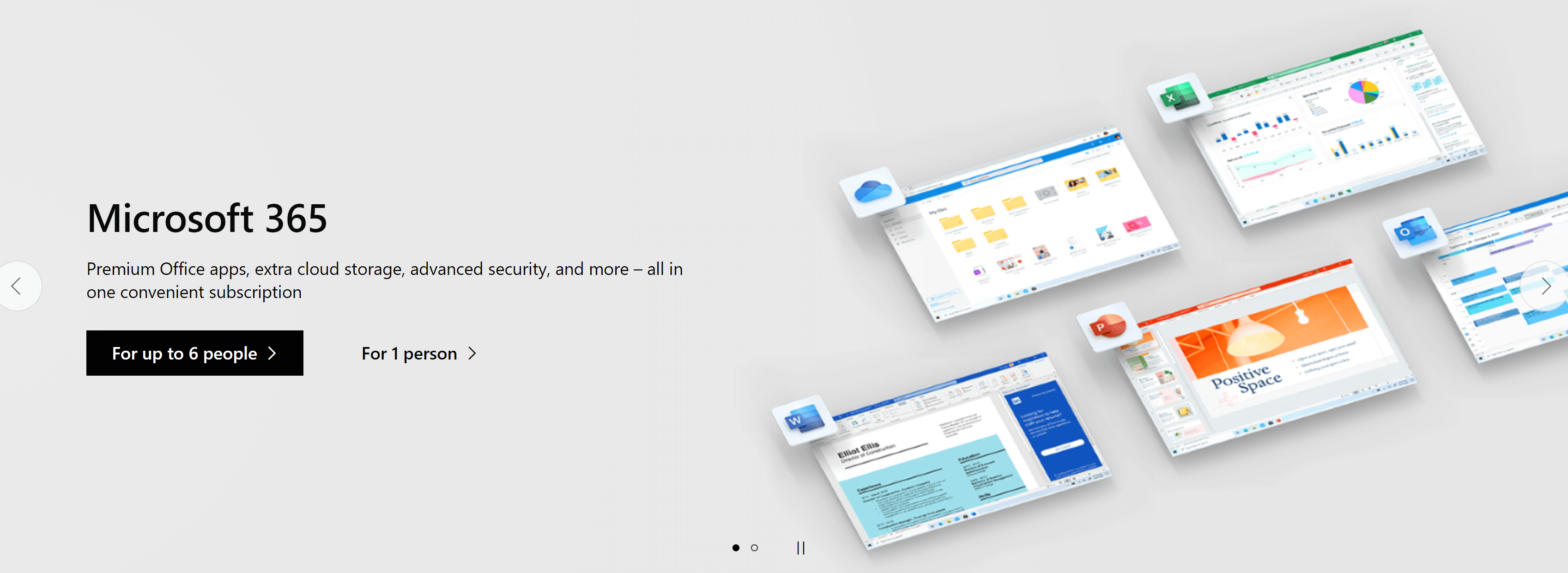
It’s not just an up-to-date look, there’s substance to the packaging. To steal a phrase, Microsoft are making some ‘insanely great’ products again. As we’ve come to expect with our phones and tablets, software should just work – and with these it does. Slick is the new norm and Microsoft are embracing this.
Our CEO at The CRM Team spent a little while playing around with Power Apps and exclaimed ‘I’ve just built an app in 30 minutes that would have used to have taken a developer 3 days!’– and apparently he can’t even code. We’ve already got Flow working to automate some of our repetitive tasks – and it’s damn good.
Have you tried Power BI yet? Data is becoming accessible AND beautiful again. We’re very excited by this and are already helping our clients see the information they need in a format that actually invites you to delve in.
And we’ve already stated how excited we are that Dynamics 365 is on its way!
Microsoft are investing heavily in the Internet of Things, and Machines Learning. And we are very excited about the business implications of this. But they are also doing some really fun stuff as well. When a promo video gets these sorts of comments on YouTube we know things are starting to change:
“Probably the first ad I’ve ever clicked on because I actually wanted to watch it – holy crap”
“What is this sorcery?”
We hope you agree, but it looks like the Seattle Megalith is getting its cool back.
The page you requested could not be found. Try refining your search, or use the navigation above to locate the post.
Discover More Stories

Recent research by Gallup proves just how much customer engagement matters. Clue: a lot. Engaged customers provide a 23% premium over the average customer when it comes to share of wallet, profitability, revenue, and relationship growth.
Consider this:
For its yearly survey, ThinkJar recently asked customer service managers to list their top three initiatives for the next five years. Customer engagement came in second place for the next two years. It got the number one spot for the following three.
Customers’ expectations have changed:
Get the full ThinkJar report here.
The page you requested could not be found. Try refining your search, or use the navigation above to locate the post.
Discover More Stories

But when people heard that The CRM Team were bringing two of the scariest Navy SEAL’s imaginable to South Africa, they typically had one question:
It’s simple. No matter what industry you’re in, your teams are fighting daily battles!
Marketing are driving brand awareness and fighting to acquire new leads. Sales are fending off aggressive competition and attempting to achieve their objective; winning new customers. Your delivery teams are dealing with complex logistics to fulfill on customers orders. And, your customer service teams are constantly trying to assist customers. All the while de-escalating to ensure your business retains and grows the customer your teams fought so hard for.
In the end, it’s best to accept that your business is in an ongoing campaign to win your customers hearts!
At The CRM Team, it’s our mission to help companies win those battles and build deep, meaningful relationships with their customers. Typically we do that by implementing solutions on top of state-of-the-art technology from Microsoft. We add to that with our thought leadership events like the Ten-by-10’s and more recently, the Extreme Ownership Event.
Jocko Willink and Leif Babin are decorated Navy SEALs, but more importantly they’re co-authors of the New York Times #1 best selling leadership book, Extreme Ownership – How Navy SEAL’s Lead and Win. Their company Echelon Front deliver leadership coaching for a wide range of companies, including a number of Fortune 100’s!
The book details the characteristics of great leaders and provides a framework for leadership, based on the laws of combat:
We were privileged to host them in South Africa, where 400 people from over 70 companies got to learn this framework firsthand.
So if Jocko and Leif have a leadership framework that’s proven on the battlefield, why wouldn’t we want to learn it and apply this highly effective framework in your business.
The principles that Jocko and Leif share can be applied by people at every level and in every team within your business.
We’ve proven it at The CRM Team and it’s paid huge dividends for us!
When it comes to the work we do for companies like yours, we’ve defined a CRM framework that will help you be successful in the campaign for your customers hearts!
Just like Jocko and Leif’s framework, it’s based on extensive experience… and it’s simple. It’s designed to help you understand the highest priorities in your business and what to execute on first. It’s also designed to help your people manage the process themselves in a decentralised way.
If your business is trying to improve the effectiveness of your Marketing, Sales, Delivery and Customer Service teams: Sign up to attend one of the “Ten by 10’s” (Limited to 10 people, giving great value, done by 10am) or talk to us. We’ll share more detail on the CRM framework and the tools that will help you have a rapid and decisive impact on your battlefield.
The page you requested could not be found. Try refining your search, or use the navigation above to locate the post.
Discover More Stories

You’re faced with the constant pressure of winning deals in a world saturated with competition. So, the idea of disqualifying a lead probably makes you apprehensive.
A lead is a lead, right? Whether it brings in R50k or R300k?
We disagree.
And it’s a lesson we learnt the hard way.
The time we made this mistake

We took it through our qualification process and a red flag was raised. The typical deal size for our business is R750k. But this prospective customer had a budget of just R100k.
Instead of disqualifying the deal based on our own tried and tested qualification process, we decided to take on the new customer. Saying to ourselves, “Surely we can make a plan?” – How many times have you heard a salesperson say those words?
A week into the new project, our biggest customer came to us with an urgent requirement worth five times the budget of this new customer. The problem was, we couldn’t fulfil on this requirement because our consultants’ time was now consumed by the smaller deal.
The realisation: We’d spent all our time and energy on a field mouse. And it meant that we missed the antelope.
What we learnt from this mistake

In our last sales article, we emphasised the importance of having a structured sales process and the need for defined gates. And the first gate in any sales process must be Qualification.
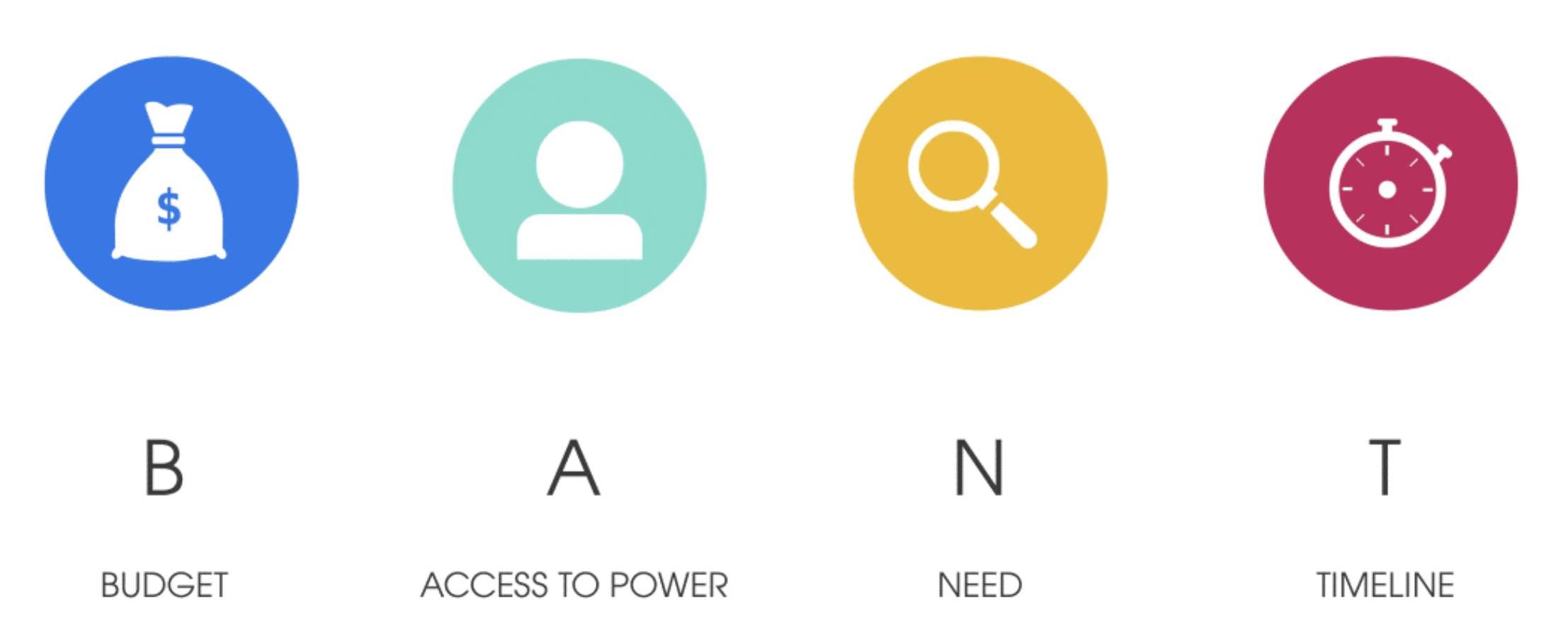
Our mistake made us reassess our qualification process (we use B.A.N.T). We asked ourselves some hard questions and looked at what went wrong. What we discovered was: we faltered when it came to qualifying OUT (just like all businesses). And it wasn’t because we didn’t follow B.A.N.T.
On the contrary, the prospective customer ticked all the B.A.N.T boxes. What we didn’t do was look beyond Budget, Access to Power, Need, and Time. We didn’t follow our instincts. We knew this prospective customer wasn’t the best fit but we decided to say “yes”… because it’s hard to disqualify a lead.
In his book, Tools of Titans, he talks about “hunting field mice vs antelope”:
“A lion is fully capable of capturing, killing, and eating a field mouse. But it turns out that the energy required to do so exceeds the caloric content of the mouse itself. So, a lion that spent its day hunting and eating field mice would slowly starve to death. A lion can’t live on field mice. A lion needs antelope. Antelope are big animals. They take more speed and strength to capture and kill, and once killed, they provide a feast for the lion and her pride. … So, ask yourself at the end of the day, ‘Did I spend today chasing mice or hunting antelope?'”

The resources needed to complete a job for a field mouse, are the same needed for an antelope. A field mouse might tick all the B.A.N.T boxes. But it doesn’t mean it’s going to be good for your business. So, you must extend your qualification process, and trust in your instincts as a salesperson.
Next time you need to qualify a lead, stop and ask yourself…
The page you requested could not be found. Try refining your search, or use the navigation above to locate the post.
Discover More Stories

There’s been a lot of buzz around Dynamics 365. At their recent world conference, it was Microsoft’s big announcement. And it marks their latest move towards cloud-only computing. Is it just good marketing? Or is it something substantial? Let’s look at this in detail.
For those not familiar with Dynamics, Dynamics is currently the overarching name that Microsoft use to refer to their various ERP products (AX, Nav, GP, SL etc) but also includes their CRM suite. We heard a rumour that CRM was going to be separated from the Dynamics brand, but it looks like something much bigger is on the cards. If Dynamics 365 is as good a product as Office 365 then we are in for something truly great.
[1] http://www.theregister.co.uk/2014/01/21/microsoft_windows_azure_uptake_claim/
In a world where Microsoft CRM and Dynamics AX/NAV/GP… etc competes against some big players, offering a common data sync with Office 365 is something that should get everyone else very nervous. Which company doesn’t use at least one of Word, Excel, PowerPoint, or Outlook? Not many.
At The CRM Team, we already relish being able to say to companies how easily CRM Online links up with their O365 but sharing a common data model is a whole new level of love. Built on Microsoft’s ever developing Azure network, it means easy access to powerful machine learning, and the exciting new development of the ‘Internet of Things’ (IoT) – think automated monitoring and servicing of devices or machinery.
Do you remember the era of having to buy whole music albums to get the one song you wanted? It sucked. But then iTunes came along, and people could buy just single songs. It was great. That’s what’s happening with Dynamics 365.
Instead of buying CRM you can just purchase their sales module, or just the marketing one – you can mix and match according to your needs. Have a contact centre? Then purchase that module for your contact centre staff. Have a field service team, or project team, then buy those modules. ERP comes in a module called ‘operations’ and a new module is introduced called financials. Simply buy licenses for the modules you want.
Additionally, Microsoft have also introduced different licenses for different types of staff. Some admin staff may just need to have limited access to data in modules but not need the full functionality of each module – they get a cheaper licences, under what’s called a ‘team view’. They can see the data, and do simple tasks but are restricted to certain functionality. Staff who need the functionality can get an app licence. For example, the marketing team can get a licence for just the marketing app. Staff who need greater access across many apps can get tailored plans. We think our customers will love this new flexible way of licensing.
Another big announcement is Microsoft’s app store, ‘AppSource’. Built on the success of Google’s Play and Apple’s App Store, AppSource is a place for Microsoft Partners and Developers to offer useful add-ons, simply and quickly. Customers can still commission custom adaptions and add-ons (XRM to the initiated) but now there is an option to see if somebody has already developed what you need. This is a great development for partners and customers alike. AppSource is live now so you can check what’s already available.
Dynamics 365 is a bold, exciting move. Something we believe will not only live up to all the hype – but be even better.
The page you requested could not be found. Try refining your search, or use the navigation above to locate the post.
Discover More Stories