No Results Found
The page you requested could not be found. Try refining your search, or use the navigation above to locate the post.


Dynamics 365 and Power Platform 2023 Release Wave 1.
Microsoft published its 2023 release wave 1 plans for Microsoft Dynamics 365 and Microsoft Power Platform on January 25. They comprise a compilation of enhanced capabilities planned to be released between April 2023 and September 2023. The first release wave of this year includes hundreds of updates and enhancements, which demonstrate Microsoft’s continued commitment to empowering digital transformation.
By bridging data, insights, and people silos, this release wave adds value to every role. By enabling AI-guided insights and suggested actions, automating tasks and processes, integrating collaboration into workflows seamlessly, and building low-code solutions, new capabilities empower informed decisions.
A review of Dynamics 365 updates






















| Milestone | Date | Description |
| Release plans available | January 25, 2023 | Learn about the new capabilities coming in the 2023 release wave 1 (April 2023 – September 2023) across Microsoft Power Platform, Dynamics 365, and Microsoft Cloud for Industry. |
| Early access available | January 30, 2023 | Test and validate new features and capabilities that will be a part of the 2023 release wave 1, coming in April, before they get enabled automatically for your users. You can view the Microsoft Power Platform 2023 release wave 1 early access features now. |
| Release plans available in 11 additional languages | February 21, 2023 | The Microsoft Power Platform, Dynamics 365, and Microsoft Cloud for Industry release plans are published in Danish, Dutch, Finnish, French, German, Italian, Japanese, Norwegian, Portuguese (Brazilian), Spanish, and Swedish. |
| General availability | April 1, 2023 | Production deployment for the 2023 release wave 1 begins. Regional deployments will start on April 1, 2023. |
The page you requested could not be found. Try refining your search, or use the navigation above to locate the post.
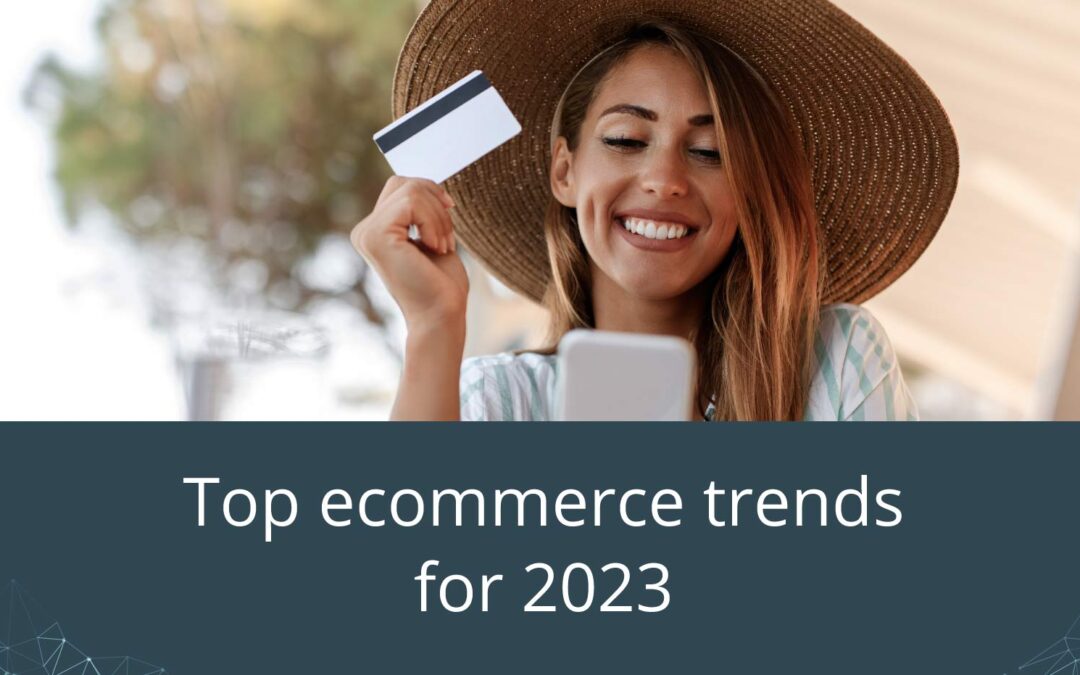
ECommerce is one of the most rapidly evolving industries in the world. In order to remain relevant and competitive, businesses must stay up to date with the latest eCommerce trends as well as the ever-changing expectations of their customers. You risk losing sales if you fall behind.
A revolution has taken place in retail because of e-commerce. With its evolution, online shopping has become easier for modern-day consumers and has met their changing needs.
In its early years, ecommerce had relatively limited capabilities. Those days are over. Whether it is customied products, improved return policies, or improved integration, all these changes (among others) have revolutionized ecommerce. And the ecommerce industry will only continue to evolve in 2023.
In 2023, take advantage of these emerging trends in ecommerce to take your business to the next level.
In any industry, whether it is business-to-business or business-to-consumer, you need to personalize your communications. No matter how you use it, whether in marketing or on your eCommerce site, it can result in more sales. It is expected that eCommerce brands will leverage data for more than just insights in the next few years. Online stores will use customer data to expand their product range and to see where and how they can improve the customer experience.
The concept of artificial intelligence (AI) refers to the development of technology that mimics human intelligence. By learning and adapting to consumer behaviour, it can produce more accurate and valuable results. The adoption of AI technology can enhance the buying experience for customers. It is predicted that AI will be a major player in eCommerce in the future. Many leading brands and companies invest continuously in artificial intelligence.
A significant percentage of businesses use AI for personalization (70%) and site search (54%).
It is evident that personalization is a trend that’s gaining traction steadily. Through personalization, users can receive suggestions for products and targeted emails based on previous activities. Personalized customer experiences help businesses attract and retain customers without using additional marketing techniques.
Site search powered by AI utilizes machine learning and natural language processing (NLP) to determine the intent behind the search query and to provide the most relevant results.
Thanks to the advancement of artificial intelligence, shoppers can conduct searches using images instead of typing keywords.
A rapid rise in social shoppers is also evident. Ecommerce has taken off with the introduction of Facebook and Instagram Checkout’s Buy button. The use of social media has transformed the way we live our daily lives, including how we shop. For brands, this is an opportunity to improve their social media presence, which is an excellent platform for brand discovery.
Through these social media platforms, brands can gain visibility and inspire people while scrolling through their feeds. The power of social media to influence ecommerce trends will only increase as it becomes a regular feature of our lives. As a result, brands need to adopt a social media strategy that focuses on the shopping experience.
Multichannel sales are no longer a luxury – they are a necessity in today’s business world. The fact is consumers purchase products through a variety of channels. It is vital that businesses reach their customers where they are.
As increasingly new selling channels emerge, omnichannel selling has dominated eCommerce since 2022 and will continue to do so in 2023 and beyond. Retailers are challenged to provide a consistent yet diversified shopping experience across all channels, whether in-person, online, or via a mobile app.
Ecommerce storefronts that offer creative and innovative VR experiences will drive consumer adoption. To make an informed purchasing decision, people are concerned about the inability to physically see the products This gap can be bridged by virtual reality technology, which allows online shoppers to better visualize the products in which they are interested.
The impact of this could be profound for ecommerce businesses. A VR/AR experience can shift the perception of products online customers intend to purchase. With virtual reality, you can help your customers better understand if your products meet their needs.
The use of virtual reality is not only enhancing the customer experience, but also allowing shoppers to evaluate and explore products in the same way they would during an in-person shopping experience.
One of the essential tasks when running an eCommerce website is to convert your traffic into purchasing customers. Applying conversion rate optimization (CRO) encourages site visitors to buy your products or sign up for your newsletter.
The future of CRO is customer centric. More marketers will focus on discovering what attracts visitors and what prevents them from taking action, guaranteeing the best user experience possible.
Optimizing the eCommerce site’s performance is a great starting point. Business owners should strategize their eCommerce developments and optimise every customer touchpoint.
Recently, chatbots have gained popularity for their ability to communicate effectively and quickly with people as well as their ability to provide businesses with time and resource savings.
HubSpot’s survey found that 90% of customers prefer “immediate” responses to marketing and sales questions. And 60% of customers defined “immediate” as 10 minutes or less. You know what this means – If you don’t respond to your customers’ queries quicker than your competitors, you might lose a chance to sell.
Because of that, increased store owners are using chatbots as “assistants” for their customer support team. The bot is online 24/7 and can be set up to answer present and frequently asked questions from your customers.
Thanks to technological advances, chatbots can provide more tailored service and product recommendations, making the shopping process more efficient and more enjoyable. This is a promising eCommerce trend that will explore in 2023!
With the advancement of technology and changes in consumer behaviour, one must keep an eye out for these ecommerce trends in 2023. Whichever ecommerce trend you decide to adopt, do it with the aim of improving the shopping experience for your customers and building a long-lasting relationship with them.
Take your ecommerce evolution to the next level by evolving with it side-by-side and taking advantage of these ecommerce trends.
The page you requested could not be found. Try refining your search, or use the navigation above to locate the post.
In 2023, some fascinating artificial intelligence trends may be able to show tangible growth, according to artificial intelligence trendsetters.
IoT and AI will lead to more advanced devices
2022 was a year of tremendous interest in the subject. There will be no difference in 2023; the world will be more reliant on smart devices.
While artificial intelligence and the Internet of Things (IoT) appear to be separate topics, combined, they can significantly enhance business outcomes. Technology experts consider both technologies an opportunity for innovation, product improvement, and competitive advantage.
An Insight into 2023’s AI Technology Transformations
AI technology trends in 2023 will leave both industry and consumers intrigued. One thing is certain: artificial intelligence has limitless potential. According to Sundar Pichai, the CEO of Alphabet (Google), “AI will have a greater impact on humanity than fire, electricity, and the internet.” The possibilities are endless, from personalized marketing to remote documentation.
In the midst of the technological revolution, industries worldwide are undergoing digital transformations. According to International Data Corporation (IDC) research, artificial intelligence spending will surpass $500 billion globally by 2023. Every sector and the world at large will be reshaped by AI’s widespread applications.
Below are some major trends in 2023 that will have a lasting impact:
With the growing use of AI in security operations, automated defences against cyber threats will continue to develop naturally.
The use of artificial intelligence (AI) in cybersecurity extends far beyond its predecessor, automation, and is used to perform routine data storage and protection functions. Cybersecurity artificial intelligence, however, goes beyond this and supports more complex tasks.
An example of an application of advanced analytics is the detection of ongoing threats or suspicious trends. Despite this, not all news is good. It will be a never-ending game of cat and mouse between cybercriminals and organisations as AI becomes more prevalent. Therefore, firms who are concerned about staying in business must begin integrating AI into their cybersecurity as soon as possible.
At present, natural language processing is the most widely used AI mechanic because it comprehends human speech without requiring text input. Additionally, this technology analyses and converts different languages into computer codes that enable apps and websites to run efficiently. YouTube has adopted this AI-powered NLP technology to allow users to search, play, and access other controls via voice commands.
One of the most fascinating areas of artificial intelligence is improving predictive analytics, which has applications across a variety of academic sectors. It makes predictions about the future based on previous data using data, statistical algorithms, and machine learning techniques. The goal is to accurately anticipate the future using data from the past. The rise of predictive analytics is not something that happened overnight; rather, its history shows that it has only recently been gaining traction.
Our jobs will become more efficient and more effective with the help of robots and smart machines in 2023. This could be in the form of smart devices providing access to data and analytics instantly. Both retail and industrial workplaces are increasingly using this type of technology. AR-enabled headsets could overlay digital information on the world around us. As an example, real-time information could be provided to assist us with identifying hazardous conditions in maintenance or manufacturing – such as showing when a component is hot or a wire is likely to be live. In the future, management and leadership teams will have access to real-time dashboards and reporting, which will allow them to keep track of operational efficiency in real time. As AI-powered virtual assistants gain prominence in the workplace, they will be able to answer questions quickly as well as suggest more efficient methods of accomplishing tasks. As a result, developing the ability to work with and alongside intelligent, smart machines will become increasingly necessary to succeed in the workplace.
With the aid of artificial intelligence, leading retailers are improving operational efficiency and customer service. Instead of being just transaction centres, retail stores are increasingly becoming focal points for brand awareness and customer experience. Adaptive AI will drive this transformation. One of the biggest growth areas will be frictionless shopping with computer vision and edge-based AI systems that will reduce wait times and ease hassle. With on-premises infrastructure, future retail stores will also be able to tailor seamless customer journeys and deliver hyper-personalized recommendations.
A physical store’s in-store analytics will provide intelligent insights based on dwell time across different aisles. The integration of past shopping histories across multiple channels and factoring in demographic profiles will enhance the customer experience and make experiential shopping highly immersive and enjoyable for them. In addition to omnichannel management, adaptive AI will provide highly contextual assistance. Conversational AI, coupled with emerging technologies like AR and VR, will augment the capability of store employees to redefine the shopping experience entirely in brick-and-mortar stores.
The growth of more ethical and explainable AI versions is fundamental for a number of reasons. AI requires information to acquire, which repeatedly requires private information. For countless of the potentially more useful and significant AI use cases, this may be extremely sensitive information like health or financial details. If we, as a society, don’t believe in AI or can’t figure out how it makes decisions, we simply won’t feel really safe handing over our details. The entire system will come to an end. In 2023, AI will make strides to overcome the “black box” issue of AI.
The people responsible for putting AI systems in place will work more vigorously to ensure they have the ability to clarify how decisions are formulated. This will enable them to clarify what details have been used to reach those conclusions. The part of AI ethics will become more prominent, too, as organizations get to grips with eliminating bias and unfairness from their automated decision-making systems. Biased information has already been displayed to lead to prejudice in automated results. This can potentially lead to discrimination and unfair treatment. This simply won’t be acceptable in a world where AI plays a significant role in decisions entailing employment and access to justice or healthcare.
It’s an exciting time to be in AI, and 2023 will be no different. As responsible AI makes its way into practice and generative AI continues to grow, we can expect many new interesting and innovative use cases soon. As a society, we’ll need to pick between the good and bad ones and help people adjust to this fast-changing world.
The page you requested could not be found. Try refining your search, or use the navigation above to locate the post.
With the pandemic accelerating digital transformation, 2022 was hit hard by the digital revolution. Technology is enabling more people than ever to stay connected both personally and professionally, putting pressure on the global economy to keep up. As we approach 2023, let us take a look at ten trends to keep an eye on.
AI is hardly a new concept. As we move into next year and beyond, artificial intelligence is going to continue to permeate virtually every aspect of our lives. More organisations are expected to implement AI in 2023. With its easy drag-and-drop interface, No-code AI will be used by any business to create richer products and services.
AI has the potential to transform and streamline industries across the board, from finance to education. As a result of its ability to train, learn, analyse, and produce large volumes of output, it has the potential to replace much manual work humans are required to do every day, preventing them from focusing on the bigger picture, improving their skills beyond basic needs, and influencing their industries’ future and direction.
There is no doubt that this is the future of the internet. While it is hard to predict exactly what it will look like, what we do know is that a more immersive experience is on the way, with the ability to ‘try on’ clothes via virtual reality already possible. The year 2023 may be the year when phones, headsets, glasses, and more become more integrated into the metaverse.
It is already common for companies to use metaverse technology for training and onboarding, and in 2023, this trend will accelerate.
Several experts predict that the metaverse will contribute $5 trillion to the global economy by 2030, with 2023 being the year that defines how it will evolve in the decade to come.
Like any other year, 2023 will see developments aimed at combating real-world threats. Cybersecurity is one of the greatest threats facing governments, businesses, and individuals today. Businesses should invest in high-quality cybersecurity products and keep them up-to-date and should also invest in staff training to ensure that the team recognises scams and can handle their tasks safely. In the recent past, attacks have spiked in part because of remote workers, who can leave organisations vulnerable.
The next step in application development will be the development of superapps that allow users to control most aspects of their business ecosystem from a single app. Approximately 50% of the world’s population will use superapps every day, according to Gartner. In some cases, these. Superapps may have mini apps that serve as add-ons and provide benefits beyond those already offered.
Superapps can connect to all systems and linked accounts (savings accounts, credit cards, etc.), and perform transactions at all systems (buying mutual funds, stocks, groceries, insurance, etc.) with one app. One superapp will be capable of delivering multiple experiences around a person’s daily life. For instance, an app that provides news, checks the user’s vitals, buys groceries, buys tickets, provides entertainment via OTT, tracks delivery status, tracks bank balances, and notifies about meetings, other tasks, etc.
This is another trend that has been featured on trend lists for several years. However, its effects will likely be felt as late as 2023 and beyond. Connected devices and devices that can interact with each other will become more and more common. It is now possible to connect many “things” to the Internet and to each other using Wi-Fi. Thus, the Internet of Things. There is no question that the Internet of Things will revolutionise the way we live, and has already made connected devices, home appliances, cars and much more possible.
Cloud migration will continue to take place in 2023 with companies transferring their mission-critical resources to the cloud. According to Gartner, by 2023, public cloud spending will reach roughly $600 billion, as businesses increasingly recognize the value of cloud computing. As a result, businesses will increasingly opt for industry cloud platforms, designed to meet the specific requirements, needs, and best practices of industries.
We are already seeing the emergence of a bridge between the physical and digital worlds, and this trend will continue into 2023. A digital twin and 3D printing are two components of this merger.
A digital twin is a virtual simulation of a real-world process, operation, or product that allows the testing of concepts and ideas in a safe virtual environment.
The use of digital twins enables designers and engineers to test physical objects under any conceivable condition without incurring the high costs of real-life experiments. Manufacturing, machinery, cars and precision healthcare will all benefit from digital twins in 2023.
Currently, blockchain is primarily used in the financial sector, but by 2023, this secure technology will expand to the healthcare, government, and educational sectors.
Companies will be able to decentralise trust and security in a way that is impossible to tamper with, driving innovations in security and data exchange. Blockchain will have endless applications, including the storage and transmitting of personal information like health records, as well as the verification of high-end products over long periods of time.
The threats to the environment have become apparent over the last few years, and most of us are aware of the need to continue evolving our behaviours and practices to be more ecologically friendly. Business and branding are constantly evolving, but in 2023, sustainability will become the number one business branding innovation. As a result, technology will play a significant role in reducing the carbon footprint businesses leave behind.
Consumers will continue to demand energy-efficient and sustainable products and services in 2023, pushing supply chains toward greater transparency.
Digital product teams are now responsible for 76% of generating revenue, so CIOs will have to adopt new practices and technologies for software design, development, automation, operation, and analytics that will improve user experience while reducing system failures. Gartner predicts 80% less downtime for organisations that invest in digital immunity by 2025.
The page you requested could not be found. Try refining your search, or use the navigation above to locate the post.
After 15-years of doing retail mystery shops and lecturing Customer Experience (CX) at the Gordon Institute of Business Science (GIBS), Ian Rheeder shares the human science behind great Customer Experience Management (CEM). In this short article, he shares an avalanche of brain-science that has made the topic of CX easier to understand and implement.
There are just two things that are important to our business—a clear strategy and great customer experience (CX). From advertising to every interaction, CX is the overall customer experience (or accumulative perception) of our company. Service is just part of CX.
Traditionally, Customer Experience Management (CEM) was always designed before Customer Relationship Management (CRM). Senior management was heavily involved in the design of the CX (the customer journey), thereafter, CX was monitored using CRM at all touch-points. This means CX has always lead CRM. So CRM tracked CX and improved CX at every touch-point. However, because of the digital transformation of the hybrid-workplace, this traditional CX process must be challenged. Advanced CRM software now needs to be imbedded into CX from the start. There is a new CX balancing act—the need for digital; and a want for human touch.

So let’s now look at how we can use the below top-10 golden nuggets, spawned by neuroscience, to improve the world of CX.
The single biggest breakthrough is customer-centricity should start with employee-centricity or improving the employee experience (EX). This is because “when you love your work, then customers will love your work”. The biggest thing to loving one’s job are work relationships. For instance, Gallup’s studies show that if you have a good friend at work, you are 700% more likely to be engaged (motivated). This is also why bosses need to be approachable and likeable (think Putin vs. Zelensky). Dr Mathew Lieberman’s studies show that only 0.8% of leaders focus on “social” and thus only have a 12% chance of being rated great. But as soon as a leader focuses on “social”, their chance of being rated great, skyrockets to 75% (again, think Putin vs. Zelensky). This is also why working alone at home hurts collaboration and innovation; people solve customer journey problems face-to-face with colleagues – not huddled over a keyboard.
Again, due to the Digital Transformation of the workplace, software (infused with AI) must be developed to compliment the employee end-to-end journey—from recruitment, onboarding and career development. Digital tools should make the average employee look like a genius, and therefore improve employee engagement. In other words, employees need the right hardware and software to do their work right—especially in a hybrid work-from-anywhere (WFA) office.
The “science of happiness” has exposed that innovation increases by 300%, call-centre staff increase sales by 400%, other salespeople increase sales by 37%, and blue-collar workers are 27% more productive when in a good mood (HBR, 2012). Why is this? Because due to the energy enhancing dopamine and serotonin released when happy, every single part of the brain works better. Leaders think people are rational, but the rational human does not exist. Humans are driven by feelings, which then drives performance. Rene Descartes (1596-1650) was wrong when he said “I think therefore I am”, which is not nearly as accurate as “I feel therefore I am”. Feelings make us act; thoughts merely guide us. Hope, faith, love, trust are feelings – not thoughts. Leaders need to realise that they are managers of energy or feelings. It was Napoleon who realised that to win a war peoples’ morale is 300% more important than equipment.
Yet, because of the new digital way of doing work, digital software can easily improve real-time collaboration and thus performance, reducing employee burnout.
Dr Daniel Kahneman’s work on pain, suggests that last impressions are “lasting”. This means we need to focus on the last moment-of-truth, as this touch-point is recalled longest and remains top-of-mind. It’s like the last day of your holiday—make sure it is a fun one.
Using software to personalise every experience (using customer insights) will improve loyalty by enhancing every touch point.
This advice is confusing to employees, because it’s impossible to delight unless you first get the basics right (at all touch-points). The neuroscience backs this up too. Our brain registers the emotion of bad service 300% more than good service. Or “bad” is 300% bigger than “good”. Our brains are just hardwired to lookout more for painful touch-points vs. delightful touchpoints. What’s more, our brains need three delightful touchpoints to cancel out one bad touch-point (i.e. a 3:1 ratio). Which means delightful gets expensive if you have one bad touchpoint. So, forget the delight factors initially, and focus on meeting basic needs first. Then if you have a CX budget leftover, work on meeting wants too.
Digital has become the new basic. AI software can help employees get the basics right, in real-time, by reminding them to do relevant CX things.
It’s now proven using brain scanners that if someone smiles at you (or does a single-eyebrow-flash), it feels like you are actually smiling. The impact of this is huge because the service provider literally creates serotonin in the customer’s blood stream, which unconsciously biases them towards enjoying the CX. In summary, positive energy is contagious, but negative energy (i.e. indifference) will spread through our mirror neurons 300% faster.
Don’t forget, an online meeting with your HD camera on, exposes your body language in high definition.
Our brain does 400 billion calculations per second (bits/second), but we are only conscious of 40 bits/second. This means that the world of CX is an unconscious one. At an unconscious level we are still sipping in smells, sounds, body language and colour, which means that customers are often unaware of why they love or hate the CX.
Again, don’t forget, an online meeting, reveals your facial body language in high definition. Work on your online image. Get the best graphic designers involved in the UX (User Experience) and UI (User Interface).
One of the best ways to influence is to build trust by demonstrating empathy. Trust produces oxytocin, which is the platform for starting new relationships and great CX. One of the fastest ways to build trust is to be the first to do a small favour (servant leadership or servant CX). Smile warmly, do a single eyebrow-flash during the handshake and show genuine sincerity when greeting (for example, by asking relevant questions with a caring tone). It’s difficult to fake sincerity because we pick up on the unconscious micro-signals that warn us. Secondly, did you now that the opposite emotion of trust is disgust? What’s more is there is no emotion between trust and disgust. Customers either trust you or they have disgust for you. It’s just the way our brains work—brains have to choose between “are you for me or are you against me.”
With improved Customer Relationship Management data quality, CRM software can assist by prompting relevant CX at every touchpoint, and of course improve Time To Resolution (TTR). This improves the Employee Experience (EX) and reduces burnout. Remember EX is the secret behind great CX.
34% of women murdered in the USA are murdered by the man who loves them. This means that love and hate go together. Indifference (lukewarmness) is the real CX killer when doing mystery shops. We pick up through tone of voice and body language that service providers just don’t care. Studies show that about 70% of all customers are put off by just one employee’s indifference. The question is how do we solve this? The answer is: leaders need to give employees a “why” to improve CX and make the workplace a fun place to be. Remember, we are more sociable than any other species.
With better data quality, CRM software can support the service provider by making them more relevant at every touchpoint. Quality data can be used for segmentation, defection warnings and automatically scripting relevant outgoing messages.
In comparison to our ‘feeling’ brain (limbic system) our ‘thinking’ prefrontal cortex is not that well developed. The novice Chief Customer Officer (CCO) bombards the receiver with too many things, thinking they can take it all in. The expert communicator will not deliver more than two benefits for a product or service, as the drop-off in recollection is drastic. This is why CX practitioners need to offer fewer options and touchpoints—less is more. Receptionists often attempt to give you great service whilst also typing on a keyboard—humans simply can’t do two new tasks at a time. Frontline staff need to choose or their tone will come across as indifferent.
With about 66% of retail staff resignations citing burnout as the cause (Axonify), systems need to support the employee’s prefrontal cortex. With the assistance of efficiency boosting AI fed CRM (i.e. doing stock take), this allows the more engaged employee to concentrate on the customer.
Asking questions, with the right tone and body language, is now proven to really build trust. Asking questions also demonstrates that you are an empathetic problem solver. Imagine being asked these three questions by a front-line salesperson: “What’s important to you about buying an SUV?”, “What are you driving at the moment?” and “What cars are on your short-list?”
By prompting the most relevant questions at the right time, whilst offering a 3600 view of the customer, this is where artificial intelligence (AI) fed CRM and machine learning (ML) can really assist. By having all the customer data, neatly segmented at one source, would assist both acquisition and retention. Through quality data, CRM, AI & ML can prompt which customers are feeling disgust and about to defect. AI, CRM & ML assists with demand forecasting, supply chain management, and thus improved OTDIFIC (on time delivery, in full, invoiced correctly).
To monitor our CX (using CRM), the two best metrics by far are the Net Promoter Score (NPS) and Customer Effort Scores (CES). Thereafter Time To Resolution (TTR) or First Time Fix Rates (FTFR).

Ian Rheeder
Ian draws on the practical knowledge of 17-years of training marketing teams, was the founding member of the SA Marketing Association, founding member of CXSA, and was The Past President of the Professional Speakers Association. Before starting his own marketing consultancy in 2005, Ian was the marketing & sales director of the global zipper giant, YKK. Before that he gained his experience consulting to over 30 international brands.
The page you requested could not be found. Try refining your search, or use the navigation above to locate the post.