No Results Found
The page you requested could not be found. Try refining your search, or use the navigation above to locate the post.


# IT Software, Sales, Sales Professional, AI, Technology Enthusiast

Meet Paul Mulder, a seasoned sales professional with a passion for technology, outdoor activities, and making a positive impact on the world. Born and raised in South Africa, Paul has a deep appreciation for the natural beauty, great weather, and the simple pleasures of life that his home country offers.
As a “born-and-bred” South African, he has a love for the seaside and enjoys activities such as snorkelling, swimming, catch-and-release fishing, and scuba diving. When he’s not near the coast, Paul keeps himself active by playing tennis, skateboarding, hitting the gym, and attempting to play the guitar (although he modestly claims to play it “very badly”). He also has plans to learn to play the piano in the near future, showcasing his love for music and continuous pursuit of personal growth.
Paul’s passion for making a difference extends beyond his personal interests, as he is deeply committed to the humane and just treatment of all inhabitants and environments of our planet. He is particularly passionate about marine conservation and children’s rights, which reflect his caring and empathetic nature. With a heart for making a positive impact on the world, Paul strives to contribute towards creating a better future for all.
Professionally, Paul has an extensive background in the IT Software Industry, with a focus on software sales. He has held various roles throughout his career, ranging from sales executive to business unit manager, and has even started his own business that implements sales effectiveness solutions.
Paul is known for his innovative mindset and his belief in the power of technology, particularly artificial intelligence, to help businesses and individuals achieve more than they thought possible. He brings a unique perspective to his work, driven by his divergent way of viewing the world and his unwavering enthusiasm for staying up-to-date with the latest advancements in his field.
Currently, Paul is a Senior Solutions Sales Professional at The CRM Team, where he brings his wealth of experience, passion for technology, and commitment to making a positive impact to the team. With his expertise in sales and his forward-thinking mindset, Paul is well-equipped to help clients navigate the ever-changing landscape of customer relationship management and drive meaningful results.
In addition to his professional pursuits, Paul is an active member of his community and strives to make a difference wherever he can. He is constantly seeking opportunities to contribute to charitable causes and give back to society, aligning with his values of compassion, fairness, and social responsibility.
The page you requested could not be found. Try refining your search, or use the navigation above to locate the post.
# sales, marketing , AI, CX, ChatGPT, Microsoft
There’s no holding back the tide of next-generation AI, and organisations need to start embracing it to stay ahead of the competition and meet consumer expectations.
This is according to Paul Mulder, a Senior Solution Sales Professional at The CRM Team, a leading Microsoft Solutions Partner.
He says new AI technologies such as OpenAI’s ChatGPT and Google Bard AI are fast approaching the peak of inflated expectations in the Gartner Hype Cycle and have heightened consumer expectations of what is possible using Generative AI. Mulder says: “The exposure and experience consumers are now having with Generative AI is making them accustomed to it, so when they go into a work environment or engage with a service provider, their frame of reference is built around consumer-based AI experience.”
Generative AI is offering consumers personalised, relevant content at the click of a button. While not all information presented by generative AI is 100% accurate, and legislation around copyright issues has yet to be formalised, consumers are now witnessing the speed and convenience AI can offer.
“At the peak of the Gartner Hype Cycle, people start demanding more and wanting a richer experience. Once over the top of the curve, a down trend starts, and leads to a point where we find place for AI within our lives.”
“Now the question arises – what can we do with AI? There are issues such as copyrighted materials – we need to determine who coaches the system to not return values which infringe on people’s copyright. Maturity, legislation and the concept of responsible AI are necessary, but in line with Moore’s Law, AI is developing faster than we can keep track of or legislate. The reason for this is that it’s consumer driven, it’s people on the street going to companies and saying ‘I have seen it, I want it’.”

Mulder says organisations must now work to keep up with the evolution of change to deliver the level of engagement and immersive experiences consumers are demanding.
In the consumer world, the likes of Google AI-powered Search and Performance Max, Meta’s Advantage+ are already redefining our AI experience and in the business world Microsoft AI such as Copilot will help meet changing expectations and revolutionise how enterprises operate and engage with customers, he says. Microsoft Dynamics 365 Copilot in Sales and Viva Sales, Dynamics 365 Customer Service, Dynamics 365 Customer Insights and Dynamics 365 Marketing brings Generative AI to every line of business.
“Organisations need to get ready to take AI to the next level of detail to deliver generative experiences able to provide the right advertising and engagement to the consumer, at the right time,” Mulder says.
“In enterprise systems this is playing out through several interfaces. For example, in sales, marketing and customer experience, Copilot is a technology sitting across those domains, gathering information in the back end and assimilating it, to provide very relevant information to the person engaging with the content. So, if you are a salesperson, you want to know the person you are engaging with previously purchased x, as well as their demographic, how they engaged with the company in the past, and how they engaged on social media, you could write a natural language query to Copilot which would return a natural language synopsis of what you had asked. Copilot brings it together and says: ‘This customer insured a household appliance with us last month, but his structural coverage isn’t with us, so we could bring that into our portfolio too’. Copilot will build an appropriate quote for you or structure highly relevant messaging and content for you to incubate or engage in a more immersive way with that customer.”
He notes that early efforts to gain a 360-degree view of the customer were too slow and required multiple engagements with the customer to bring it all together. With Generative AI, organisations can redefine the customer experience by instantly bringing together customer information and understanding the situational context of the conversation sales is having with a customer. AI gives salespeople the opportunity to immerse themselves in the customer’s journey to purchase, not only to influence it, but to actually participate in it…real time.
The immersion into the customer journey starts from our very first interaction, “In marketing, Copilot could pull a person’s behaviour within the framework of privacy, across social media, emails they opened, and rich information on their online behaviour, Copilot assimilates this information and then guides the marketer to help consumers make their next best purchase decision. It offers intelligent segmentation of people with common attributes beyond their demographic – such as hobbies and sports they are interested in. Copilot suggests to marketers more relevant ways of engaging with the customer.”
To support sales, Generative AI will help form the necessary human connections. “As marketing organisations, we have always known that relationships between people are fundamental, and word of mouth is powerful. LinkedIn Sales Navigator will look at networks of connections, offering the ability to say ‘I want to connect with a certain person, what key areas of interest allow me to do so? Who in their network can connect me to them and enable us to exploit that?’. Generative AI also supports a better employee experience, empowering employees and helping organisations to become employers of choice.”
He notes that while consumer Generative AI may make mistakes, enterprise grade AI is less likely to. “There’s a distinction between AI in the public domain and within a business. Within a business, these AI tools only have access to controlled areas using qualified data. The benefits far outweigh the downsides and are more controllable in a corporate environment. However, there is still a responsibility on companies to take the suggestions made by a machine and validate that they are true,” he says.
Mulder believes those organisations that will get ahead in future and live up to consumer expectations are those that embrace next-generation AI now. Machines are starting to mimic humans, “it’s coming, and you can’t hold back the tide,” he says.
Paul Mulder
Paul is a Senior Solutions Sales Professional at The CRM Team, where he brings his wealth of experience, passion for technology, and commitment to making a positive impact to the team. With his expertise in sales and his forward-thinking mindset, Paul is well-equipped to help clients navigate the ever-changing digital transformation landscape and drive meaningful results.
Subscribe to our newsletter
The page you requested could not be found. Try refining your search, or use the navigation above to locate the post.
# Dynamics 365, Microsoft D365, Dynamics CRM, Next-gen AI, Microsoft Dynamics 365 Copilot, AI-powered business processes
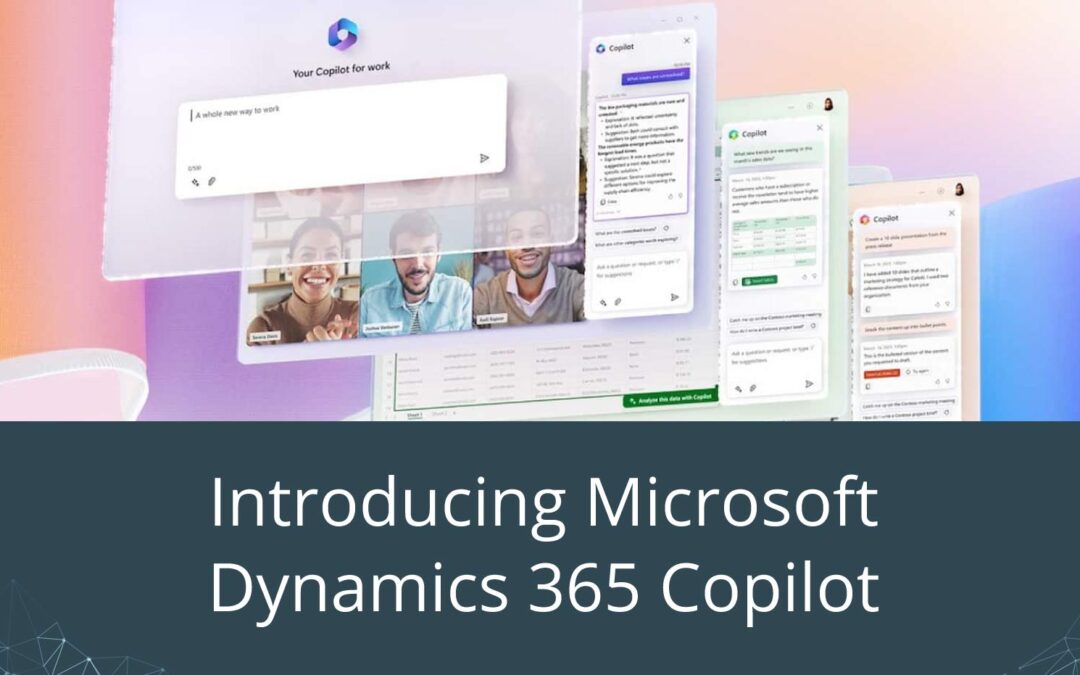
The world of customer relationship management (CRM) is always evolving. As businesses compete for customer loyalty and attention, they seek new ways to engage, delight, and retain customers. In recent years, artificial intelligence (AI) has emerged as a powerful tool for improving customer experiences and driving growth. Microsoft Dynamics 365 Copilot is the latest and most advanced solution in this space, providing from sales to customer service professionals with personalized recommendations, streamlined workflows, and valuable insights into customer interactions and behaviors.
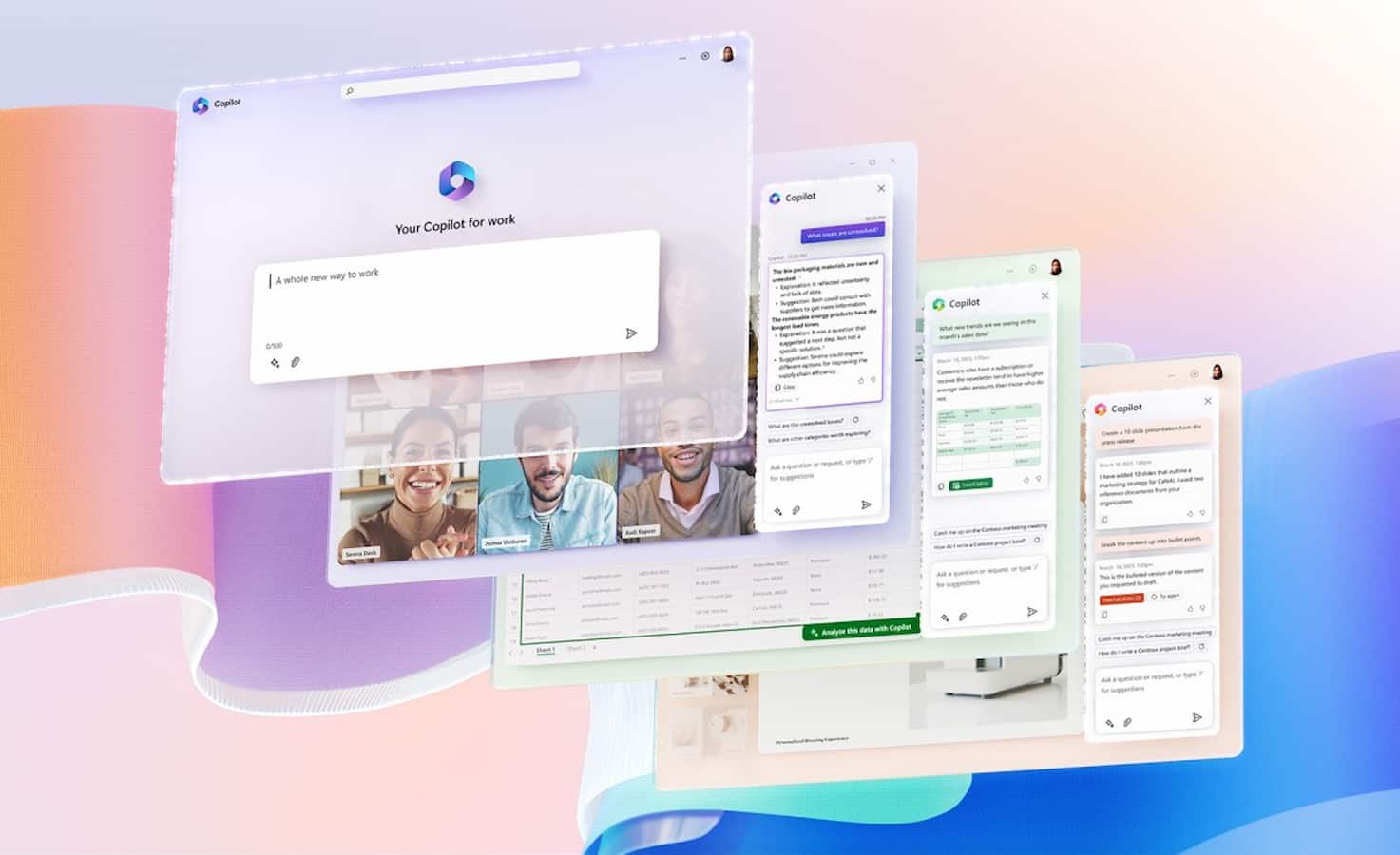
Microsoft Dynamics 365 Copilot is a groundbreaking AI-powered solution that offers a wide range of features to streamline and automate various business processes.
Microsoft’s CVP of Business Apps and Platform, Charles Lamanna, recently revealed the release of Dynamics 365 Copilot on March 6, 2023. This revolutionary AI-powered solution is designed to optimize and automate an array of business processes, ranging from financial management and supply chain operations to customer service and sales.
In this article, we’ll delve into the essential features of Dynamics 365 Copilot, uncover the advantages it offers to businesses of all sizes
Let’s take a closer look at some of its key features:
Dynamics 365 Copilot has the unique ability to understand and respond to natural language queries, making it easier for users to interact with the system using everyday language. This feature eliminates the need for complex commands or programming, allowing users to perform tasks efficiently. For instance, users can simply ask Copilot to create a new invoice for a customer, and the system will automatically generate the relevant document based on data in the chosen ERP system.
Another standout feature of Dynamics 365 Copilot is its advanced analytics capabilities. The solution employs machine learning algorithms to analyze vast amounts of data from multiple sources, including transactional data, customer feedback, and social media. With this, Copilot can provide insights and recommendations to help improve decision-making and drive better business outcomes. For instance, Copilot can identify customer complaints’ trends about a particular product, prompting companies to investigate and resolve the issue before it escalates.
Dynamics 365 Copilot also allows users to create and customize workflows that align with their specific business processes and requirements. This means that companies can tailor their CRM/ERP systems to their unique needs instead of relying on a one-size-fits-all solution. For example, a manufacturing company could create a workflow that automates the process of scheduling production runs based on demand forecasts and inventory levels. This would help to minimize waste and optimize production efficiency.
When it comes to business success, few things are as important as efficiency, customer experience, data insights, and flexibility. That’s where Microsoft Dynamics 365 Copilot comes in. This AI-powered solution promises to streamline and automate a variety of business processes, making it a powerful tool for companies of all sizes.
By automating routine tasks and providing insights, Dynamics 365 Copilot can free up your workforce’s valuable time and optimize resources that can be redirected to more strategic activities. This can lead to increased efficiency and productivity across the organization.
Dynamics 365 Copilot can analyze customer feedback and identify trends to help you address issues proactively and improve your overall customer service. This can lead to higher customer satisfaction, increased brand loyalty, and increased revenue and profitability. Additionally, Microsoft is simplifying virtual agent creation for customer service departments using Power Virtual Agents with conversation boosters, which can help customers get fast access to answers from company websites and internal knowledge bases through Azure OpenAI Service and Bing.
With Copilot’s advanced analytics capabilities, Dynamics 365 Copilot can help companies gain deeper insights into daily business operations and what customers are looking for. This can provide valuable intelligence that can be used to identify new opportunities, optimize processes, and keep you in the know.
Microsoft Dynamics 365 Copilot’s customizable workflows and its functionality to integrate with different Microsoft products give businesses greater flexibility and agility in responding to evolving business requirements. This can help organizations future-proof their operations and ensure they enjoy long-term success.
Overall, Dynamics 365 Copilot empowers businesses with the latest advancements in AI technology, making it possible to automate tedious tasks and unlock the full potential of the workforce. The solution promises to accelerate innovation, improve business outcomes, and transform the way organizations operate in every line of business.
Connect with Solution Sales Professionals at The CRM Team to understand how you can utilize the power of Dynamics 365 Copilot like many organizations that are taking advantage of OpenAI’s ChatGPT.
Learn more about D365 Copilot
The page you requested could not be found. Try refining your search, or use the navigation above to locate the post.
Brands are built on the success of their customer service. Instead of it being a responsive measure to deal with complaints, companies are learning to take personalised, empathetic customer care right to the heart of everything they do. This comes at the right time because customer expectations for hyper-personalised service from businesses continue to increase.
Winning the trust and loyalty of customers depends on how well businesses across every industry utilise their customer data and empower their teams to make every digital and physical engagement matter.
We are here to help you explore the art of customer service and engagement. We understand the importance of creating a more unified, intelligent data ecosystem to spark innovation across customer service teams. As your customers’ needs evolve, we can partner with you to turn every customer interaction into an opportunity to delight.
Create outstanding experiences in the moments that matter
Gaining a customer for life happens when organisations make every interaction matter. Whether that is reacting efficiently to a customer query, complaint, or need, or proactively taking steps to offer a new product or service. The key is to personalise the experience. Better understand your customers to create personalised journeys and lasting brand loyalty.
Demand for this bespoke treatment has increased. Today’s expectations are for hyper-personalisation across all channels of engagement between the customer and organisation. This move towards an omnichannel model has increased the scope in which companies can reach customers in new ways.
Where should a business start in this vast landscape of customer touchpoints to craft a personalisation strategy that leads to customer delight and long-term loyalty? Let us examine this now.
Understand your customers
It takes 12 positive customer experiences to negate the poor impression left behind from a single unpleasant experience. There is no margin for error when it comes to delivering customer care. A crowded marketplace of competitors, coupled with the number of digital channels open to consumers to voice their opinions and experiences with brands (both positive and negative) means that a single missed opportunity to delight a customer can have a significant impact on your brand reputation.
Employees use data to personalise the experience of the customer. The goal is to make every customer feel that the service they are receiving is 100 percent customised to them. However, this is not always achievable due to time and budget constraints.
Instead, a crucial step is to analyse your own data estate. From your customer relationship management (CRM) system to social channels and customer engagement (CE) platforms. Integrating this data for analysis with a Customer Data Platform (CDP) can help to surface rich insight by creating a single customer view that generates individualised personas.
Predicting customer behaviours using these data-driven personas can allow businesses to segment their customers more effectively in order to better align customer treatment strategies.
Embrace omnichannel experiences
The ways that customers engage with your business continue to expand. This offers a huge opportunity to benefit from the increased customer data flowing into your business.
Unifying this data into a consolidated customer profile that can carry across any customer touchpoint is fundamental to business personalisation efforts. As a result, conversations are more targeted and relevant. Additionally, customer service agents gain a greater understanding of the events leading up to a customer interaction if this unified omnichannel profile is accessible and properly collated.
Make the most of innovation to personalise
AI adoption for customer service has been widespread. However, its full potential to drive personalisation lies beyond the simple Q&A functionality that has become a popular standard.
Conversational AI’s ability to learn about customer interests and preferences, and then re-engage with personalised product recommendations at key stages of the buying process has become a key personalisation capability for companies to adopt.
The more simplistic virtual assistant functionality also has its place. For example, where customers need to action more simple tasks, such as getting an update on an order status. These systems complement the more complex analytical use cases. AI should be thought of as augmenting existing processes that extend the consistency of your company identity.
Personalise – but do not overdo it
It can be a fine line to tread between providing a customer with bespoke service and appearing to be compromising their privacy. Location-based personalisation techniques such as offers/greetings sent to apps on consumers’ phones when they pass by a store can come off as invasive.
At the same time, be as transparent as possible when it comes to informing consumers about how and why their data is used. Regulations like GDPR (General Data Protection Regulation) have helped created industry standards for this. However, companies can always look to bolster trust with their own in-house messaging and policy statements.
Do not lose the human touch
The capabilities of AI and data analytics are crucial to developing the insights necessary for understanding customers, building profiles, and offering bespoke offers and interactions.
However, businesses should not over-rely on these automated capabilities. The moments that matter are often those of one-on-one human connection. Take time to establish a comprehensive culture of communication that is agile to change. This is essential to empower your customer service agents with the empathetic skills they need to help find resolutions for customers that are personal and valued.
Personalise your customer’s experiences
The ways that personalisation will be felt across customer service will continue to evolve. Either from ongoing trends of increasing digital touchpoints or unexpected factors. Being agile to change is key.
We work with customers across industries to implement modular solutions that fit into existing customer service ecosystems to unlock new personalisation capabilities.
Why use Dynamics 365?
Align sales and marketing
Sales and marketing components can work together to help you better understand a customer’s needs and address those needs through the right marketing channels. Some of the ways these two functions can work together to help you are:
Increase sales productivity
The right CRM software allows your sales team to find, prioritise the right leads, and deliver insights on when and where your sales teams engage with customers. These systems can work together to:
Build better customer relationships
Bringing customer service and sales together helps you determine and predict your customers’ preferences and makes it easier for your buyers to interact and trust doing business with you. When these two solutions combine, they can help you:
Get an end-to-end view of your customers
Turn data into insights to keep your current customers happy or connect with new prospects. Other benefits include the ability to:
Use a common platform
CRM takes disparate customer relationship software functions and brings them all together for seamless management. Other common platform benefits are:
Get visibility into customers
The more you know your customer’s preferences, the more likely you are to gain their trust and, eventually, their loyalty. Giving your team visibility into what makes customers tick will give you the inside edge over the competition. Put the customer at the centre of your business with CRM software that helps you:
Offer customer portals
Online self-service portals put customers in control of their data, help them learn about product information, and let them track account activity. Companies have grown to realise that as vital as it is to provide their staff with an online company portal, offering it to clients makes it easier to engage with them as well. Here are three other reasons why customer portals for clients make sense:
Marketing: Improve your customers’ journey
Generate multichannel marketing campaigns, nurture sales-ready leads, and align your sales and marketing teams with planning and tracking tools that integrate with your existing apps and services.
Subscribe to our newsletter
The page you requested could not be found. Try refining your search, or use the navigation above to locate the post.

Dynamics 365 and Power Platform 2023 Release Wave 1.
Microsoft published its 2023 release wave 1 plans for Microsoft Dynamics 365 and Microsoft Power Platform on January 25. They comprise a compilation of enhanced capabilities planned to be released between April 2023 and September 2023. The first release wave of this year includes hundreds of updates and enhancements, which demonstrate Microsoft’s continued commitment to empowering digital transformation.
By bridging data, insights, and people silos, this release wave adds value to every role. By enabling AI-guided insights and suggested actions, automating tasks and processes, integrating collaboration into workflows seamlessly, and building low-code solutions, new capabilities empower informed decisions.
A review of Dynamics 365 updates






















| Milestone | Date | Description |
| Release plans available | January 25, 2023 | Learn about the new capabilities coming in the 2023 release wave 1 (April 2023 – September 2023) across Microsoft Power Platform, Dynamics 365, and Microsoft Cloud for Industry. |
| Early access available | January 30, 2023 | Test and validate new features and capabilities that will be a part of the 2023 release wave 1, coming in April, before they get enabled automatically for your users. You can view the Microsoft Power Platform 2023 release wave 1 early access features now. |
| Release plans available in 11 additional languages | February 21, 2023 | The Microsoft Power Platform, Dynamics 365, and Microsoft Cloud for Industry release plans are published in Danish, Dutch, Finnish, French, German, Italian, Japanese, Norwegian, Portuguese (Brazilian), Spanish, and Swedish. |
| General availability | April 1, 2023 | Production deployment for the 2023 release wave 1 begins. Regional deployments will start on April 1, 2023. |
The page you requested could not be found. Try refining your search, or use the navigation above to locate the post.