CRM Agent Technology: Top AI Solutions & Benefits for 2025

CRM Agent Technology: Top AI Solutions & Benefits for 2025

Revolutionize Your Sales Strategy

Harness AI for Unprecedented Sales Growth

Explore how cutting-edge CRM technologies are transforming sales processes, enhancing productivity, and driving success in the digital age.

The CRM Team
}
Sept 9, 2025
15 Mins Read

CRM Agent Technology: Top AI Solutions & Benefits for 2025

Sales teams are designed to close deals, but too often get bogged down with repetitive admin like manually qualifying leads, entering data, and trying to keep up with follow-ups. This slows response times and lets opportunities slip through the cracks, especially as only 51% of sales professionals currently use AI to help lighten the load.

CRM agents change that equation. These AI-powered digital workers automate lead qualification, customer communication, and data management, working 24/7 to free your team for higher-value selling. In this guide, you’ll see the key benefits of CRM agent technology, the features that matter most, and practical steps to measure their impact on sales productivity and success.

Key Takeaways:

  • $CRM agents work 24/7 to qualify leads, answer questions, and manage follow-ups automatically, freeing your team to focus on closing deals and building relationships.
  • $These AI-powered digital workers learn from every customer interaction and get smarter over time, unlike basic chatbots that only follow scripts.
  • $Most businesses see measurable ROI within 3-6 months through faster lead response times, reduced manual work, and higher conversion rates.
  • $With The CRM Team, you can build intelligent workflows without coding — just drag and drop to automatically categorise leads, extract key information, and trigger actions across your entire team.
  • $CRM agents handle routine tasks at scale while maintaining personalisation, letting you grow your customer base without hiring proportionally more staff.

What are CRM agents?

CRM agents are AI-powered digital workers that handle customer relationship tasks without human help. Think of them as an AI sales agent that can qualify leads, answer customer questions, and manage follow-ups automatically.

Unlike regular CRM software where you manually enter data and track interactions, a CRM with AI can make decisions on its own. They learn from your customer data and get smarter over time.


AI-powered automation in CRM

AI transforms your CRM from a digital filing cabinet into an active team member. Here’s how the technology works in simple terms:

  • Machine learning: The agent learns from every customer interaction and improves its responses
  • Natural language processing: It understands what customers mean, not just what they say
  • Predictive analytics: It spots patterns and tells you what’s likely to happen next

These technologies work together to handle complex processes that used to require human judgment, making sales automation more intuitive than ever.


Digital workers vs chatbots

You might wonder: aren’t CRM agents just fancy chatbots? Not quite. While chatbots answer questions with pre-written scripts, CRM agents manage entire customer relationships in advanced CRM software solutions.


Core components of CRM agent technology

Every CRM agent needs four key parts to work effectively. Understanding these helps you see how agents can fit into your business:

  • Reasoning engine: The brain that analyzes situations and decides what to do next.
  • Learning module: The part that remembers what worked and what didn’t.
  • Action interfaces: The connections to your email, phone, and other systems.
  • Knowledge base: The library of information about your products, policies, and customers.
CRM agents vs traditional CRM systems

If you’re using a traditional CRM, you might wonder whether switching to an agent-powered system is worth it. Here’s what changes when you make the move.


Speed of implementation

Traditional CRMs often take months to set up properly. You need to configure fields, build workflows, and train your team on complex processes.

CRM agents start delivering value much faster. They learn from your existing data and adapt to your processes rather than forcing you to change. Many businesses see results within weeks, not months.


Automation capabilities

Traditional CRM automation follows rigid rules: “If this, then that.” These rules work until something unexpected happens, which is often.

CRM agents use intelligent automation that adapts to each situation. They consider context, learn from outcomes, and make decisions more like a human would. This flexibility means fewer errors and less manual intervention.


Learning and adaptation

Your traditional CRM is the same today as it was last year unless you manually updated it. CRM agents get smarter every day through machine learning.

They notice which email templates get the best response rates and use them more often. They learn which lead sources produce the best customers and adjust scoring accordingly. This continuous improvement happens automatically.


Cost and ROI comparison

CRM agents might cost more upfront than traditional systems, but they deliver ROI faster through reduced labor costs, higher conversion rates, better retention, and faster scaling.

7 key benefits of CRM agent technology
CRM agents do more than save time — they fundamentally change how you can grow your business by leveraging AI for sales prospecting and automated processes. Let’s look at the specific ways they help revenue teams succeed.


1. 24/7 customer engagement

Your customers don’t stop needing help when you leave the office. CRM agents work around the clock, qualifying leads from different time zones and answering customer questions on weekends.

Imagine a prospect in Australia visits your website while you’re asleep. The agent can qualify them, schedule a meeting for your morning, and send them relevant information — all before you wake up, similar to a CRM for call center approach that never misses a call.


2. Automated lead qualification and scoring

How much time does your team spend figuring out which leads to pursue? CRM agents analyze every interaction to score leads automatically.

They look at website behavior, email engagement, and company information to identify your hottest prospects, pairing these insights with sales tech to streamline your pipeline. Your sales team gets a prioritized list each morning, so they know exactly who to call first.


3. Predictive analytics and insights

CRM agents spot opportunities you might miss. They analyze customer patterns to predict who’s likely to buy, who might cancel, and when to reach out for maximum impact, especially when leveraging AI in B2B sales.

For example, if a customer’s usage drops suddenly, the agent alerts you before they consider switching to a competitor. This proactive approach helps you save deals before they’re lost.


4. Scalability without added headcount

Growing companies face a challenge: how do you handle more customers without hiring proportionally more staff? CRM agents solve this by handling increasing workloads automatically.

Whether you have 100 or 10,000 customers, agents manage routine tasks at the same high quality. This advantage is particularly relevant for CRM for insurance agents who handle large client portfolios. This lets your human team focus on strategic work while agents handle the volume.


5. Reduced manual data entry

Nobody became a salesperson to type notes all day, yet according to HubSpot, sellers in the US and Canada spend over one-third of their time on administrative duties and updating their CRM. CRM agents capture information from emails, calls, and meetings automatically, aligning perfectly with CRM automation best practices.

They update contact records, log activities, and maintain accurate data without anyone lifting a finger. Your team spends time selling, not typing.


6. Personalized customer experiences at scale

Every customer wants to feel special, but personalizing thousands of interactions seems impossible. CRM agents make it happen by tailoring every message to individual preferences and history.

They remember past purchases, communication preferences, and specific needs by using customer data analysis to deliver relevant recommendations that feel personal. Each customer gets relevant recommendations and timely follow-ups that feel personal because they are.


7. Improved team productivity

When agents handle routine work, your team can focus on what humans do best — building relationships and solving complex problems. Sales reps arrive at meetings fully prepared with talking points and customer insights provided by the agent.


Chat to The CRM Team

How CRM agents power smarter sales and customer service

Sales and support teams face constant pressure to do more with less: faster outreach, more meaningful customer touch points, and seamless collaboration. But with limited time and resources, scaling up often means sacrificing quality or burning out your best people. That’s where CRM agents come in.

These intelligent digital partners don’t just automate tasks — they fundamentally change how you connect with customers and drive growth, freeing your team to focus on high-impact work while elevating every interaction. Here’s how CRM agents reshape the day-to-day for both sales and service.


Automating sales development for faster pipeline growth

Your SDR team probably spends hours on repetitive tasks like initial outreach and meeting scheduling. CRM agents take over these processes while maintaining quality.

The agent identifies interested prospects, sends personalized first messages, and books meetings directly into calendars. When prospects respond, it knows whether to continue the conversation or hand off to a human.

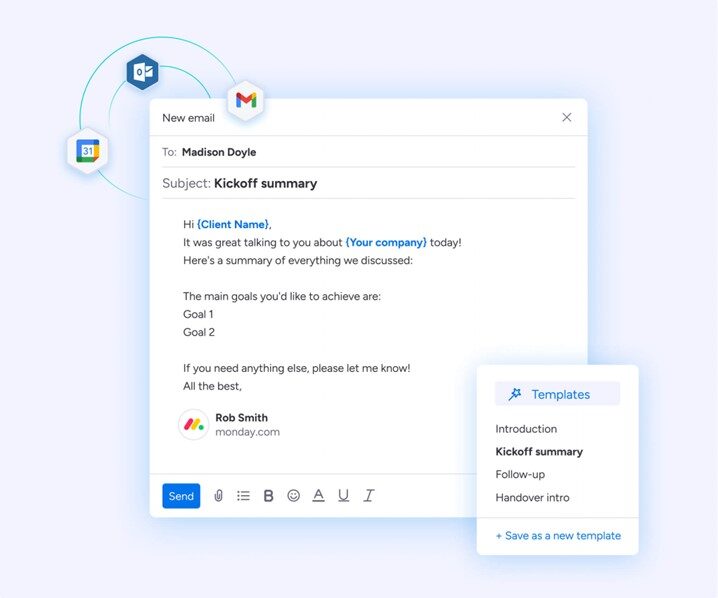
monday CRM makes this even easier with AI Blocks that categorize leads instantly and extract key information from any communication. Your team sees exactly what matters without reading through long email threads.


Delivering smarter, context-aware customer support

Support tickets pile up fast, especially for growing companies. CRM agents handle common questions instantly while routing complex issues to the right specialists.

They don’t just match keywords — they understand context. If a customer mentions they’re “having trouble with the new update,” the agent knows their account history, what version they’re using, and whether similar issues have been resolved before.

Driving proactive engagement to prevent churn

Waiting for customers to tell you they’re unhappy usually means waiting too long. CRM agents monitor usage patterns and engagement levels to spot problems early.

When a customer’s activity drops or their renewal date approaches, the agent triggers appropriate outreach. It might send helpful resources, schedule a check-in call, or offer incentives — whatever has worked for similar customers in the past.


Unlocking real-time performance insights for sales leaders

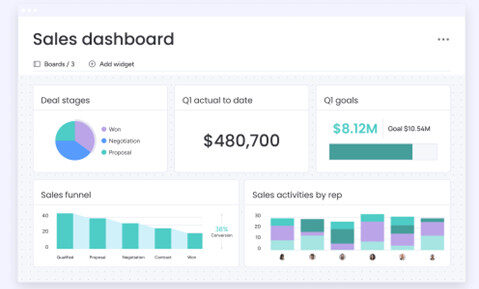
Sales managers need to know what’s working and what isn’t. CRM agents provide continuous analysis of team performance, deal progress, and pipeline health.

Instead of waiting for monthly reports, you get daily insights about which reps need coaching, which deals are stuck, and what actions could improve results. The agent even suggests specific next steps based on successful patterns.
Essential features of modern CRM agent platforms

Not all CRM agent platforms are equal. Here are the must-have features that separate powerful agents from basic automation.


Natural language processing capabilities

Your CRM agent needs to understand human communication, not just process keywords. Good NLP means the agent can:

  • Detect urgency: Know when “I need this ASAP” requires immediate escalation
  • Understand context: Recognize that “the issue from last week” refers to a specific support ticket
  • Read sentiment: Identify frustrated customers who need special attention


Multi-channel integration

Customers contact you through email, phone, chat, and social media. Your CRM agent should work across all these channels seamlessly.

This means maintaining conversation context when someone emails after calling, or when they message on social media about an email they sent. The agent keeps everything connected so customers never have to repeat themselves.


Real-time data analysis

Speed matters in sales and service. CRM agents need to process information instantly to provide relevant responses and recommendations.

When a high-value prospect visits your pricing page, the agent should alert sales immediately. When a customer’s credit card fails, it should trigger retention protocols right away.


Customizable workflows

Your business is unique, and your CRM agent should adapt to your specific processes. Look for platforms that let you configure agent behavior without coding.

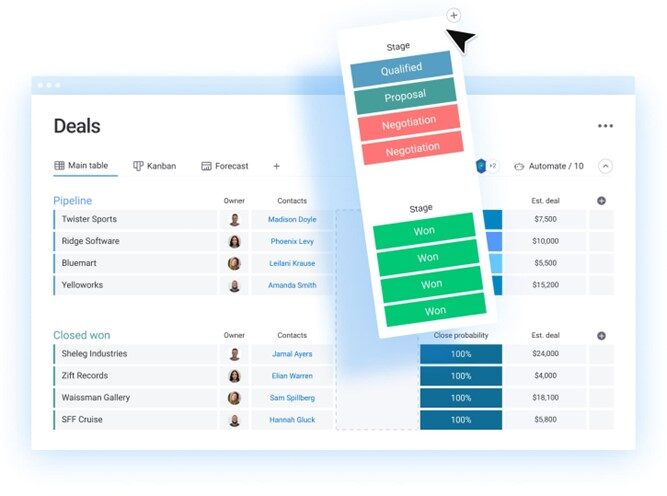
You should be able to set rules for lead routing, define escalation triggers, and customize communication templates. The best platforms make this as simple as dragging and dropping.


Built-in security and compliance

Customer data is sensitive, and CRM agents handle a lot of it. Essential security features include:

  • Encryption: All data should be protected in transit and at rest
  • Access controls: Define who can see what information
  • Audit trails: Track every action the agent takes
  • Compliance tools: Built-in features for GDPR, HIPAA, or industry-specific requirements

5 Top CRM agent examples across industries

Different industries use CRM agents in unique ways. These examples show how agent technology adapts to various business needs.


Healthcare patient management

Healthcare providers use CRM agents to manage patient relationships while maintaining strict privacy standards. Agents handle appointment reminders, medication refill notices, and follow-up care coordination.

They can identify patients who miss appointments and automatically reschedule, or flag those who might need extra support based on their interaction patterns. All while maintaining HIPAA compliance.


Financial services compliance

Banks and investment firms face complex regulatory requirements. CRM agents help by monitoring all client communications for compliance issues and automatically generating required documentation.

When advisors talk to clients, agents provide real-time guidance about what they can and cannot say. They also track all interactions for audit purposes and flag potential violations before they become problems.


Retail personalization

Retail CRM agents analyze purchase history and browsing behavior to create personalized shopping experiences. They send targeted product recommendations, recover abandoned carts, and coordinate inventory with demand.

During peak seasons, agents handle the surge in customer inquiries while maintaining personalization. They know which customers prefer email versus text, who responds to discounts, and when to reach out for maximum impact.


B2B sales acceleration

B2B sales cycles involve multiple stakeholders and long decision processes. CRM agents track every interaction across the buying committee, identifying champions and blockers.

They provide sales reps with talking points for each stakeholder, suggest next steps based on similar successful deals, and alert managers when deals need attention. This orchestration keeps complex sales moving forward.


Professional services automation

Consulting firms and agencies use CRM agents to manage client communications throughout long projects. Agents send progress updates, coordinate feedback rounds, and ensure nothing falls through the cracks.

They can detect scope creep by analyzing communication patterns and alert project managers before budgets are impacted. This proactive management keeps projects profitable and clients happy.

How The CRM Team powers intelligent agent workflows
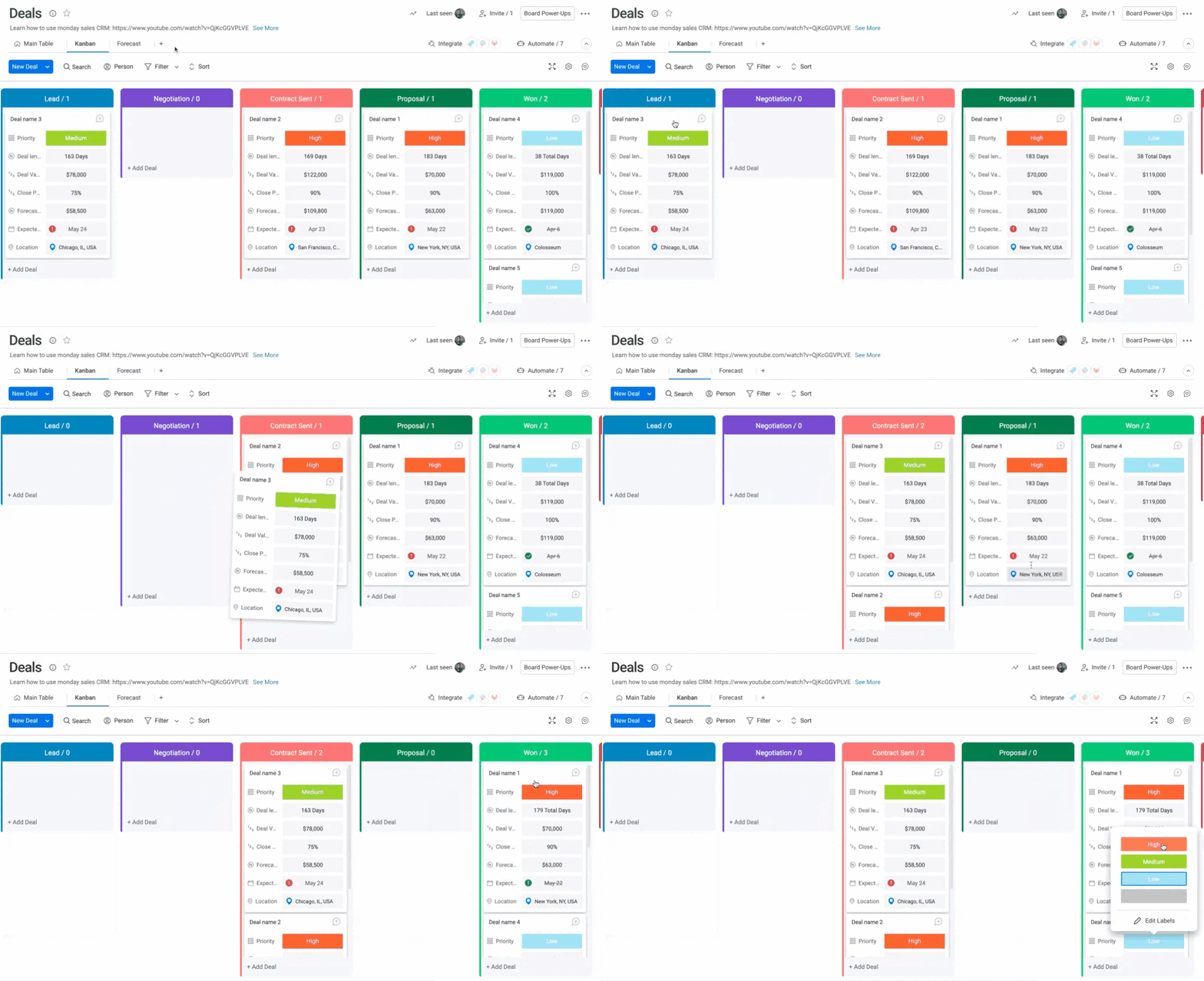
With agent technology built into your CRM, teams of any size or technical skill level can completely transform how they work. These intelligent features are designed for real people, making AI-powered workflows intuitive and accessible, even for small businesses that don’t have in-house IT support. Personalised value and automation are now within reach for everyone.


Making CRM AI agents accessible for everyone

  • Personalized small business support: Access enterprise-level AI assistance tailored specifically for teams under 20 employees who typically lack dedicated technical resources
  • AI-guided onboarding: Get personalized 1:1 guidance through virtual calls that understand your specific business challenges
  • Value-based messaging: Receive customized recommendations that match your unique workflow requirements
  • Streamlined activation: Experience a seamless setup-to-payment journey without technical hurdles


AI Blocks for instant automation
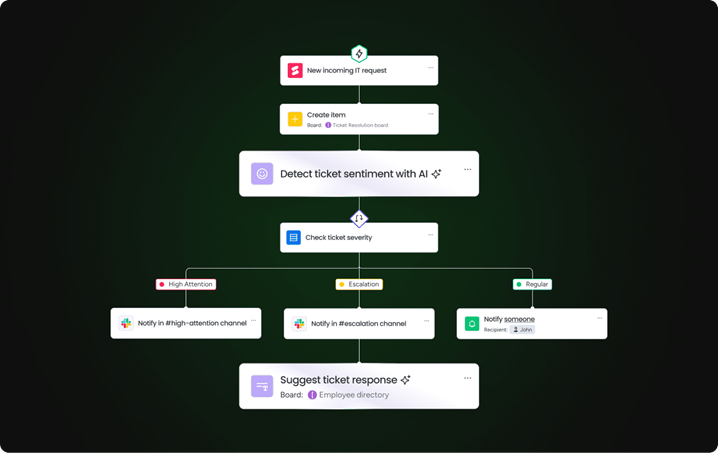
AI Blocks work like building blocks for automation. You don’t need to understand AI to use them — just click to add capabilities like:

  • Categorize: Automatically sort leads by industry, size, or potential
  • Extract Info: Pull key details from emails and documents into structured fields
  • Summarize: Create quick overviews of long conversations or meetings

These blocks work together to create sophisticated workflows. For example, combine Extract Info with Categorize to automatically process incoming leads and route them to the right sales rep.


No-code agent configuration

Building CRM agents in monday CRM requires zero coding knowledge. The visual interface lets you drag and drop to create agent workflows that match your exact needs.

You can adjust agent behavior anytime as your business evolves. Need to change lead scoring criteria? Update it in minutes. Want to add a new automation? Just drag in a new block.


Seamless integration across teams

Do monday CRM agents work in isolation? No! They connect with your entire organization through the monday.com Work OS, sharing insights and triggering actions across departments.

When an agent identifies an upsell opportunity, it can notify sales, update the product team about feature requests, and alert customer success to provide extra support. This coordination happens automatically, keeping everyone aligned.

4 steps to implement CRM agent technology

Ready to add CRM agents to your business? Here’s a practical, step-by-step roadmap to get started:


Step 1: Assess your current CRM infrastructure

Start by examining what you have now. Look at your data quality, system integrations, and current workflows to identify where agents can help most.

Check these areas:

  • Data completeness: Are customer records accurate and up-to-date?
  • Integration points: What systems need to connect with your CRM agent?
  • Process documentation: Are your current workflows clearly defined?
  • Pain points: Where does your team waste the most time?


Step 2: Define agent roles and workflows

Decide exactly what you want agents to do. Start with simple, high-volume tasks before moving to complex processes.

Map out each agent workflow in detail. For example, for lead qualification:

  • What information does the agent need to gather?
  • What questions should it ask?
  • When should it hand off to a human?
  • How will it prioritize leads?


Step 3: Train your team for AI adoption

Your team might worry that agents will replace them. Address these concerns directly by showing how agents make their jobs easier, not obsolete. In fact, monday.com’s world of Work report found that 60% of employees believe improved training is key to navigating workplace transitions.

Provide training on:

  • Working with agents: How to review agent recommendations
  • Escalation handling: When and how to take over from an agent
  • Performance monitoring: How to track agent effectiveness
  • Continuous improvement: How to help agents learn and improve


Step 4: Monitor and optimize agent performance

Launch your CRM agents with clear success metrics. Track performance weekly and adjust as needed.

Key metrics to monitor:

  • Response times: How quickly agents handle inquiries
  • Conversion rates: How well agents qualify and nurture leads
  • Customer satisfaction: How customers rate agent interactions
  • Efficiency gains: Time saved on routine tasks


How to measure ROI and success with CRM agents

You need to prove that CRM agents deliver real value — not just in theory, but in day-to-day results that matter to your business. That means going beyond gut feel or anecdotal wins and actually tracking how agent-driven automation impacts your bottom line, team productivity, and customer satisfaction.

Here’s how to measure their impact on your business:


Key performance indicators

Focus on metrics that directly connect to revenue and efficiency. Track these KPIs to demonstrate agent value:

  • Lead response time: Measure how much faster you engage new prospects.
  • Conversion rates: Compare agent-qualified leads to manually qualified ones.
  • Customer lifetime value: See if agent-managed relationships last longer.
  • Cost per acquisition: Calculate savings from automated processes.


Customer satisfaction metrics

Happy customers are the ultimate success metric. Measure satisfaction through:

  • Response ratings: Ask customers to rate agent interactions.
  • Resolution times: Track how quickly issues get resolved.
  • Repeat contact rates: See if customers need to reach out multiple times.
  • Net Promoter Score: Measure overall satisfaction trends.


Efficiency gains and time savings

Calculate the real hours your team saves with CRM agents. Track time spent on manual data entry before and after agents; lead qualification and scoring; meeting scheduling and follow-ups; and report generation and analysis. Then, convert these time savings into dollar values to show concrete ROI.


The future of sales and service: Why CRM agent technology matters now

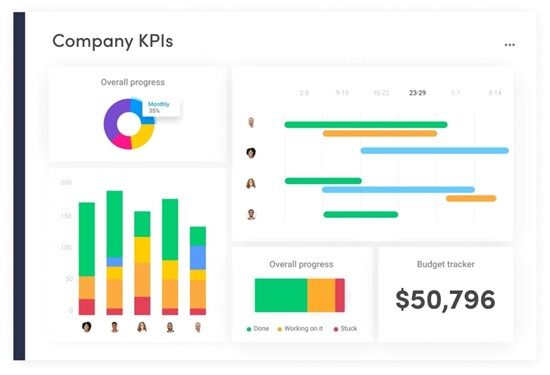
AI-powered CRM agents aren’t just the next step in sales and customer service—they’re a leap forward. By automating routine tasks, delivering personalized experiences at scale, and providing real-time insights, these digital workers empower your team to focus on building relationships and driving results.

The businesses that embrace CRM agent technology today will be tomorrow’s leaders, equipped to adapt, innovate, and grow in a rapidly changing landscape. Ready to see what’s possible? The time to transform your workflow — and your customer experience — is now.
 

The future of sales and service: Why CRM agent technology matters now

AI-powered CRM agents aren’t just the next step in sales and customer service—they’re a leap forward. By automating routine tasks, delivering personalised experiences at scale, and providing real-time insights, these digital workers empower your team to focus on building relationships and driving results.

The businesses that embrace CRM agent technology today will be tomorrow’s leaders, equipped to adapt, innovate, and grow in a rapidly changing landscape. Ready to see what’s possible? The time to transform your workflow — and your customer experience — is now.


Get started with The CRM Team

Written By Chanté Manders

Related Blog Posts

SBV Transforming HR with monday.com

SBV Transforming HR with monday.com

SBV partnered with The CRM Team to transform finance operations using monday.com. By centralizing accounts payable, payroll, and compliance workflows, SBV achieved full visibility, improved accountability, and thousands of hours in time savings—creating a more agile, transparent, and data-driven finance ecosystem.

Ready to Transform Your Business?

Join the ranks of successful enterprises that have revolutionized their operations with our cutting-edge digital solutions. Contact us to discover how we can help you achieve measurable impact.


IT service portals: the key to faster, smarter support

IT service portals: the key to faster, smarter support

Transform IT Support with Smarter Service Portals

IT service portals: the key to faster, smarter support.

Say goodbye to email chaos. With monday service, IT teams gain a clear, automated, and user-friendly portal that keeps requests visible, measurable, and under control.

The CRM Team
}
Sept 28, 2025
13 Mins Read

IT service portals: the key to faster, smarter support

Support teams are under pressure to resolve requests quickly, yet many of those requests are repetitive and time-consuming. An IT service portal gives employees and customers one place to request support, find resources, and track progress. In this article, you’ll learn how IT service portals improve productivity, lower costs, and give employees more control, plus how a platform like monday service makes it easy to launch one with AI-powered automation and no-code customization.

Get started The CRM Team!

Key Takeaways:

  • $An IT service portal cuts down on duplicate requests, lowers costs, and delivers consistent support.
  • $Employees gain self-service access to a knowledge base and service catalogue, reducing wait times.
  • $Automations streamline IT workflows, from routing tickets to sending updates and escalations.
  • $Dashboards and reporting provide visibility into SLA performance, ticket trends, and recurring issues.
  • $Enterprise-ready features like SSO, SCIM, and audit logs ensure security and compliance at scale.
  • $With monday service, you can launch a customizable IT service portal powered by AI and no-code configuration.

What is an IT service portal?

An IT service portal is a digital workspace where employees and customers can access IT resources, request support, and track updates in one place. Instead of relying on manual replies from a helpdesk, people get self-service options that resolve issues quickly.

The goal is twofold: give employees more control over support and shift IT’s focus from routine tickets to higher-value work. Unlike a traditional helpdesk that manages requests one by one, a service portal reduces that dependency with tools like a knowledge base, service catalogue, and automated workflows.

Why invest in an IT self-service portal?

IT teams face growing demands, while employees expect quick answers. A self-service portal supports both needs:

  • Boost productivity: Employees resolve issues on their own instead of waiting in queues.
  • Equip employees: A knowledge base and service catalogue give people reliable resources when they need them.
  • Cut costs: Minimizing routine requests frees IT to focus on strategic projects.
  • Deliver consistent service: A clear, reliable process builds trust across the organization.

When employees can find answers quickly, ticket volume naturally drops and both IT and employees benefit.

What features make an IT service portal effective?

An IT service portal should deliver more than basic ticket logging. The right features drive adoption, make self-service usable, and give IT the visibility to manage requests efficiently. Together, these capabilities create a smoother experience for employees and measurable gains for IT.


Build a knowledge base employees rely on

A knowledge base is the foundation of self-service. Step-by-step guides, FAQs, and troubleshooting walkthroughs let employees solve routine issues on their own. This reduces wait times and shifts IT’s focus to more strategic projects. To be effective, a knowledge base should be easy to update, searchable, and accessible across devices.


Streamline requests with a service catalogue

A service catalogue standardizes how employees request access, devices, or software. Instead of sending ad hoc emails, they choose from predefined services with clear descriptions and approval workflows. This consistency helps IT track requests from submission through resolution without unnecessary manual effort.


Track tickets with visibility and accountability

Some issues still require IT support. A strong portal makes ticket logging simple and transparent, giving employees clear visibility into ownership and progress. Features like automated notifications, ticket history, and SLA tracking strengthen trust and reduce back-and-forth communication.


Make search intuitive and reliable

Search is what makes self-service usable. Employees should be able to quickly find the right resource without sifting through long lists. A modern portal surfaces the most relevant content, whether it’s a guide, a catalogue item, or an open ticket, so users can resolve issues faster.


Automate repetitive IT tasks

Automation reduces the manual work that slows IT down. Routing tickets to the right team, sending closure messages, and escalating requests at risk of breaching SLAs all keep requests moving. With fewer routine tasks to manage, IT can dedicate time to innovation and long-term improvements.


Enable real-time communication for urgent needs

Employees sometimes need immediate support. The live chat inside the portal connects them directly with IT for pressing issues, while proactive announcements, such as planned maintenance or outages, help reduce duplicate tickets. With monday service, teams can also push updates directly into Slack channels to keep employees informed without switching tools.

Try it with The CRM Team

How do you choose the right IT service portal?

Selecting an IT service portal requires more than a feature checklist. The best option will support your scale, adapt to your processes, and protect sensitive data.

  • Cloud or on-premises: Cloud systems typically deploy faster, require less maintenance, and scale with demand. On-premises deployments may be necessary for organizations with strict compliance or data residency needs.
  • Customization and integrations: Look for a portal that adapts to your workflows and connects seamlessly with CRM, HR, or asset management systems. Confirm whether integrations are built-in, API-driven, or require custom development.
  • Cost and scalability: Evaluate the total cost of ownership, including licenses, implementation, training, and administration. Ensure the system can handle high ticket volumes, support multiple departments, and scale workflows, approvals, and reporting as your business grows.
  • Security and compliance: Go beyond role-based access and encryption. Prioritize platforms with identity and access management (SSO, SCIM), audit logs, and independent certifications like SOC 2 Type II or ISO 27001. For regulated industries, verify support for HIPAA and GDPR.
  • Branding and accessibility: Branded portals with custom domains and mobile-friendly designs encourage adoption. Accessibility features such as screen reader compatibility, keyboard navigation, and WCAG compliance ensure all employees can participate.
  • Ease of use and adoption: Adoption is critical. Choose a portal that feels intuitive, integrates with familiar tools like email and chat, and makes request tracking transparent. Overcome common hurdles, like employees defaulting to email, through awareness campaigns, training, and leadership support.

The right portal balances robust functionality with usability, giving IT the control they need while creating a seamless experience employees will use every day.


Solve IT service challenges with monday service

Many portals are complex to implement and difficult for employees to adopt. The monday service platform provides an intuitive, customizable platform that fits your workflows and scales with your organization.


Centralize support and projects

Requests, tickets, and service catalogue items live in one place. IT teams gain full visibility into every ticket and its related project milestones, ensuring issues are resolved with the broader context in mind.


Resolve more requests with AI and automations

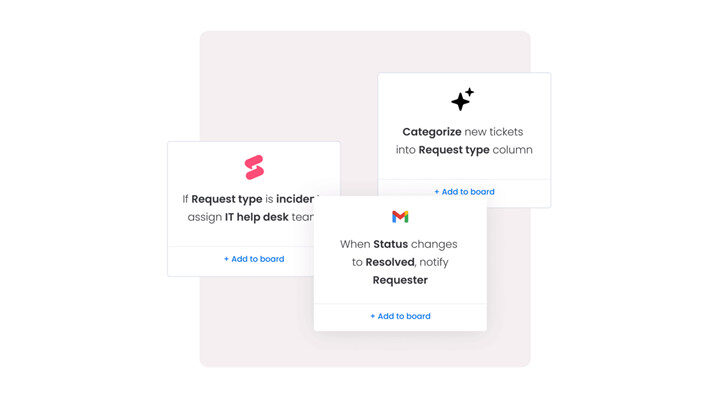
AI routes tickets to the right team, suggests next steps, and triggers CSAT surveys automatically. Automations close resolved tickets, send updates, and escalate urgent issues to keep work moving.

Unlike traditional ITSM (IT service management) tools that stop at routing, monday service AI learns from past tickets and employee behavior. It recommends next-best actions, predicts recurring issues, and surfaces relevant knowledge base content proactively — helping teams prevent problems before they escalate.


Adapt your portal without coding

Every organization has different needs. The flexibility of monday service makes it easy to brand your portal, configure request forms, and adjust approval paths without developer support. As needs change, workflows can be updated in minutes.


Collaborate across teams with full context

Service requests often involve HR, finance, or operations management. Collaboration is seamless with monday service, which allows teams to add approvers, share updates, and attach files directly within a ticket. Everyone stays aligned with the complete history in one place.


Make informed decisions with real-time insights

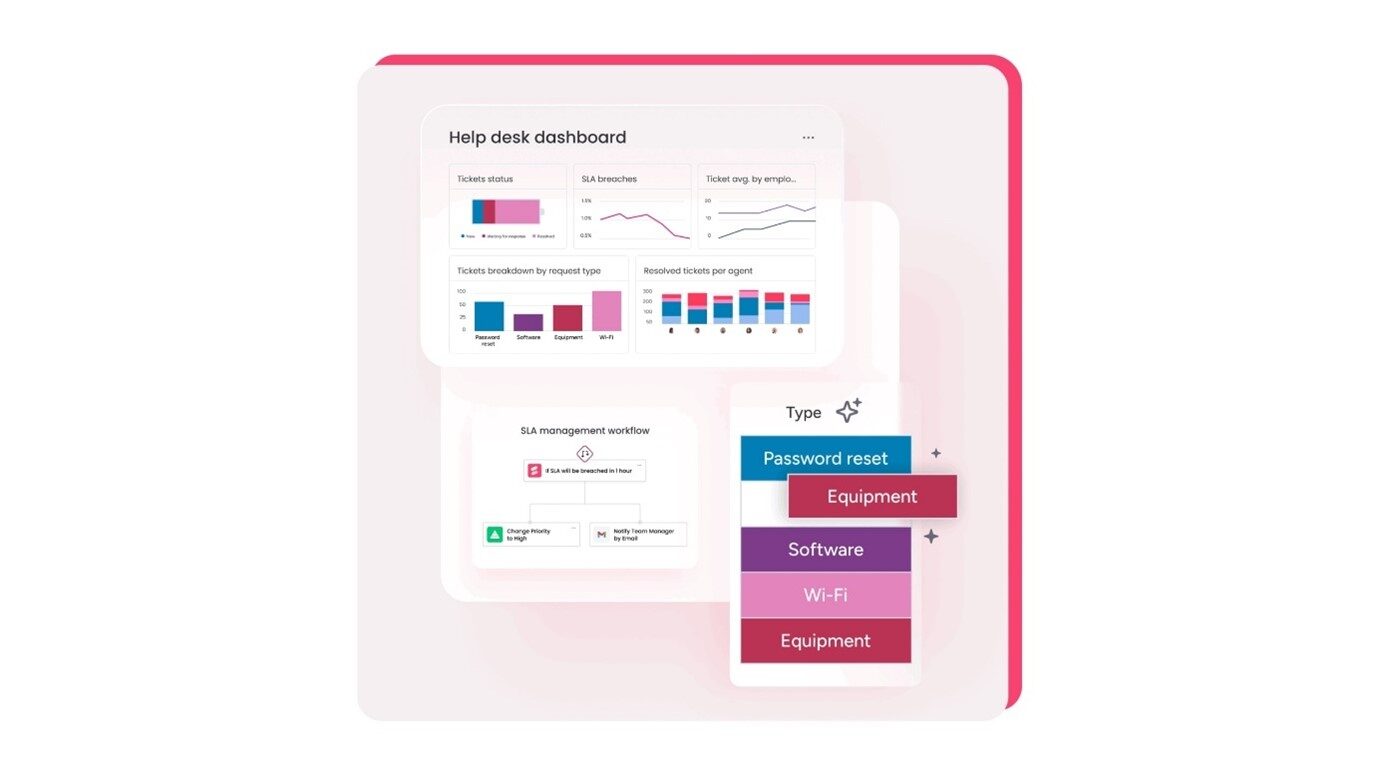
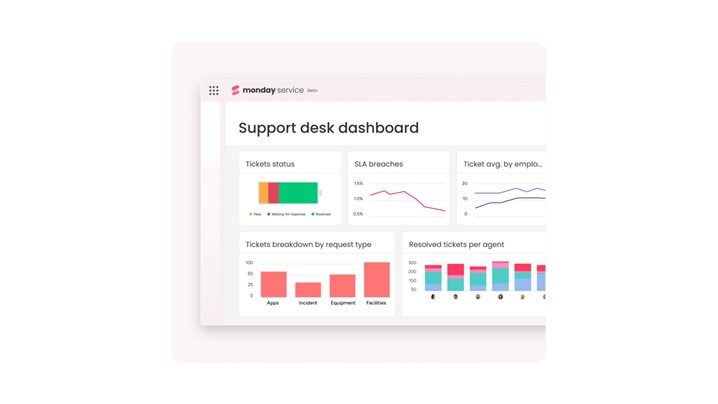
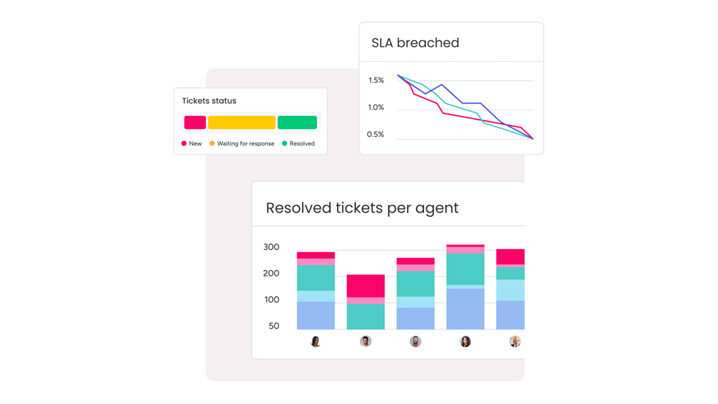
Dashboards display SLA (service level agreement) performance, ticket volumes, and recurring issues. Because service data connects with related projects, leaders can identify trends, address bottlenecks, and prevent problems before they affect the business.


Connect with tools you already use

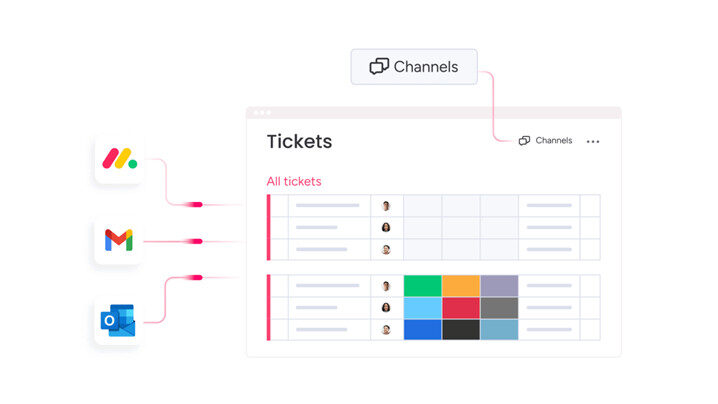
Outlook and Gmail tickets flow directly into monday service. Slack channels display live updates. Azure DevOps connects development workflows, while DocuSign brings contracts and SLAs into one system. These integrations cut context switching and improve efficiency.


Scale confidently with enterprise readiness

Enterprise identity and governance features such as SSO/SAML, SCIM, granular roles, and audit logs are built into monday service. Data is encrypted in transit and at rest, and the platform’s architecture supports high ticket volumes and multi-department operations without sacrificing performance.


Support employees everywhere

Employees can submit requests and track progress from any device. Branded domains build trust, while live chat delivers real-time support when needed. A mobile-friendly interface ensures employees get help wherever they work.

Try it with The CRM Team

How to implement a self-service portal

Rolling out a service portal requires clear goals, careful planning, and consistent follow-through. A structured approach ensures it delivers long-term value.


Define clear goals

Identify the challenges your portal should address. Common objectives include cutting down on duplicate requests, improving SLA compliance, and giving employees faster access to support. Involve IT, HR, operations, and other stakeholders early to set measurable success criteria.


Build a strong foundation

The value of a portal depends on the resources it offers. Create a knowledge base with troubleshooting guides, FAQs, and how-tos for common issues like password resets or access requests. Add a service catalogue with structured forms and approval paths so employees can request hardware, software, or permissions consistently.


Launch and drive adoption

Awareness is critical. Communicate benefits such as faster resolutions, self-service options, and request visibility across internal channels. Provide short training or quick-start guides to help employees feel confident using the portal.

Adoption challenges are common and employees may continue to email IT or hesitate to use automation. These barriers are reduced with monday service through embedded support in Slack and Outlook, plus transparent status tracking that helps employees see progress in real time.


Measure and refine performance

Track performance against your goals with built-in dashboards. Monitor ticket volume, SLA compliance, and CSAT scores. Gather employee feedback to refine workflows, expand the service catalogue, and update content. The dashboards in monday service make it easy to spot trends and adjust quickly.

Successful portals evolve over time. Continuous updates and improvements keep the experience relevant and useful.


Boost productivity and deliver consistent IT support with monday service

An IT service portal cuts down on duplicate requests, lowers costs, and delivers a smoother experience for employees. It also gives IT leaders the visibility they need to operate efficiently.

With monday service, you can launch a portal that’s easy to adopt, customizable to your workflows, and powered by AI. The sooner you shift to an intelligent service portal, the faster your teams can focus on strategic work and innovation.


Get started with The CRM Team

Related Blog Posts

SBV Transforming HR with monday.com

SBV Transforming HR with monday.com

SBV partnered with The CRM Team to transform finance operations using monday.com. By centralizing accounts payable, payroll, and compliance workflows, SBV achieved full visibility, improved accountability, and thousands of hours in time savings—creating a more agile, transparent, and data-driven finance ecosystem.

Ready to Transform Your Business?

Join the ranks of successful enterprises that have revolutionized their operations with our cutting-edge digital solutions. Contact us to discover how we can help you achieve measurable impact.
Navigating the IT World with Farai Sibanda A Conversation on Professionalism and Adaptation

Navigating the IT World with Farai Sibanda A Conversation on Professionalism and Adaptation

Navigating the IT World with Farai Sibanda: A Conversation on Professionalism and Adaptation

The CRM Team
}
Sept 19, 2023
7 Mins Read

# Information Technology, IT professional, Innovation, data security, functional consultant

Jordan-Master-rounded

In the ever-evolving landscape of Information Technology (IT), professionals play a critical role in harnessing the power of technology to drive business success. Farai Sibanda, a seasoned IT expert, shares insights into his journey and experiences as an IT professional. In a candid conversation, Farai sheds light on the challenges, innovations, and skills required in this dynamic field.

Farai’s journey into the world of IT began at a young age. He recalls being the curious kid who loved to tinker with gadgets and explore their inner workings. This early fascination with technology laid the foundation for his career in IT. Farai pursued a degree in Information Systems and later completed a postgraduate diploma in management, setting the stage for his IT career.

“When I was young, I was that kid who would take things apart and try to figure out how they work. I’ve always had this curiosity around technology, which fuelled my passion for IT,” says Farai.

In today’s fast-paced tech landscape, staying current is a top priority for IT professionals. Farai emphasizes the importance of adaptability and continuous learning. Technology evolves rapidly, and IT professionals must keep up with the latest trends and innovations.

“Adaptability is crucial because technology changes at a rapid pace. You need to be someone who’s always willing to learn because you can never know enough in our industry,” Farai advises.

Staying updated requires actively seeking information from various sources. Farai regularly visits technology websites and blogs like Engadget, Windows Central, and The Verge. Additionally, he participates in industry-specific groups on LinkedIn to learn from peers and stay informed about new developments.

IT professionals often face high-pressure situations and tight deadlines. Farai shares a project from his experience where he and his team successfully managed time and resources to meet a critical deadline. In this case, they were tasked with rolling out a new software version for a retail client with over 40 stores.

Despite the challenges, including a tight timeframe and a previous consultant’s departure, Farai and his team worked diligently, including late-night shifts, to meet the client’s deadline. Their efforts paid off, and they successfully completed the project.

Innovation is a cornerstone of the IT field. Farai highlights a situation where he proposed and implemented an innovative solution to improve efficiency. In a retail environment with distributed databases, they faced challenges in manually updating systems across multiple stores.

To address this, Farai and his team developed an automated PowerShell script that streamlined the update process. This innovative solution significantly reduced the time required for system upgrades, demonstrating the power of technology to drive efficiency.

In the IT field, effective communication is crucial when dealing with non-technical team members and stakeholders. Farai emphasizes the need to speak the language of the audience and avoid overwhelming them with technical jargon.

“As a functional consultant, you deal with end-users and business stakeholders a lot. You have to learn to speak their language and convey technical information in a way they understand,” says Farai.

Given the sensitive nature of data handled in IT, data security is paramount. Farai follows best practices to ensure data security and integrity. He backs up all work data in the cloud, uses strong passwords, and implements multi-factor authentication for added security.

Farai Sibanda’s journey through the IT landscape showcases the importance of adaptability, continuous learning, and effective communication in this dynamic field. His experiences reflect the ever-evolving nature of technology and the vital role IT professionals play in shaping the future of businesses. Farai’s commitment to innovation and data security exemplifies the dedication required to thrive in the world of IT.

Yolani Williams – Content Writer

Yolani Williams is the Content Writer at The CRM Team, with the role of producing relevant content such as blogs, articles, and social media copy. Yolani holds a qualification in Strategic Corporate Communication from the University of Johannesburg and has 3 years of relevant experience in the marketing field.

Subscribe to our newsletter

No Results Found

The page you requested could not be found. Try refining your search, or use the navigation above to locate the post.

National Coding Week: Unveiling the Code Maestro Jordan Masters

National Coding Week: Unveiling the Code Maestro Jordan Masters

National Coding Week: Unveiling the Code Maestro: Jordan Masters

The CRM Team
}
Sept 15, 2023
9 Mins Read

# coding, software development, integrations and web development, OCR, game logic, machine learning

Jordan-Master-rounded

In the fast-paced world of coding and software development, there are few individuals who manage to stand out at a young age. Jordan Masters is one such exception, a talented coder whose achievements and projects have captured the attention of the tech community. With a passion for coding that began at an early age, Jordan has not only achieved remarkable success but has also made significant contributions to the field.

The Early Spark

Jordan Masters’ journey into the world of coding began at the tender age of sixteen. Introduced to programming through a program called Delphi, Jordan was instantly captivated by the endless possibilities it offered. He reminisces, “A friend of mine showed me how to use it, and we started building forms for Windows. I thought it was pretty cool, and I wanted to create something custom of my own.” Jordan’s early venture resulted in a pong game with a unique twist – power-ups. It was a time when even simple creations like Flappy Bird garnered immense popularity, making every coding achievement exhilarating.

A Self-Taught Trailblazer

While many aspiring coders opted for formal education, Jordan took a different path. He chose to be self-taught, a journey that had its own share of challenges. “Coming straight out of high school, I decided to do freelance development because I wanted to pursue coding instead of accounting. Not being able to attend university was not due to grades but a personal choice,” he shares. Jordan’s determination to educate himself led him to freelancing, where he tackled small projects for South African companies, often charging modest fees to gain experience. It was a win-win situation for both parties.


Coding Specialisations

Jordan’s coding prowess extends to two distinctive areas – integrations and web development. His knack for handling complex integrations, where one system communicates with another, has earned him accolades. He describes it as a puzzle where he acts as the middleman, translating systems and ensuring they work seamlessly together.

On the web development front, Jordan’s specialization includes technologies like Node.js and server-side form development. These skills, not common among all developers, have proven invaluable in certain projects.

Milestones Along the Way

Jordan’s coding journey is punctuated by significant milestones. He recalls his first project win as a moment of immense satisfaction. “Delivering a complex project like an OCR system that left the customer more than happy was a turning point,” he shares.

Participating in coding tournaments and hackathons, learning new systems, and transitioning into web development were other pivotal moments in Jordan’s journey. However, his most recent milestone, joining The CRM team stands out as a personal favourite. It marked his entry into collaborative coding, working alongside others who share his passion for delivering exceptional products.


Lessons Learned

Jordan’s journey offers valuable lessons for aspiring coders. Perseverance, resourcefulness, and a refusal to see obstacles as insurmountable walls are some of the key takeaways. “There are never brick walls; there are always workarounds,” he asserts.

Jordan Masters’ story is a testament to the boundless potential of self-taught coders. His relentless pursuit of excellence in coding, coupled with his unique approach to problem-solving, sets him apart as a true coding maestro in the making.

Hackathon Success: Rising to the Top

One of Jordan’s notable achievements is his success in hackathons, particularly those held at the Rage Expo. He reflects on this accomplishment, stating, “I think one achievement I like is the one with these hackathon coding challenges that you would have at the Rage Expo or that I think those ones are really cool and being able to come pretty much in the top ten of those challenges against others that have been doing this for 40 years more than you is something that felt really good.”

Jordan’s ability to excel in these intense coding competitions is a testament to his skill and dedication. He doesn’t stop there, mentioning, “Even with that being like in the top 15% in the world during these hackathons, because they’re global and now you have a lot of numbers and a lot of people that there are going up against, you know, but keeping calm and collected throughout those things and just trying to solve the problem and blocking out any other kind of noise. It was something I suppose that made me show my colours.”


Collaborative Success with the NHS Credit Union

While individual success is commendable, Jordan’s journey took an exciting turn when he collaborated on a project for the NHS Credit Union of the UK. He reflects on this experience, saying, “One of my favourite projects in delivering, which was my first project as collaborating with a team instead of 100% solo, was delivering a project to the NHS Credit Union of the UK. Because that was a massive, massive company. You know, it’s the NHS UK, and being able to meet them in Scotland and that and giving them something that they were happy with was very much an achievement.”

This project marked a significant milestone in Jordan’s career, demonstrating his ability to work effectively within a team and deliver outstanding results for a prominent organisation.

Impact on Career and Acknowledgements

When asked about the impact of his coding skills on his career, Jordan acknowledges the recognition he has received for his expertise despite his young age. He mentions, “Yeah, I think, for this question, one thing that seems to get brought up a lot by others is the experience that I have and the kind of technologies that I know from being so young, you know, being 23 and that I am somebody that they can consult with and sometimes help my colleagues is definitely a topic that gets brought up a fair bit.”

Moreover, Jordan’s critical thinking skills and his ability to tackle challenging issues have earned him the respect of his peers. He adds, “Also, I suppose the like solving a puzzle that was something that was eluding us for a while was definitely something one of my more favourite acknowledgements from fellow colleagues.”


Coding Principles: Efficiency and Problem Solving

When speaking about his coding principles, Jordan emphasizes the importance of efficiency and problem-solving. He explains, “First of all, you have to sit down and think: What is the best system that I can use that will give the outcome as much as possible with the littlest amount of time spent doing it?” This approach reflects his commitment to optimizing the development process and minimizing time spent on unnecessary tasks.

Moreover, Jordan stresses the significance of choosing solutions that are less likely to encounter problems down the line. He recognizes that constantly fixing and adjusting a project can be draining, stating, “Solving the initial problem is fun, but having to only touch it here a little bit and there a little bit is definitely not something that’s fun because you got your head inside of it and then that’s outside of it, and then you’re coming back a week later with your head inside of it. Now you solve a problem once. Finished and done.”

Unique Approaches to Coding Projects

One of Jordan’s unique approaches to coding projects involves breaking down complex requirements into manageable steps. He explains, “What I like to do is to first of all categorize them into steps. Then, do a whole brief overview of what is inside of step one. What is something that may be challenging? Try and do a test, a proof of concept for step one. Then move on to Step 2 and get a proof of concept for that, and then once you have all your proof of concepts for every step, then you can start with step one and actually create it and then Step 2 and create it.”

This method not only helps in managing complexity but also enables adjustments without causing ripple effects throughout the project. Jordan recognizes that flexibility in problem-solving is crucial to achieving success.


Favourite Project: The Automated Hearthstone Player

Among his many projects, Jordan fondly recalls one from his earlier years as his favourite. At just 19 years old, he embarked on creating a unique project: an automated player for the popular card game Hearthstone. This project required the integration of various technologies, including OCR (optical character recognition), game logic, and machine learning.

Jordan’s excitement about this project shines through as he shares, “What made this one of my more favourite projects was because of how complex the requirement was that I made for myself. You are working with a whole bunch of systems here, including OCR, game logic, and machine learning. I think that’s what makes it my favourite one.”

Future Aspirations: Continuing Education and Leadership

Looking ahead, Jordan has clear aspirations for his future in the coding field. He expresses his eagerness to pursue higher education, saying, “I am so motivated to go to university and thrive there.” He recognizes that formal education can complement his self-taught skills and provide a structured learning environment.

Additionally, Jordan aspires to become a senior professional in the field, emphasizing the endless learning opportunities within the tech industry. He acknowledges, “Becoming a senior is something that I don’t even think I could imagine how much knowledge there would be existing and how much further you could take it.”


Roehan Manders, Jordan’s manager, remarks, “Jordan Masters’ coding journey is a remarkable testament to the power of self-determination and a passion for problem-solving. His achievements, from conquering hackathons to collaborating with prestigious organizations like the NHS Credit Union, showcase his unwavering commitment to excellence.”

Furthermore, Jordan’s unique approach to coding projects, as highlighted by Mr. Manders, involves breaking them down into manageable steps and emphasizing efficiency, demonstrating his practical wisdom in the field. Jordan’s future aspirations, which include higher education and a desire to become a senior professional, underscore his dedication to continuous learning and growth.

“Jordan’s story,” Mr. Manders adds, “serves as a shining example of what can be achieved in the ever-evolving world of coding and software development. Aspiring coders can draw inspiration from Jordan’s journey, learning that determination and adaptability are keys to overcoming any coding challenge.”


Yolani Williams – Content Writer

Yolani Williams is the Content Writer at The CRM Team, with the role of producing relevant content such as blogs, articles, and social media copy. Yolani holds a qualification in Strategic Corporate Communication from the University of Johannesburg and has 3 years of relevant experience in the marketing field.

Subscribe to our newsletter

No Results Found

The page you requested could not be found. Try refining your search, or use the navigation above to locate the post.

Breaking The Barriers with The Powerhouse

Breaking The Barriers with The Powerhouse

Breaking The Barriers with The Powerhouse

The CRM Team
}
Sept 01, 2023
8 Mins Read

# Head of Marketing, Career, Women in IT, Women Empowerment

Mariana Becerra

In the realm of professional success, there are few stories as inspiring as that of Kubeshni Govender (Kesh), the dynamic Head of Marketing at The CRM Team. Kesh’s journey is a testament to the power of determination, resilience, and the unyielding spirit of a woman breaking barriers in the competitive world of marketing in the IT Industry. Fondly referred to as “The Powerhouse,” Kesh’s story is a beacon of hope for aspiring young women who aim to carve their paths and make impactful contributions to both their careers and society. In this exclusive interview, Kesh shares her insights, challenges, and strategies that have shaped her remarkable journey.

Journey to the Pinnacle of Marketing Excellence in the IT Industry

Kubeshni embarked on her remarkable journey to the position of Head of Marketing at The CRM Team through a series of pivotal moments that shaped her career. Starting as an intern at Microsoft in 2019, she diligently absorbed knowledge and insights into Microsoft’s operations and partner expectations. This inside information proved invaluable as it allowed her to excel when working with partners. Kesh’s dedication was further demonstrated when she completed the Modern Marketing Digital Transformation program, earning recognition for her efforts. Her outstanding performance and impact didn’t go unnoticed, and Microsoft managers remembered her well. When the need arose for a Head of Marketing at The CRM Team, her previous achievements and impressive track record made her the top candidate as a recommendation from Microsoft. Kesh’s journey from intern to leader is a testament to the power of dedication and impact. She adds, “Working for The CRM Team made me realise that I made some bad career moves previously, but with those lessons, I cherish the opportunity I’ve received with The CRM Team, as they’ve shown me the definition of good company culture, a healthy work environment, exemplary teamwork energy, and the power of leadership excellence.” Kesh’s journey from intern to leader at age 23, is a testament to the power of dedication and impact.

Breaking Barriers: Challenges and Triumphs

The journey of Kubeshni Govender is not just a tale of professional growth, but a testament to her resilience in the face of personal challenges. As a young woman aiming for success in the IT industry, she encountered formidable obstacles that threatened to undermine her confidence and potential. The realm of marketing, which she chose to conquer, was not without its gender biases and misconceptions about age. However, Kesh’s determination to rise above these challenges and carve her unique path led her to become a powerhouse in her field.

Overcoming the perception that her age might hinder her success was a daunting task. The stereotypes that questioned her readiness for leadership roles or dismissed her as “too young” were discouraging. Kesh candidly acknowledges that these biases are prevalent, often coming from both male and female leaders. Despite the industry’s competitiveness, where women occasionally view one another as rivals, Kesh persevered. While creativity thrived within her, she found that other women could sometimes feel threatened by her potential. These experiences of being pulled down by mentors and colleagues served as pivotal moments that fuelled her determination to prove her worth.

Amid her professional challenges, Kesh faced deep personal struggles that pushed her to the edge. Battling past traumas from her childhood till the age of 23, she found herself at a breaking point, attempting suicide with a very narrow escape. Yet, emerging from this dark moment, Kesh decided to reshape her identity and take charge of her narrative. This transformation marked the birth of “The Powerhouse.”

Reclaiming her strength and forging a path to empowerment, Kesh co-founded two Non-Profit Organisations dedicated to uplifting others. One focused on providing support to those who had endured similar challenges and charitable initiatives, whilst the other sought to empower women in leadership roles. Kesh’s journey toward becoming “The Powerhouse” was not confined to her own growth; she actively contributed to the betterment of those around her.

Kesh’s status as “The Powerhouse” was solidified through her role as a speaker and advocate on platforms like ‘Future Females’, ‘Women Takes IT To The Stage’, ‘Rehoboth Radio’, ‘WITS University’, ‘Libex Marketplace’, ‘YAEI’ (Young African Entrepreneurs Institute), ‘SuperSport’ and more, where she shared her story of resilience and empowerment, leaving an indelible impact on countless women. Her tenacity, confidence, and unwavering belief in her abilities earned her the title that resonates today.

The term “powerhouse” isn’t just a label; it symbolizes the journey of a woman who transcended adversity and shattered stereotypes. Kubeshni Govender (Kesh) embodies the essence of strength, resilience, and empowerment, inspiring others to overcome barriers, find their voice, and become forces of positive change. Her story serves as a reminder that even in the face of the most daunting challenges, one can rise, thrive, and make an enduring impact.

Empowering Change through Nonprofit Initiatives

Kubeshni Govender’s dedication to making a positive impact in the world is not limited to her professional accomplishments. Beyond her career, she has channelled her passion into two remarkable nonprofit organisations that embody her commitment to social change and empowerment.

Govender, a true advocate for charitable causes, has always found joy in bringing smiles to people’s faces. This innate desire to give back was sparked by her friend’s charitable endeavours. Witnessing the impact of these efforts firsthand ignited a fire within her to contribute to the betterment of society.

The inception of Govender’s Non-Profit Organisations came about because of her involvement in various charitable initiatives. The first, Connected Humanity, was born out of a clothing drive that evolved into something much larger. Govender recognised the need to formalize her efforts, leading to the establishment of this NPO. She collaborated with like-minded individuals who shared her passion for making a difference.

Connected Humanity’s mission transcends borders. While it began in South Africa, its reach extends internationally. Through initiatives such as clothing drives, feeding programs, and contributions to animal shelters, Connected Humanity aims to touch lives across different communities. The organisation’s goal is to foster connections and create sustainable change.

The Geek Goals Foundation, Govender’s second initiative, is focused on the build of an e-learning platform and women empowerment. This foundation embodies her belief in the transformative power of education. The platform seeks to empower women holistically, from academia to mental health and emotional well-being. Govender envisions a wide array of courses, ranging from cooking and baking to marketing and science, allowing women to upscale their skills and build successful careers.

The key element of The Geek Girls Foundation is its ripple effect. Govender envisions a cycle of empowerment, where successful women on the platform not only uplift themselves but also become mentors, contributing to the growth of others. Govender’s vision aligns with creating a positive domino effect, as women inspire and support one another, fostering a community of success.

Govender’s philanthropic endeavours extend beyond her organisation’s scope, as she seeks partnerships with other companies working toward social change. Her commitment to solving pressing issues, such as defence and sustainability, highlights her holistic approach to creating a better world.

Balancing Act: Journey of Professional Excellence and Social Impact

In a world where juggling various commitments can feel like a daunting challenge, Kubeshni Govender stands as a prime example of someone who seamlessly balances her professional life, personal passions, and community initiatives. Govender has not only excelled in her career but has also made a tangible difference in the lives of others through her impactful Non-Profit Organisations.

The question often arises: How does one effectively contribute to both personal and societal betterment without compromising on quality or impact? Govender’s approach revolves around two key principles: time management and priority setting. Recognizing the significance of allocating time according to priorities, she emphasizes the importance of giving her all to each endeavour, even if it means seeking assistance when needed.

Navigating this demanding path is undoubtedly challenging, yet Govender believes that action speaks louder than hesitation. She emphasizes the importance of forward momentum and the futility of overthinking. To her, time is a valuable resource that should be maximized rather than squandered on deliberation. This perspective stems from her innate passion for her initiatives, allowing her to immerse herself fully in each endeavour.

Central to Govender’s success is her engagement with projects she genuinely enjoys. Her current role aligns seamlessly with her studies and experience, which empowers her to invest herself wholeheartedly. This synergy translates into sustained energy and enthusiasm, even when she’s dedicating time to her passion projects outside of work hours.

Govender acknowledges the vital role of a supportive network, both personally and professionally. She draws strength from her family, sister, and partner, who stands by her side, offering encouragement and understanding during demanding periods. This support system enables her to dedicate quality time to her loved ones, despite her busy schedule.

Govender’s journey underscores the significance of following one’s passion and embracing the challenges that come with it. Her ability to synchronize her professional ambitions with her philanthropic initiatives stands as a testament to her remarkable dedication and resilience. As she continues to navigate this delicate balance, Kubeshni Govender exemplifies the transformative power of determination, time management, and unwavering passion.

Empowering Change: Kubeshni Govender’s Impact on Gender Equality and Women’s Empowerment

Kubeshni Govender’s journey serves as an inspiration to many, especially the younger generation who look up to her as a trailblazer and role model. Her influence is evident not only in her professional accomplishments but also in the positive transformation she has sparked within communities. A brief encounter with her presentation is enough to recognize her as a champion for change, making her a true role model for young women everywhere.

So, what advice does Kubeshni Govender have for those who aspire to follow in her footsteps? She advocates for self-belief as the cornerstone of success. Govender emphasizes the importance of embracing one’s unique qualities and being comfortable in one’s own skin. She encourages aspiring individuals to focus on their own journey, understanding that growth and transformation are constants. Govender underscores the significance of energy and passion, which radiate positivity and attract good energy in return.

In light of Women’s Month and the ongoing conversation about gender equality and empowerment, Govender’s accomplishments hold a crucial place. Her efforts extend beyond the surface-level understanding of women’s empowerment. Govender clarifies that her mission is not to uplift women at the expense of men but rather to establish a platform where equal opportunities are presented to all. Her initiatives aim to bridge the gender divide by promoting inclusivity, acknowledging that both men and women have unique qualities that contribute to progress.

Govender’s approach to gender equality involves creating spaces where women’s voices are heard and valued. Through her initiatives, she encourages women to be empowered and assertive, providing them with tools to tackle inequalities and advocate for themselves. Govender believes that fostering an environment where women are respected and appreciated leads to a collective empowerment that benefits society as a whole.

Words of Wisdom and Empowerment from the Powerhouse

“Don’t let your past define who you are, as you are the author of your own destiny. Never lose your voice to speak your worth, or regret your challenges and mistakes, as this is how the learning curve of growth shifts both personally and professionally. You cannot expect to grow where you feel complacent and comfortable, you got to get uncomfortable to experience the beauty of growth.”

Yolani Williams – Content Writer

Yolani Williams is the Content Writer at The CRM Team, with the role of producing relevant content such as blogs, articles, and social media copy. Yolani holds a qualification in Strategic Corporate Communication from the University of Johannesburg and has 3 years of relevant experience in the marketing field.

Subscribe to our newsletter

No Results Found

The page you requested could not be found. Try refining your search, or use the navigation above to locate the post.