No Results Found
The page you requested could not be found. Try refining your search, or use the navigation above to locate the post.

Customer Data Platforms (CDPs) – The CDP market is booming, and it won’t slow down any time soon. Customers are demanding more personalised interactions with brands, and brands who fail to meet these demands will likely see customers turning to their competitors.
A Customer Data Platform collects and combines personally identifiable data on individual customers. This allows companies to generate highly personalised marketing messages that convert new customers and retain existing ones.
The global customer data platform market size is predicted to reach $20.5 billion by 2027, with a Compound Annual Growth Rate of 34% during the forecast period.
Part of this growth can be attributed to the increasing demand for personalised interactions between consumers and brands. Another reason is the exponential growth and influx of new data that stemmed from the global pandemic as more and more consumers turned online for products, services, and offerings.
Companies that are not harnessing this massive influx of data are missing out on opportunities to connect with their customers on a more personal level. Here is what you may be missing out on if you aren’t using a Customer Data Platform:
A unified view of individual customers.
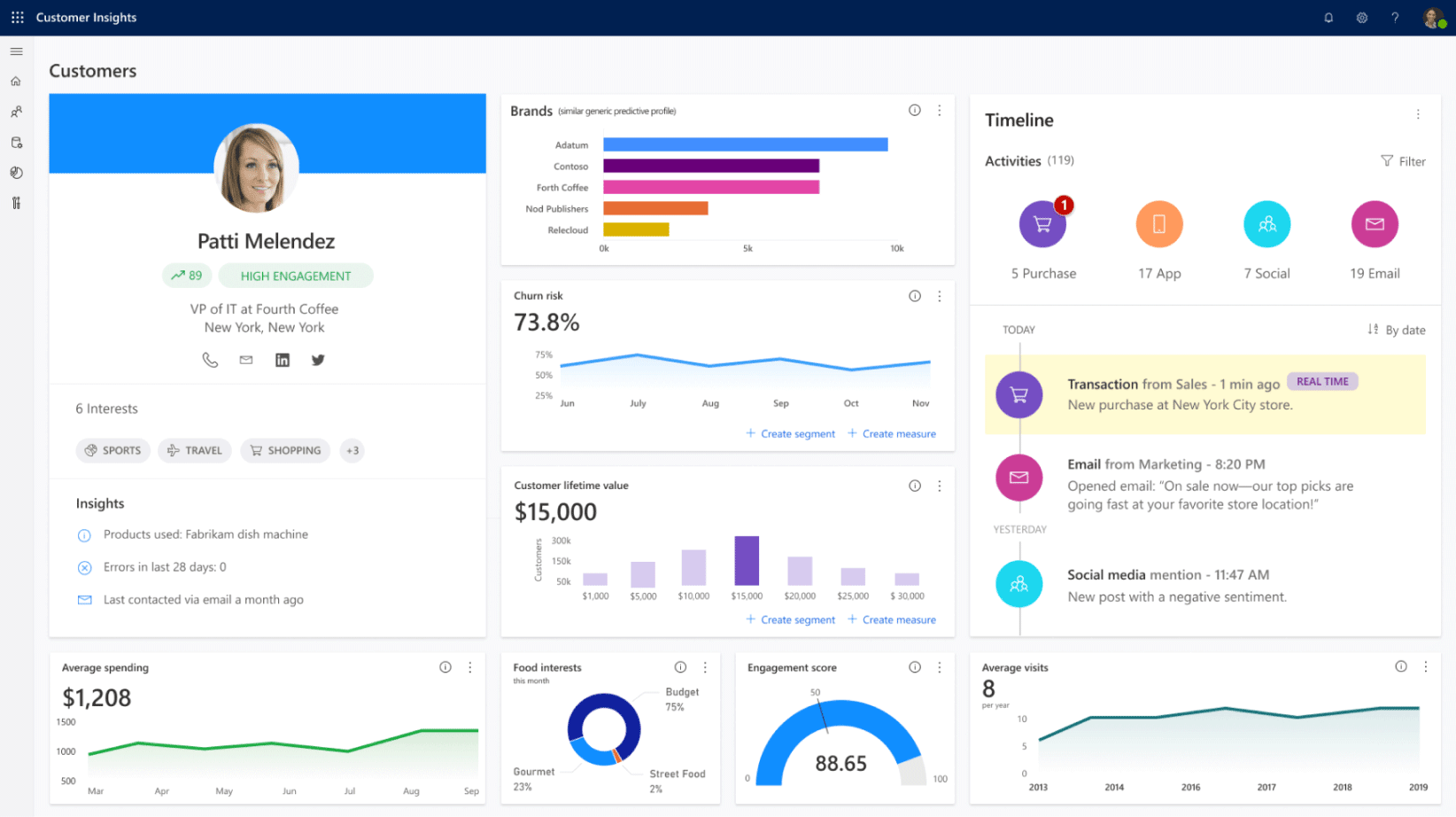
Using tools like a Customer Relationship Management (CRM) system or Data Management Platform can provide valuable insights into your target audience. Still, these tools have their limitations. While the data harvested, processed, and stored by these tools is valuable and can greatly benefit your marketing efforts, it only provides you with general information on your current or prospective customers.
A Customer Data Platform aggregates all the data gathered on specific customers from their very first interaction with your company. A CDP uses AI-powered identity resolution to combine multiple identities from across various touchpoints into one unified customer profile.
All your customer data is located on a centralised platform by using a CDP. That means that there are no data silos, and companies can obtain a unified view of any particular customer within moments.
Quickly locating relevant data.
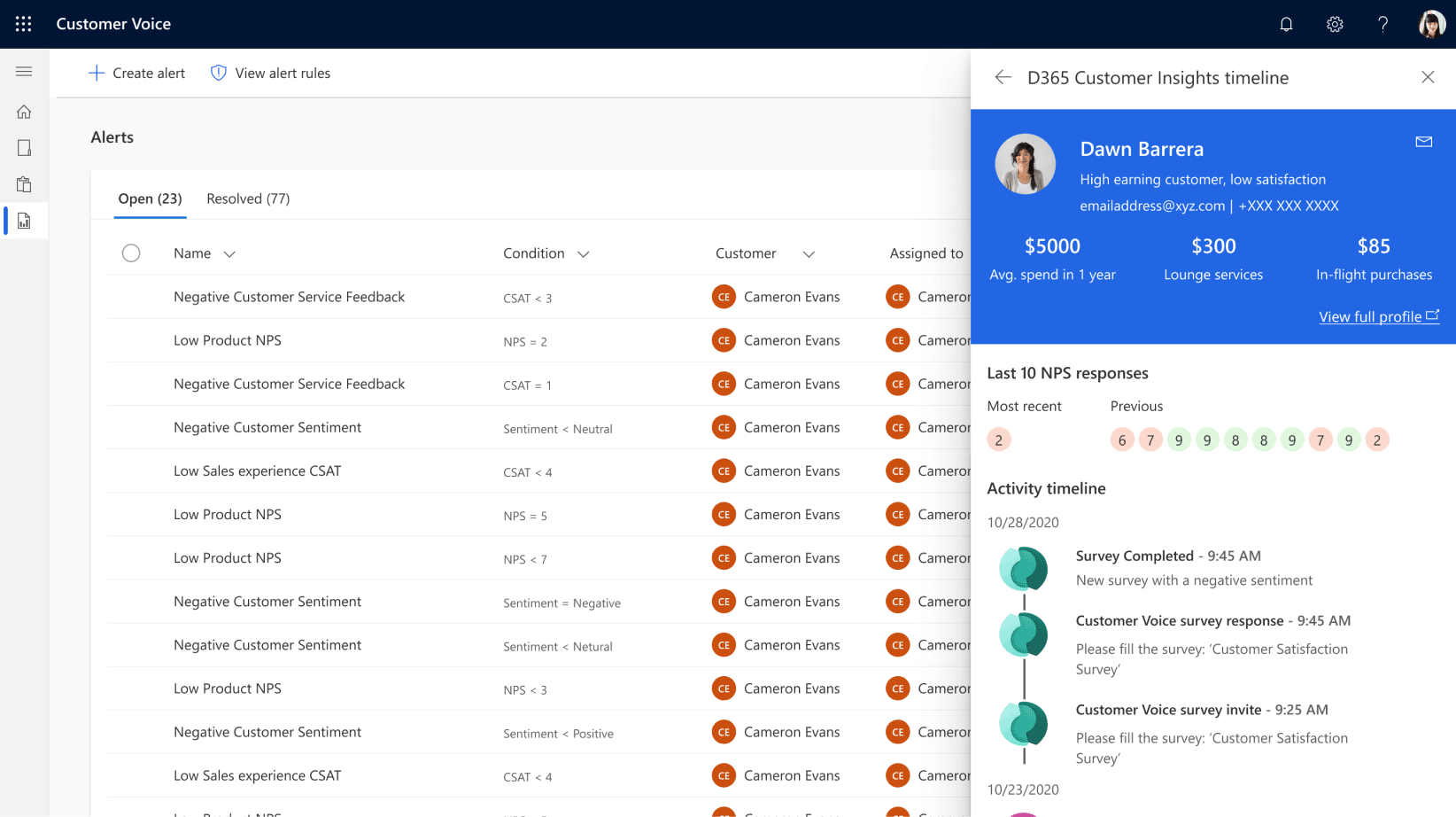
Because data is stored on a centralised platform, it can quickly and easily be retrieved. The Customer Data Platform combines data that would otherwise be stored in separate locations. Having all the data relating to any particular customer in one place means that companies would be able to draw on and utilize that information quicker and more effectively.
Companies can now have a real-time 360-degree view of unique customers and tailor marketing messages directly to those customers where and when they would have the most impact.
Most notably, companies can have transactional, behavioural, and demographic data in real-time. This could be extremely valuable in creating more targeted marketing messages that may be time-sensitive.
Creating more personalized and consistent brand messaging.
Customer Data Platforms use first party personal identifying information. This information gives companies the power to generate highly personalised content. Not only is this content personalised, but it can meet customers (or potential customers) where and when these messages could be most effective.
Information is power, and this power is amplified when it can all be combined to generate marketing messages that speak directly to unique individual customers. It is even more effective when these messages can meet your customers where and when they want it.
By harnessing the information generated by a Customer Data Platform, you not only ensure that specific clients receive tailored marketing messages. You also avoid sending irrelevant information to those customers.
Improved operational efficiency and automation.
Companies that do not have a customer data platform can still personalise and automate some aspects of their marketing campaigns. However, these features are limited if you are not using a CDP. This is not necessarily because you may not have the data (although this could also be the case). It may be because you have data spread out over different platforms.
That means you need to locate, reference, analyze, and draw actionable strategies based on data that is located on different systems. This can be highly resource-intensive, potentially slowing down your operational efficiency and automation.
Taking longer to generate insightful marketing strategies that speak to individual people means that you may miss out on opportune moments to convert customers.
Using ethically sourced data.
CDPs mostly use first party data. First party data is data collected directly from consumers who have interacted with your brand. That means you are in control of how, where, and when this information is gathered.
By regulating how you collect consumer data, you can ensure that you have obtained the proper consent to collect and use your customers’ personal (and sometimes private) information.
Although the first party data collected and aggregated through your Customer Data Platform may be ethically sourced, your company is still responsible for keeping that data safe. That means you need to have robust data security, which most Customer Data Platforms provide. More than that, most Customer Data Platforms help you stay compliant with relevant data protection laws like the General Data Protection Regulation (GDPR) and California Consumer Privacy Act (CCPA).
Getting the best of both worlds.
A Customer Data Platform collects and stores data specific to individual customers and aggregates data relating to anonymous customers as they move through each step of the customer journey.
This information will allow you to target specific customers and optimize your more general customer journeys and sales funnels.
The growing demand for more personalised interactions coupled with the massive influx of customer data created the ideal scenario for companies to step up and show up consistently across multiple marketing channels. Using a CDP can not only help your brand be seen by those who are most likely to engage with it, but to do it in a manner that will make them want to engage with your brand.
If you aren’t using a CDP yet, perhaps the question you should ask yourself shouldn’t be whether you should get one, but why you haven’t gotten one yet.
The page you requested could not be found. Try refining your search, or use the navigation above to locate the post.

Marketing that lacks real-time data and client consent are referred to as Tone Deaf SPAM, and it is not only annoying but also unlawful under GDPR and POPIA regulations. I fell in love with customer data platforms (CDP) and Next Best Action software back in 2012, when I first met Dr. Shuki Idan, he lead the SAP product group called RTOM (real-time offer management). This was a SAP product that leveraged the power of HANA and was revolutionary at the time!
The issue we had with RTOM and later SAS IMM was that it was pretty useless without data, and while it could influence customer behavior in real-time, lowering the cost of customer acquisition and increasing the profitability of each customer interaction with the next best actions, the business case was harmed by the cost and time required to set up a data warehouse. These great applications could have been deployed in weeks, but the underlying data warehouse need would take months, if not years, to fulfill. Completion did not always imply success since the business did not trust the data.
Then…
The door slams open, and Microsoft’s Customer Experience Platform with Dynamics Customer Insights steps in (CI). (Imagine a scene from a cowboy film…) “Dynamics 365 Customer Insights enables businesses to combine all of their B2C and B2B customer data in real-time to provide AI-powered insights, resulting in a single view of the customer.” Marketers can use interactive reports to enhance their customers’ experiences, and AI-powered insights can help foresee customers ’ demands faster. “Dynamics 365 Customer Insights serves both technical and non-technical users seamlessly, whether it’s through a visual UI/drag and drop interface for marketers or advanced analytics for data scientists.” Microsoft was recently named a leader in the IDC MarketScape for Worldwide Customer Data Platforms.
The IDC MarketScape said, “Consider Microsoft if you are looking for user-friendly AI/ML modeling capabilities that do not require marketers (and other LOB users) to be data scientists.” The report also noted, “Microsoft’s CDP segments are created through automated discovery powered by AI, API configuration, and visual UI/drag and drop interface for markets and through analytic/SQL queries for data scientists. Segments are updated based on a variety of factors such as streaming web session data, geolocation, and dynamic modeling and based on batch data updates.”
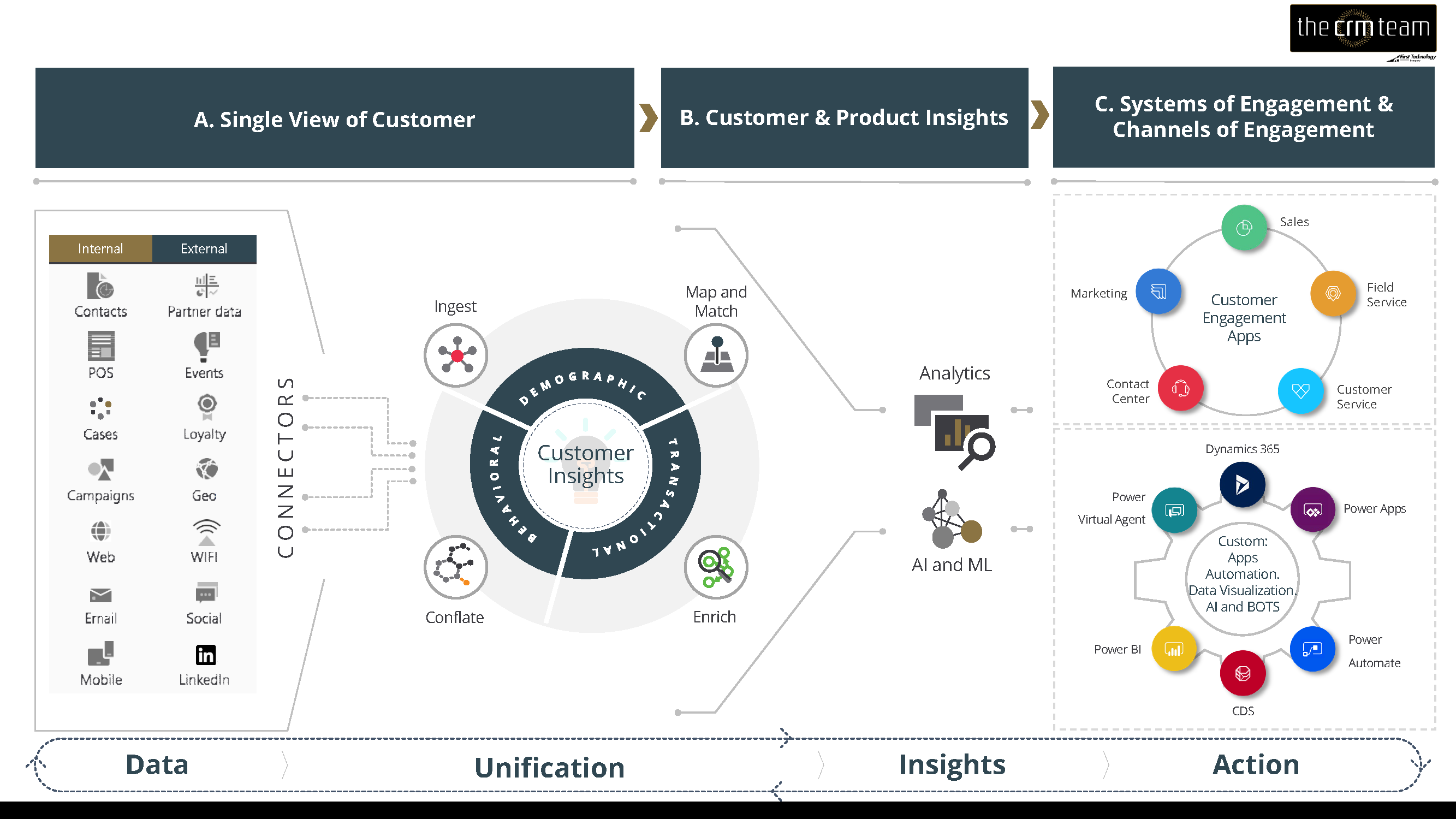
1. The manner in which you ingest data using power query connectors and a common data model, which takes days or weeks rather than months or years. Power query connectors are predefined integration points for over 500 apps, and as you may be aware, integration takes time, which costs money.
2. How you unify data using AI-enabled MAP, MATCH, and MERGE (or M3 as we’ve labelled it) functionality.
3. The way you enrich the data through sources like Microsoft and other partners to gain insight to brand affinity and other interests.
4. How you use built-in AI and analytics to predict customer needs:
a. Predict customer lifetime value, transactional churn, and subscription churn using prebuilt AI models.
b. With product suggestions, use prebuilt AI models to swiftly uncover cross-sell and upsell possibilities.
c. Make your own audience segmentation or use AI-driven suggestions.
d. Use industry standards to establish key performance indicators (KPIs) or create your own bespoke KPIs.
e. Use Microsoft Power BI and Azure Synapse Analytics, a big-data-analytics service, to combine customer data with financial, operational, and unstructured Internet of Things (IoT) data.
5. How you use AI-powered insights to drive meaningful actions:
a. Intelligently orchestrate personalized journeys across destinations including marketing automation, advertising, and customer engagement platforms from Microsoft and other providers.
b. Surface up-to-date customer data and insights in the Microsoft apps that your employees use every day, like Microsoft 365 and Dynamics 365 Marketing, Sales, and Customer Service.
c. Create smart, responsive, low-code bespoke apps from your customer data with Microsoft Power Apps.
6. How advanced CDP capabilities may help you personalize B2B interactions:
a. Shorten sales cycles by obtaining unified account profiles that provide actions and insights on an aggregated or individual basis.
b. Improve lead accuracy and quality by leveraging third-party enrichment sources to enrich account data from industry-leading data suppliers like Leadspace and Dun & Bradstreet.
c. Increase account retention by detecting at-risk accounts with prebuilt, customizable AI churn prediction models.
d. Use LinkedIn to boost your account-based marketing (ABM).
Last but not least…
7. The way you build customer trust on a consent-enabled CDP:
a. Enhance customer experiences in a cookie-less future to respect consumer consent and privacy without requiring any additional workflows or understanding where and how consent data is collected and managed.
b. Harmonize consent across business workflows. Count on a flexible customer data platform (CDP) with always up-to-date consent data refreshed automatically, using connections to the consent data mastering service.
c. Stay compliant with the General Data Protection Regulation (GDPR) and the California Consumer Privacy Act (CCPA) by utilizing data governance capabilities enabled by Azure Purview Preview.
The more I wrote this article the more it felt like 10 things I love about you…
All of these capabilities are built on top of industry-specific data models, such as Microsoft Cloud for Financial Services’ Unified Customer Profile. By enabling Dynamics Customer Insights, we’ve been able to unleash incredible returns for our customers – give us the chance to do the same for you!

Wynand Roos- Managing Director, The CRM Team
Wynand is the co-founder and Managing Director of The CRM Team and has been an expert in CRM for the past fifteen years. While working for Microsoft, he was responsible for building the Dynamics CRM market and partner channel, from version 1.2 of the software. Today, he is used by Microsoft Corp. to train their sales team across the world and has extensive experience in creating developing CRM solutions using the Dynamics 365 platform.
The page you requested could not be found. Try refining your search, or use the navigation above to locate the post.
People perceive and apply hybrid working models in many ways. However, there is one unifying principle that underpins hybrid work: flexibility. Hybrid systems are inherently more adaptable than more uniform, inflexible models that require employees to work wholly or primarily in the same central place.
Workers in a hybrid work style have more flexibility to complete tasks when they are most efficient. Effective hybrid working involves the updating of formal flexible working rules, as well as the recognition that a one-size-fits-all strategy rarely actually suits anyone.
COVID-19 has led in significant changes in the way people work and wish to interact in the workplace during the last two years, and these changes are still ongoing.
The current difficulty for companies and employees is determining the optimum combination of in-person and remote work to fulfil the demands of a diverse collection of stakeholders.

Hybrid employment has given some people new career options, greater family time, and the ability to choose whether to commute. However, they are not the only advantages.
Employees have diverse work habits and perform better in different environments; hybrid work allows employees to take advantage of this.
Build-in flexibility may be a retention driver in the same way that the hybrid work choice enhances the talent pool.
A hybrid approach can provide flexibility and allow individuals to work to their strengths, increasing productivity. Teams may achieve a healthy mix of creativity and cooperation by promoting a culture that considers remote work as a beneficial option to completing deep-focus activities in the office. Employees who want solitude and quiet to concentrate or who flourish in an office environment might be offered the option of working where and when they are most productive.
According to Microsoft statistics, one in every five global survey respondents believes their company is unconcerned about their work-life balance. While work and life are rarely perfectly balanced, work-life fit is an essential component of any healthy working environment.
Understanding how and where the existing workforce is deployed, as well as ensuring that those employees are informed on objectives and goals, will be required.
Hybrid work has mostly influenced how Agile ceremonies operate. Many teams’ communication and collaboration might be hampered when not all the people in the room are present. Estimating and Retrospective Sessions are two of the most effective ceremonies for keeping your team on track during a project.
As a leader, you want to foster a hybrid work environment that is collaborative, efficient, and encourages team members to perform to their full potential. There are several approaches to achieve this aim in today’s ever-changing economic landscape.
When thoughtfully and strategically organized, the hybrid work model can propel your organization to new heights of productivity. Previously, the hybrid model was seen as an alternate work style. However, as more employees want flexibility, it will become increasingly widespread. Companies must address the requirements of their employees or risk losing talent to competitors.

Roehan Manders – Head of Delivery
Roehan completed a B.Com Entrepreneurship & Business Management at North-West University (awarded with Cum Laude) he is also a certified Scrum Master. After developing and running his own marketing website business, he successfully sold the business and became a business adviser, analyst, and high-income private banker. Roehan then used these skills to transition into project management where he trained in SCRUM and Agile methodology.
The page you requested could not be found. Try refining your search, or use the navigation above to locate the post.
Imagine running the business of your dreams, but you can’t seem to get any sales or retain customers. Before you deem your business a failure, consider using CRM software.
Then, you can manage multiple things in one place to help promote your business and increase sales. And you don’t have to juggle different tools to get the job done or risk losing out on sales because of a lack of organization.
Read on to learn what you’ll have to deal with if you don’t use a CRM.
When you don’t use CRM software, you have to manage multiple tools that do the same thing as a CRM. Good CRM solutions can help with everything from marketing and sales to customer service.
If you don’t have a CRM system you would need something to market your business, a sales tool, and a customer service system. All of those can take time and money to set up, and they may not even be as efficient as a CRM.
You may waste a lot of time trying to manage and connect the various tools to run your business. When that happens, you may lose out on sales and customers, so your overall business could suffer.
Data is essential to making decisions for how to move your business forward. If you don’t use CRM software, you may not have as much access to customer data or management data.
When that happens, you may need to spend more time collecting data on the members of your customer base. However, using a CRM can make collecting and accessing data much easier.
Whether you want to make decisions about finances or product releases, having access to data can make a huge difference. You can track data without a CRM, but it will be much more difficult, especially as your business grows.
Even if you can get some data, you may need to enter it manually into something like a spreadsheet. This will require you to spend more time on admin tasks and less time on actually helping customers.
You’ll need to decide how often you want to work on data entry and what data points you want to track. Then, you or someone on your team will have to input that data on schedule so that you can track it.
When you have a small business, you may be able to get away with manual business processes. But eventually, you won’t have time to track all of your data and will need CRM software.
Another risk of manual data entry is bad data, which refers to inaccurate or misleading data. You could do everything possible to make sure the data is correct, but you may still have some inaccurate entries.
If you don’t recognise the bad data, you may use it to make decisions. Depending on how inaccurate it is, you might make decisions that won’t help you reach your business goals.
You might implement business processes that will hurt your sales and growth. Fortunately, an accessible CRM can help you reduce the risk of bad data and its effects.
Not having a CRM can also affect your sales and revenue. You can easily miss out on chances to cross-sell and upsell customers to get them to purchase other offers.
A CRM can help you track what customers have purchased. Then, you can promote similar products or services that each customer can buy to help them even more.
While you may be able to offer upsells manually, it can be hard to track what to offer to each person. Meanwhile, a CRM can help you keep track of sales so that you can get people to buy more.
Along with other business relationships, customer relationships are vital to the success of your business. However, building and maintaining those relationships can be difficult without a CRM.
You won’t have information on how the particular customer found you or what preferences they have. Not knowing that information may keep you from being able to sell to your customers.
For example, if someone found you through a referral, you would be able to use that when selling to them. But you’d have to know that’s how someone learned about you and your business.
Not having a CRM may also keep you and your team from being the most productive you could be. The tasks you assign to your marketing, sales, and customer service teams may require the use of different tools.
Of course, employees will have to use different programs to do their jobs. However, it can take time to log into everything, and people can waste small bits of time switching between the programs you use.
By switching to CRM software, you can make sure everyone knows how to complete their tasks. Then, you can minimise confusion and maximise productivity.
Even if you do have a good system to track data and work on customer relationship management, it can be hard to control. You may want certain employees to access only a few pieces of that system.
A CRM lets you control access so that people can get to only what they need. But if you use a spreadsheet or another program, you can only grant access to the entire thing or none of it.
That can make it easy for employees to access more data than they need for their jobs. Then, you may not have as much control over the use or accuracy of your data.
CRM software can make a huge difference in your productivity, sales, and other aspects of your business. Whether you have a massive corporation or a small team, you should start using CRM software.
Then, you’ll be able to manage your time better and focus on building good customer relationships to help your company grow. Soon enough, the CRM will be easy to use, so you don’t need to stress about the tech.
Are you ready to start using a CRM? Check out our Power CRM and get started today.
Transform your business
The page you requested could not be found. Try refining your search, or use the navigation above to locate the post.

– A quick Google search defines inertia as “the tendency to do nothing or to remain unchanged,” while Wikipedia defines it as “the resistance of any physical object to a change in velocity.” This includes changes in the speed or direction of motion. One element of this quality is the tendency of things to continue travelling in a straight path at a constant speed in the absence of external influences.” It should come as no surprise, therefore, that individuals, by definition, oppose change. It’s perfectly normal and natural. Expect some resistance when implementing a new system in an organization; it’s natural, but for goodness sake do something about it. Apply the force that causes them to shift direction.
Whether you believe in creation theory, are a big-bang fan, or anything else, there is one unavoidable truth:
Even the most ideal system is vulnerable to failure due to an internal element that far too many businesses overlook and disregard in their planning.
Who is the perpetrator? If you are not proactive, the same people for whom you made this paradise may corrupt it and turn it into a wasteland.
Your most cherished users are your greatest potential danger.
Simply put, we must reduce this risk…
History has shown that implementation efforts will fail in the absence of a strong user adoption strategy.
I just bought a Haval Jolion Super Luxury.
To replace my 2015 Volvo XC60 T6 AWD R-Design Polestar, I would have loved a Volvo XC40 or perhaps the considerably smaller Volvo S40. Any vehicle would have sufficed as long as it was a Volvo, but my budget protested loudly. I didn’t know anything about the Haval brand. So I conducted my research and found some extremely intriguing things about these vehicles, to the point where I was so pleased that I tracked down a car 500km away and had it delivered to me within 5 days, despite the 3-month waiting list for brand new vehicles. Because I was loyal to the brand I have owned before, I almost missed out on what I now consider to be the finest vehicle I have ever owned.
The point is that no matter how elegant and technologically advanced a car is, if no one embraces and utilizes it as soon as it leaves the factory, it may as well be a bicycle. This is a pretty typical end-user problem. Why should I use Excel when I already have this handy calculator? I don’t require SQL because I keep all of my client information in Excel. I don’t need the Power Platform because my SQL database has all of the information I want. People are naturally resistant to change from what they have gotten accustomed to and feel at ease with.
Alan Lee-Bourke is a Principal Consultant in Microsoft’s Adoption and Change Management Global Practice, a Prosci Certified Advanced Instructor, a Prosci Experienced Practitioner, and the Director of the Scotland Association of Change Management Professionals.
In a recent article titled “7 REAL REASONS WHY TECH PROJECTS FAIL,” he provides the following frightening statistics:
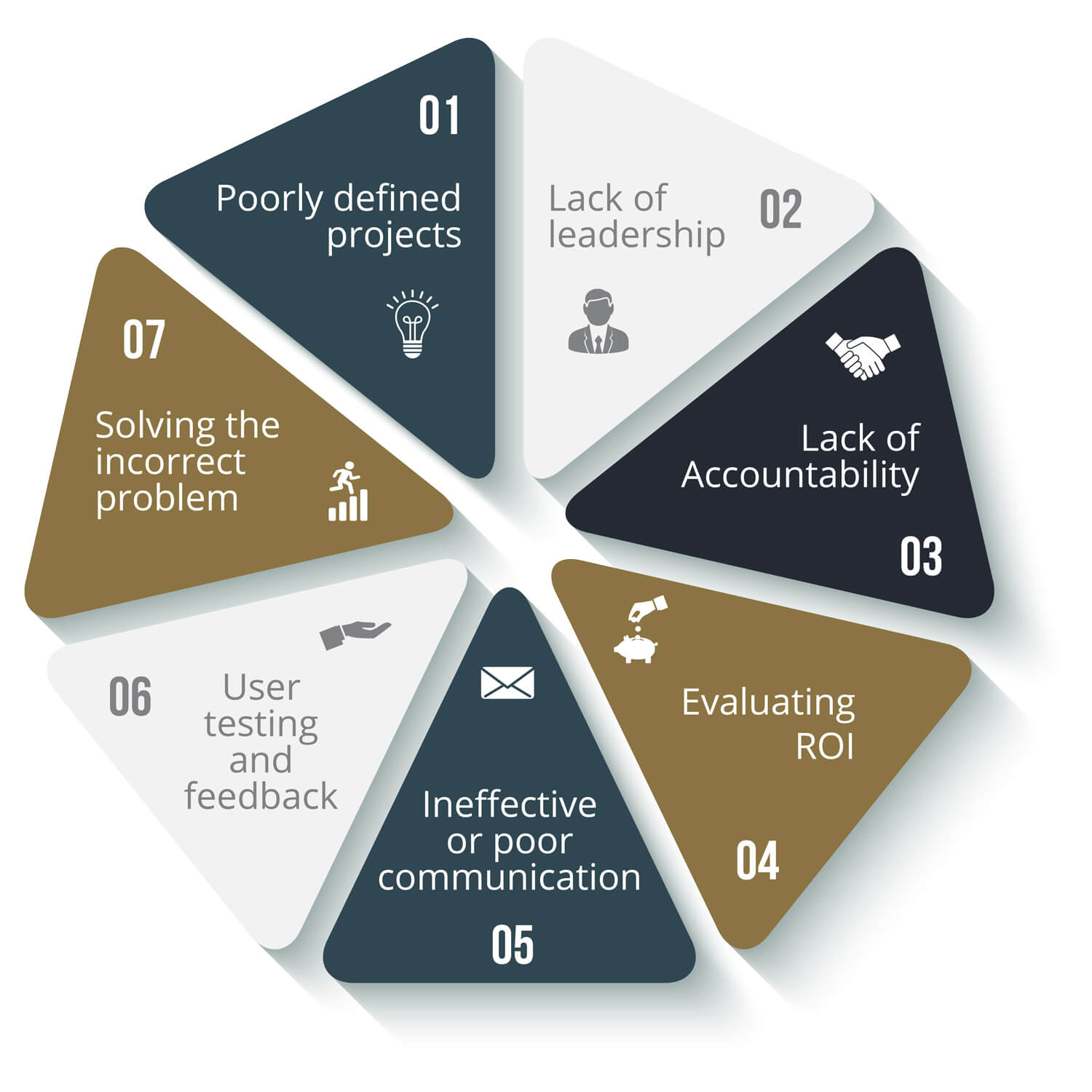
1. Poorly defined projects – this definition should cover more than just WHAT we are doing, but also:
– Why are we doing this?
– Why are we doing it right now?
– What will happen if we don’t?
2. Lack of leadership – An implementation project should never be confined to the IT department. Implementation is a business project which needs a strong key sponsor, who is active and visible – and one who will build a sponsor coalition and communicate effectively.
3. Lack of Accountability – Businesses simply must take responsibility for managing the change process. In our world that means getting users through the ADKAR process for them to make the project successful.
4. Ineffective or poor communication — Effective communication is crucial in change management.
5. User Testing & Feedback – We must focus on the end-user’s DESIRE to step out of their comfort zone and use the system.
6. When we evaluate ROI – When we go live, we will begin to see genuine business benefits from a people-dependent project.
7. Solving the incorrect problem — What are the issues, based on what your end-users are telling you? To put it another way, why would they want to switch to the new system?
At The CRM Team, we believe that to gain and maintain credibility, User Adoption Strategies must be actively led from the top down. The higher up, the better. The key sponsor should preferably be a member of the executive team – the CEO, MD, CIO, or CTO – and their message should be: “I am completely in support of this initiative.” The primary sponsor should then be supported by a Sponsor Coalition comprised of managers and supervisors who are in charge of influencing user behaviour in the departments affected by this project.
It is vital that the Key Sponsor and the Sponsor Coalition drive this change and emphasize the importance and urgency of the change. Their personal engagement is critical to the project’s success.
Reward and Recognition
A strong Recognition and Reward system would motivate and inspire users and fuel the User Adoption Drive.
The Recognition and Reward strategy can be built around key metrics such as
In terms of sales:
In terms of Customer Service:
Just to name a few….
These are small steps to ensuring optimal user adoption. Each step building on the momentum and energy generated by the previous one.
Conclusion
Friedrich Nietzsche stated many things, most of which I disagree with, but one of them remained with me: “He who would learn to fly one day must first learn to stand and walk and run and climb and dance; one cannot fly into flying.”
On the perilous journey toward User Adoption we must be careful to take each of these little steps to ensure that our system implementation does not crash and burn, but that it will fly and take your organization to new heights.
When you succeed, we succeed!

Mark James – Head of Training & User Adoption
Mark has been a Microsoft Certified Trainer for many years and has been training Dynamics since CRM version 4.0.
He specialises in Dynamics 365 end-user training and has trained across the UK, Africa, and the Middle East. Mark is proficient in Microsoft Dynamics 365: Sales, Service, Deployment, and Customization & Configuration.
Transform your business
The page you requested could not be found. Try refining your search, or use the navigation above to locate the post.