
















No Results Found
The page you requested could not be found. Try refining your search, or use the navigation above to locate the post.
Through a complete sales process redesign and the implementation of Microsoft Dynamics 365, Vitality automated lead management, improved team performance, and achieved record-breaking growth in just seven months.
Vitality, one of the most distinctive life and health insurers on the British market, has revamped its entire lead management process via an intensive business process redesign linked to the introduction of leading-edge CRM techniques with Dynamics.
The project has doubled the team’s contribution to group income in just seven months and even higher targets for the team are now feasible, says the business owner.
Vitality is the successful UK business face of major South African health and life insurer Discovery. Set up to make a real difference to its customers, the brand offers a distinctive set of values around trying to make positive improvements in customer lives.
D2C’s leadership ended up with three possible options: a small ISV’s solution, extension of use of Salesforce, employed in other parts of its parent Discovery – and the potential aid of a specialist Microsoft Dynamics CRM consultancy, The CRM Team.
“What I liked about The CRM Team’s approach was its deep focus on using all the power of Dynamics to help us,” notes Boyle. “What started as a conversation about lead management consulting quickly grew, in an exciting way, into a vision of building a new sales process with functionality we just hadn’t even considered.”
%
Offering both life and health financial services products, the company seeks to deliver value via a constantly-improving rewards and engagement program all about finding new ways to boost the health of its customers.
The firm has been making solid progress in market growth, however its first wave of lead management workflow, handled since 2014 by its UK-based Direct to Customer (D2C) unit, while serving to grow its customer base, was slow and inefficient. “We had a system where leads coming into our customerfacing website had too many gaps before they were delivered to our Stockport-based financial advisory
team,” says D2C’s Head, Keith Boyle.
“Ten promising leads might drop down to eight when they actually got to our advisers to call. We also had no effective way of tracking things in real time, and there were pauses in the flow that meant agents were waiting around to work.”
Boyle puts the lead management problems down to a combination of an internal workflow needing improvement, a clunky Excel-based extraction system, and manual handling of leads off the website. It was decided in late 2015 to explore ways to streamline the whole Vitality lead capture and processing function, with initial evaluation of possible technologies to support a better way of organizing the core
business process.
Boyle also saw potential in Dynamics he just couldn’t detect in alternatives.
“I quickly saw access to really interesting new Microsoft tools in the stack like propensity management, digital Web chat support, Machine Learning and analytics to build better models of customer behavior and needs. “That sealed the deal for me, ultimately.”
“We could see there was no one consolidated place for D2C to activate leads, which meant a poor way to convert into business or direct customers to expert advice,” comments The CRM Team’s Head of Delivery and Projects Jessica Du Toit. “What was needed was a better, integrated way of handling and routing leads off the site that would help build up a 360-degree picture of new customers.” The form of CRM judged most optimal by the partner for Vitality’s needs was Dynamics CRM Online, she adds.
The CRM Team is committed to an Agile delivery methodology, which means it was able to action ideas rapidly, delivering a working initial redesigned lead management process at D2C in just six weeks. That initial platform, up and running in early 2016, was then modified by Boyle and his management team. “It needed some work to help support a slicker internal structure to be even more proactive and efficient,” he says. “I could see we were still not getting leads reacted to quickly enough for our business growth needs.
“We promptly actioned an extensive lead business process redesign, working with The CRM Team – and we’re glad to say a new approach was set in place very quickly.”
What does that new approach look like in practice? Boyle says that the management and optimization of lead management in the team radically improved from day one. “That’s in terms of increased efficiency, a highly noticeable increase in speed, and support for us to do what we really want for Vitality customers – give them totally individual attention and advice.”
In terms of speed, Boyle says that pre-Dynamics, a lead could sit in the system for an hour and a half on a bad day; that’s shrunk to seconds. And with the team now organized into real-time lead focus, a lead generation and a specialist advisory team, he says “a genuine step-change” has occurred as far as D2C is concerned.
But the most dramatic evidence of the impact of tech-empowered change at the company is the bottom line. “I’m really pleased with our growth,” says Boyle. “In just seven months we saw an 87% increase in sales over the entire calendar year before.” In terms of the unit’s contribution to the wider Discovery business, he adds, that translates to a stunning jump from 3% to 7%.
But Boyle’s aiming even higher. “With the improvements in our internal processes and the betterengaged and organized team we’ve got here, I have every confidence we’re on a digital transformation journey to a 10% contribution by end of year – and I am pushing for 20% by 2019.” In tech terms, Boyle has already actioned work to integrate telephony support into the CRM process and is evaluating advanced techniques for building that more detailed behavior picture he wants.
Summing up, Boyle says that thanks to Dynamics CRM Online, he has a humming lead machine with a “team that grabs for opportunity now” and which delivers a way for Vitality customers to get what they want at the speed they deserve.
Discover how The CRM Team helps businesses like Vitality boost performance and deliver exceptional customer experiences through Microsoft Dynamics 365 CRM.
By implementing Microsoft Dynamics 365 Marketing and Customer Insights, First Group automated key business processes, improved efficiency, and gained an integrated customer view across operations.
First Group’s back-end operations were manual, which resulted in slower turnaround times and much higher administrative expenditures.
The group exclusively used a selfdeveloped property management system; there were no CRM systems in place.
First Group was able to automate the manual processes they had in place and digitalize operations thanks to the implementation of Dynamics Marketing and Customer Insights, which enhanced efficiency and decreased manual administrative costs. The organization can now do something they have never been able to do before: receive a complete 360° customer view
Discover how The CRM Team can help your organisation build smarter customer connections and achieve operational excellence with Microsoft Dynamics 365.
Modern customer service demands more than quick responses — it requires intelligence, agility, and seamless collaboration. Discover how AI and Dynamics 365 Contact Centre empower your business to deliver smarter, faster, and more personalised support.
Experience how AI and Dynamics 365 Contact Centre are redefining customer engagement.
As customer expectations accelerate in South Africa’s increasingly digital economy, organisations face unprecedented pressure to deliver efficient, seamless and personalised service across every channel. However, many contact centres continue to operate on legacy systems that are fragmented, reactive and resource-intensive – hindering their ability to meet modern demands.
The result is rising operational costs, declining customer satisfaction and overburdened agents struggling to provide consistent support. These issues are not just service challenges – they are strategic risks.
Traditionally, contact centres have been viewed as cost centres — measured by call volumes, average handle time and issue resolution rates. But today’s competitive landscape requires a shift in mindset: contact centres must evolve into growth enablers and customer experience (CX) accelerators.
This evolution hinges on reimagining the contact centre not merely as a point of resolution but as a strategic platform for customer engagement, retention and insight.
The operational realities are familiar:
These pain points compromise service delivery and dilute brand trust – especially in sectors such as telecommunications, financial services and public sector organisations, where customer needs are complex and urgent.
Emerging technologies such as Microsoft Dynamics 365 Contact Centre offer a clear pathway to overcoming these limitations. By combining omnichannel support, AI-driven automation and real-time analytics, modern platforms help organisations resolve a greater percentage of queries without human intervention, improve routing accuracy and deliver personalised support at scale.
AI-powered capabilities, including intelligent chatbots, auto-summarisation and predictive insights, reduce repetitive tasks, allowing agents to focus on more valuable interactions. This shift enhances productivity, improves response times and ultimately drives higher customer satisfaction.
Dynamics 365 Contact Centre provides agents with a single, integrated workspace that consolidates all customer interactions. Whether a conversation begins on WhatsApp, transitions to e-mail or concludes via voice, the agent retains complete visibility throughout the customer’s journey.
In addition, Microsoft Copilot acts as a virtual assistant, helping agents respond more effectively, summarise engagements and surface actionable insights – all within a secure and compliant Microsoft environment.
In an environment where product and pricing advantages are increasingly commoditised, CX stands out as a powerful differentiator. Organisations that embrace technology to reduce friction, personalise service and deliver consistent experiences are not only improving loyalty but unlocking competitive advantage.
This is particularly vital in South Africa’s telecoms and internet service provider sectors, where high churn and customer attrition are common. A modern contact centre strategy ensures that every interaction contributes to trust, retention and long-term value.
The CRM Team is a trusted digital transformation partner and certified monday.com partner, helping businesses across Africa streamline operations, improve collaboration and unlock new levels of productivity. Through deep expertise in CRM, project management and automation tools, The CRM Team empowers organisations to build smarter workflows tailored to their goals.
Telecommunications operators are under pressure. Billing disputes, service interruptions and failed credit vetting drive thousands of frustrated customers into call queues every day. Legacy platforms are buckling under the strain, costs keep rising and customer loyalty is at risk. Every missed interaction is more than an inconvenience – it’s a potential loss of revenue and trust.
For too long, the contact centre has been treated as a cost centre. In 2025, that model no longer holds. To stay competitive, the contact centre must become a growth driver, a digital hub and the foundation of customer experience.
The shift is already under way. Around the world, telecoms operators are rethinking contact centres and embracing digital transformation. Artificial intelligence is being deployed to handle repetitive queries, guide agents in real time and reduce the friction that drives up call volumes. Omnichannel engagement has become non-negotiable, with customers expecting to switch between channels – voice, WhatsApp, SMS, chat and e-mail – without repeating themselves.
The results are clear: smarter service reduces churn, lowers costs and builds loyalty. Customers get faster answers. Agents focus on higher value interactions. Executives see healthier margins and improved customer satisfaction. This is not about cutting costs alone, it is about turning the contact centre into a genuine growth engine.
For African operators, the challenge – and opportunity – is even greater. Customers expect to engage on WhatsApp as readily as they do on voice. They want proactive notifications and self-service journeys that mirror their digital lifestyles. Falling short risks losing ground to more agile competitors. In a market where loyalty is fragile and switching is easy, the ability to deliver differentiated service is now a competitive advantage.
Microsoft has delivered the platform to make this transformation possible. Microsoft Dynamics 365 Contact Center is a cloud-native solution designed from the ground up for the modern era. It unifies voice, chat, SMS, e-mail, social and Microsoft Teams into a single agent desktop, breaking down silos and eliminating the inefficiencies of legacy stacks.
At its core, the platform is powered by Azure Communication Services (ACS), Microsoft’s enterprise-grade communications backbone. This ensures enterprise reliability, scale and security for voice and digital interactions. Where operators need to extend into additional channels, such as WhatsApp or regional SMS, services like Twilio can be integrated – expanding reach while keeping the core intact.
Built as a Copilot-first platform, Microsoft Dynamics 365 Contact Center brings AI into the heart of the agent experience. Copilot assists with live transcription, suggested responses, case summarisation and real-time sentiment insights. For customers, this means a faster, more accurate service. For agents, it means less time searching for answers and more time resolving complex issues. For leaders, it means measurable improvements in efficiency and satisfaction.
Microsoft has also continued to invest in innovation. Recent enhancements include diagnostics and telemetry tools that track every step of the customer journey. Supervisors can see how calls are routed, where delays occur and how agents perform. Armed with these insights, they can optimise operations, coach staff more effectively and deliver a consistently better customer experience.
This isn’t about experimenting with AI or digital channels. The tools are proven, enterprise-ready and already deployed globally. The question is no longer whether they work – it is how quickly telecoms operators can put them to work in their own organisations?
The difference between telecoms operators that lead and those that lag isn’t technology, it’s execution. Microsoft Dynamics 365 Contact Center provides the foundation. But the real question is: who will configure AI to align with your billing processes? Who will integrate omnichannel into your ecosystem without disruption? Who will guide delivery in the African market, where complexity is the norm?
That’s the value The CRM Team brings. We don’t just implement software; we futureproof customer experience. By aligning Microsoft’s AI and omnichannel capabilities with telco realities, we help operators cut call volumes, accelerate digital adoption and unlock new revenue streams. With The CRM Team, transformation doesn’t just start – succeeds.
Our experience spans industries where customer experience makes or breaks business outcomes – from telecoms to retail to healthcare to financial services. We understand the pressure of high-volume environments, the challenge of integrating legacy systems and the need to deliver visible return on investment quickly. This is why organisations trust us to lead their transformation journeys.
Contact centres stand at a crossroads. They can remain overwhelmed, reactive and costly. Or they can become engines of customer trust and growth. The gap between these two futures is not defined by technology – it is defined by leadership.
2025 is the tipping point. The technology is ready. The opportunity is real. The only question is whether you act or let your competitors act first.
Dynamics 365 can revolutionize your business — but only with the right strategy. Learn how to plan effectively, avoid common mistakes, and build a scalable implementation that drives engagement and long-term growth.
Drive a Successful Dynamics 365 Implementation
Implementing Dynamics 365 Customer Engagement can be a game-changer for organizations looking to enhance their digital presence and improve customer interactions. However, the path to successful implementation can be filled with potential pitfalls. Here are some common mistakes to avoid and best practices to follow to ensure a smooth and effective deployment.
One of the most frequent mistakes organizations make is underestimating the customization needs of Dynamics 365. It’s crucial to tailor the system to fit specific business requirements to maximize its benefits. Ignoring data migration challenges can also lead to significant issues down the line. Proper planning and execution of data migration are essential to avoid disruptions. Overlooking user training is another common pitfall. Ensuring that users are well-trained and comfortable with the new system is vital for successful adoption. Additionally, inadequate change management can derail the entire project. It’s important to manage the transition effectively to minimize resistance and ensure a smooth rollout.
User stories play a crucial role in ensuring that the implementation meets the needs of the end-users. They provide a clear and concise way to capture user requirements and expectations. Involving customers in the development of user stories ensures that the final product aligns with their needs and delivers value. Customer commitment to the project is equally important. Engaging customers early and maintaining their involvement throughout the project helps to align expectations, secure buy-in, and ensure a successful implementation. Regular communication and feedback loops with customers can help to address any concerns and make necessary adjustments to meet their needs.
To set the stage for a successful implementation, it’s important to define clear objectives and key performance indicators (KPIs) from the outset. Engaging stakeholders early in the process helps to align expectations and secure buy-in. Developing a detailed implementation plan and providing comprehensive training and support are also critical components of a successful deployment.
Choosing the right implementation method is crucial for the success of any project. The Hybrid method combines elements of both Waterfall and Agile methodologies, providing flexibility to adapt to changes while maintaining a structured approach. It’s suitable for projects with well-defined requirements but also need iterative development. The Waterfall method follows a linear and sequential approach, where each phase must be completed before moving on to the next. It’s best for projects with clear, unchanging requirements and a fixed timeline. The Agile method focuses on iterative development and continuous feedback, allowing for flexibility and quick adjustments based on user feedback. It’s ideal for projects with evolving requirements and a need for rapid delivery.
Leveraging tools like Azure DevOps can significantly enhance the effectiveness of your implementation plan. Azure DevOps provides a unified platform for teams to collaborate effectively, ensuring everyone is on the same page. It supports continuous integration and continuous deployment (CI/CD), allowing for faster and more reliable software delivery. With robust project management tools, including agile planning, tracking, and reporting capabilities, Azure DevOps helps manage backlogs, sprints, and releases, ensuring that the project stays on track and meets deadlines. Additionally, it integrates with various testing and security tools, enabling teams to identify and address issues early in the development process. Azure DevOps is highly scalable, making it suitable for projects of any size and complexity, with flexible deployment options.
It’s essential to consider the integration capabilities of Dynamics 365 with existing systems and data. This ensures a seamless flow of information and enhances the overall efficiency of the organization. Additionally, choosing a solution that can scale with the growth of the organization ensures that the system remains effective and relevant as the business expands.
While customization is essential, over-customization can lead to complications. It’s important to strike a balance to avoid unnecessary complexity. Proper customization ensures that the system meets specific business needs without becoming overly complicated and difficult to manage.
Thorough testing and validation before full deployment are crucial. This helps to identify and address any issues early on, ensuring a smooth rollout. Comprehensive testing ensures that the system functions as expected and meets the requirements of the organization.
Working with experienced partners or consultants during the implementation process can provide significant benefits. Their expertise can help navigate challenges and ensure a successful deployment. Experienced partners bring valuable insights and best practices that can enhance the overall implementation process.
Preparing your organization for the upcoming changes involves clear communication of the benefits of the new system. Involving employees in the process and offering training and resources can help to ease the transition. Monitoring progress and making necessary adjustments ensures that the implementation stays on track.
Promoting user adoption is key to maximizing the benefits of Dynamics 365. Continuous education and highlighting the user benefits can encourage users to embrace the new system. Providing on-demand support and gathering feedback to make improvements can further enhance user satisfaction and adoption.
By avoiding common mistakes, following best practices, choosing the right implementation method, leveraging tools like Azure DevOps, and emphasizing the importance of user stories, customer commitment, integration capabilities, scalability, proper customization, thorough testing, and working with experienced partners, organizations can ensure a successful Dynamics 365 Customer Engagement implementation that delivers significant value and drives business success.
The CRM Team is a leading provider of customer relationship management (CRM) solutions, specialising in Microsoft Dynamics 365, monday.com, and custom integrations. We empower busines
Transform disconnected data into meaningful insights. Learn how Dynamics 365 Customer Insights unifies your customer information, personalizes engagement, and drives business growth through AI-powered analytics.
Did you know that businesses that effectively use customer data are 23 times more likely to outperform their competitors in customer acquisition? As customer expectations continue to rise, companies must find innovative ways to engage their audiences. One of the most powerful ways to do this is by leveraging the full potential of customer data.
At The CRM Team, we understand how vital it is to connect the dots across customer interactions. That is why we are excited about the transformative impact of Dynamics 365 Customer Insights, a platform that allows businesses to gather, analyse, and act on customer data like never before. By integrating data from multiple sources into a single, unified view, Dynamics 365 Customer Insights empowers companies to create more personalized marketing strategies.
Here is how it is revolutionizing the business landscape.
TABLE OF CONTENTS
One of the biggest challenges businesses faces is fragmented data. Customer information is often scattered across various systems—CRM, email marketing platforms, e-commerce sites, and social media channels, to name a few. This fragmentation makes it difficult to get a holistic view of each customer.
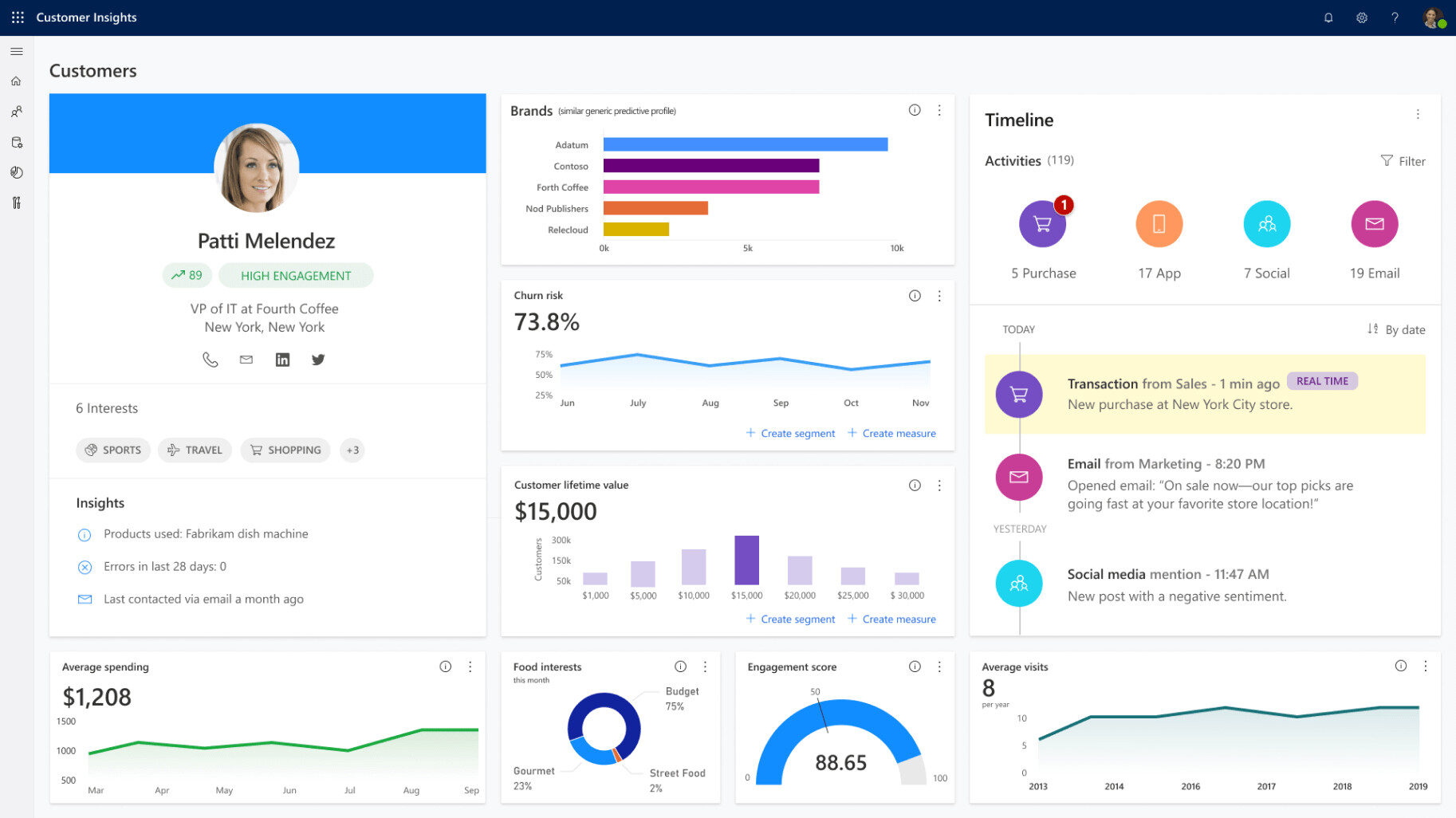
Dynamics 365 Customer Insights solves this problem by pulling data from multiple sources and centralizing it in one place. Whether it is transactional data, behavioural data, or demographic information, the platform unifies everything, giving businesses a complete 360-degree view of each customer. This unified data allows companies to better understand customer preferences, purchase behaviour, and engagement patterns.
For more information on how to improve customer data management, check out Microsoft’s detailed guide on customer relationship management (CRM).
Having data is one thing but turning that data into actionable insights is where the real power lies. Dynamics 365 Customer Insights uses AI and machine learning to analyse customer data and generate predictions that can help businesses make informed decisions.
For example, the platform can predict which customers are most likely to churn, allowing businesses to proactively address potential issues. It can also identify the best time to reach out to a customer or recommend the most relevant products based on previous behaviours. With these insights at their fingertips, businesses can personalize their marketing efforts and improve customer experiences in a way that resonates with their audience.
Customers today expect personalized experiences. 80% of customers are more likely to purchase from a company that offers personalized experiences. With Dynamics 365 Customer Insights, businesses can tailor their marketing efforts to individual customers, ensuring that each interaction is relevant and timely.
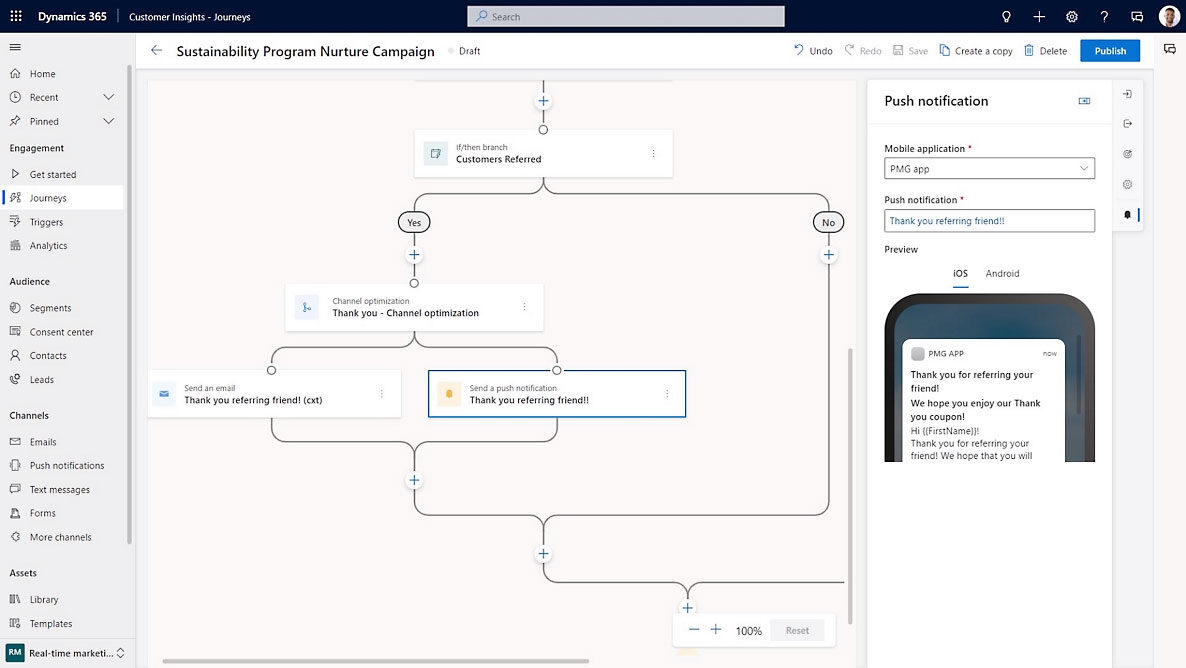
By using the platform’s predictive insights, businesses can send personalized product recommendations, tailored email campaigns, and targeted offers. This level of personalization not only enhances customer satisfaction but also increases loyalty and drives repeat business.
A data-driven marketing strategy is no longer a luxury, it is a necessity. Dynamics 365 Customer Insights enables businesses to build marketing campaigns based on data-driven insights, ensuring that every message, offer, and interaction is backed by real customer information.
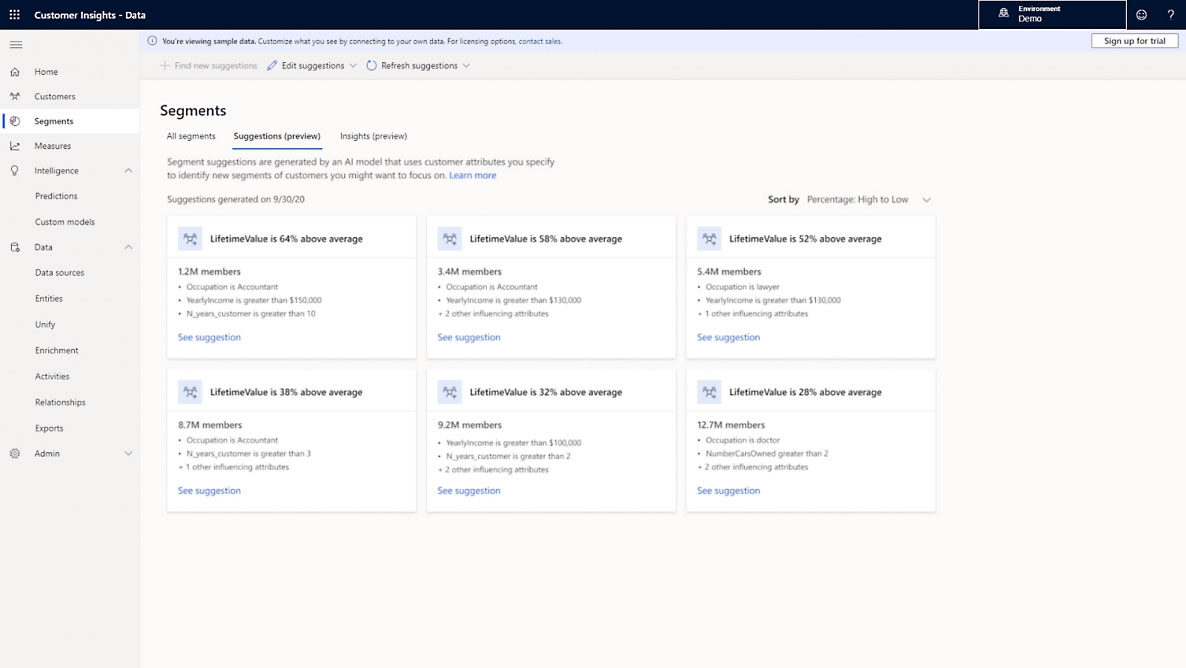
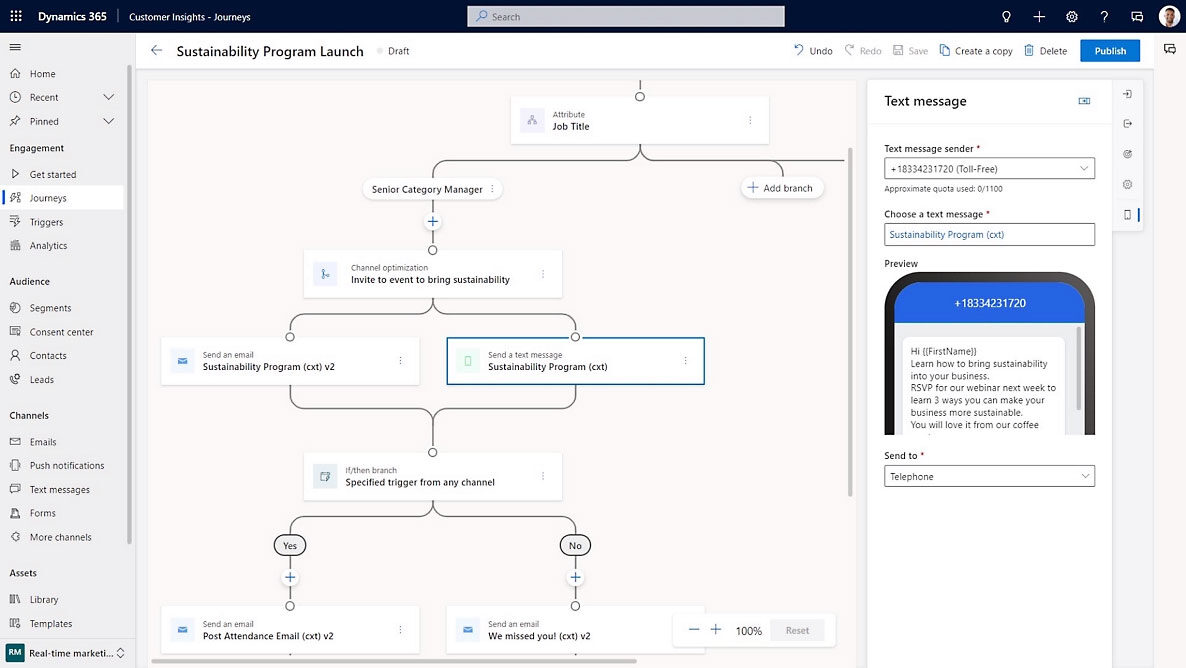
With this powerful tool, businesses can segment their audiences more effectively, optimize customer journeys, and deliver the right message at the right time. Whether you are looking to drive customer acquisition, increase retention, or boost engagement, Dynamics 365 Customer Insights gives you the data-driven foundation you need to succeed.
At The CRM Team, we know that the power of customer data is clear, but unlocking its full potential requires the right tools. Dynamics 365 Customer Insights offers businesses the ability to utterly understand their customers, predict their needs, and create personalized experiences that drive loyalty and growth.
Dynamics 365 Customer Insights is the answer you have been seeking if you are prepared to leverage customer data and elevate your marketing strategy.
To learn more about how this powerful platform can transform your business, contact us for more information.
The page you requested could not be found. Try refining your search, or use the navigation above to locate the post.
Join the ranks of successful enterprises that have revolutionized their operations with our cutting-edge digital solutions. Contact us to discover how we can help you achieve measurable impact.